 Vietnamnet.vn

 Podcast



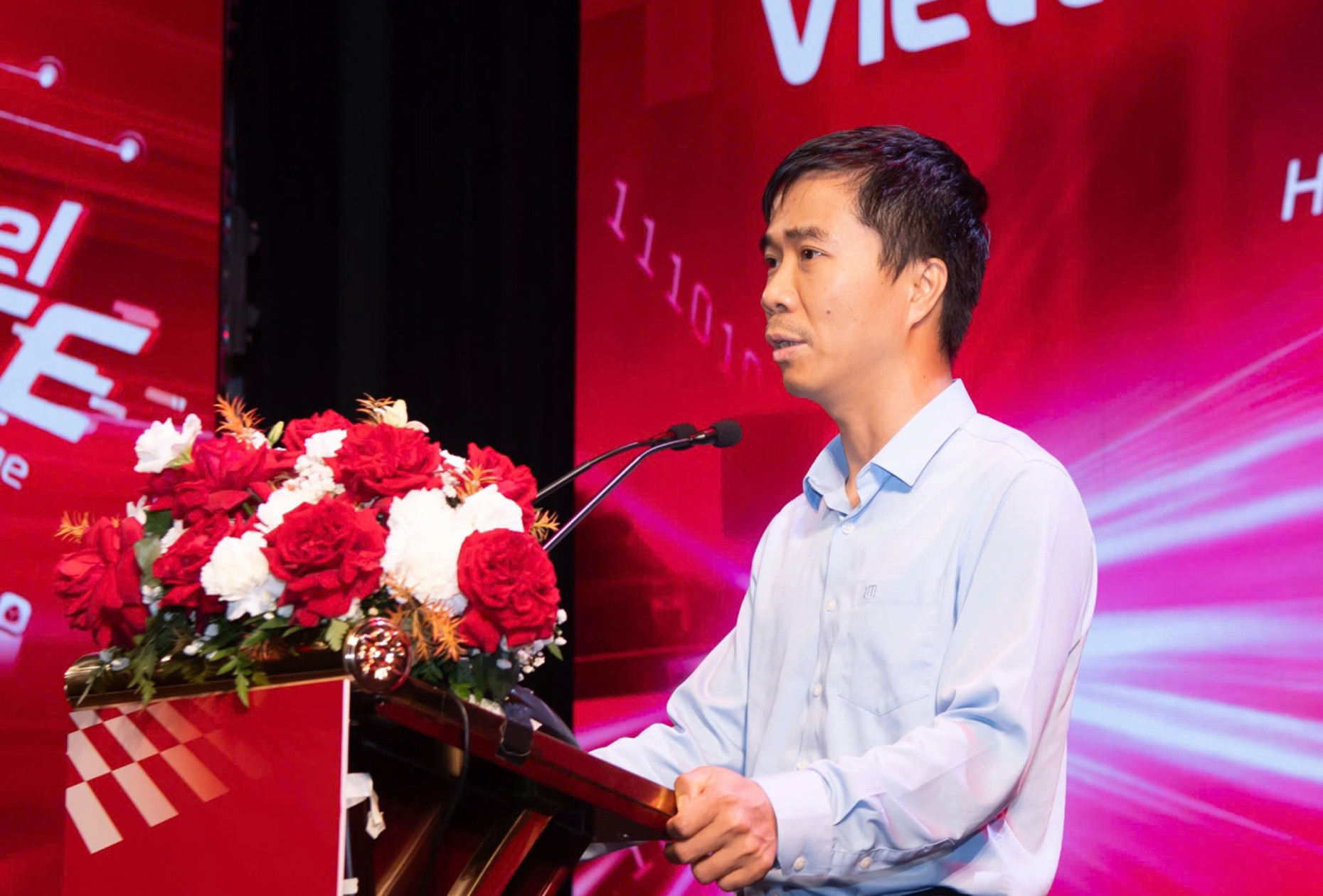
Speaking at a recent conference on institutions for science, technology, innovation, and digital transformation, Dat said Viettel has more than 20 years of operation in the high-tech science sector and has gone through periods with numerous institutional barriers.
One example is the construction of a specific salary mechanism to attract science and technology experts, which took up to 11 years to be resolved.
Immediately after Resolution 57 was issued, Viettel promulgated its own corporate resolution along with a detailed action plan to deploy strategic technology development using its own resources.
To reach that goal, the Board of Directors of Viettel requested the Ministry of National Defence and the Government to add two more deputy general directors to directly oversee the high-tech industrial sector.
Out of a total of eight members on the Board of Directors, four are directly in charge of the high-tech industrial sector, demonstrating the determination of the highest leadership in implementing Resolution 57.
According to Dat, the institutional regime is now ready for Viettel to move ahead.
Developing 9 out of 10 strategic technologies
According to Dat, Viettel's demand for high-quality human resources over the next five years is immense, while the domestic supply has not yet met the requirements.
In the semiconductor field alone, Viettel has been assigned the task of building a chip manufacturing plant. To operate this factory, the corporation estimates it will need about 1,000 personnel, including more than 300 doctorates, including the experts who have worked at major technology corporations worldwide.
Viettel has established the Semiconductor Center, recruiting more than 70 doctorate holders, and has sent three cohorts of officers to Taiwan (China) for training in semiconductor manufacturing.
In addition to the semiconductor field, the corporation has also established many specialized centers, such as the Aviation Technology Center, the Research Institute of Strategic Industrial Technology, and others. The Semiconductor Center currently has more than 300 personnel.
Among the 10 strategic technology groups of the nation, Viettel participates in nine groups and has established specialized organizations for implementation with clear programs, action plans, and goals.
In particular, Viettel also plans to master 5G Advanced technology by 2027 and begin testing 6G technology by 2030, master quantum computing, and specialized chips.
In the 5G field, Viettel has mastered the technology and has integrated 5G equipment researched and manufactured by Viettel into the networks in Vietnam and other countries where Viettel has invested.
Mastering core tech, building ecosystem for global competition
According to Dat, for Vietnam's strategic technology products to be deployed on a large scale and brought to the global market, three conditions must be fully met.
The first is mastering advanced core technologies. He noted that critical technologies are rarely transferred.
Even for Viettel's planned 32-nanometer chip manufacturing plant, gaining access to technology from foreign corporations has proved extremely difficult. As a result, Viettel must develop its own technological capabilities if it wants to expand production and compete internationally.
The second requirement is a strong market foundation. Dat said this is one of Viettel's key advantages, as the group serves both the domestic market and more than 10 international markets where it has operations, providing demand for its technology products.
The third is developing an industrial ecosystem.
Using 5G equipment as an example, Dat said Viettel has mastered product design and manufacturing, but some components still have to be imported.
Vietnam needs a network of small and medium-sized enterprises to manufacture these components, similar to the automotive industry, where major companies focus on core technologies while supplier companies produce supporting parts.
According to Viettel president Tao Duc Thang, Viettel's approach has been to "develop while collaborating."
The group does not seek to replace research institutes or universities but instead works closely with them to master key technologies.
In areas such as quantum technology, advanced materials, satellites, and radar systems, the foundation lies in basic science. Therefore, research institutions and universities play an essential role in developing long-term human resources.
Thang added that Viettel's technology strategy follows a step-by-step approach, from simulation and prototyping to gradually mastering technologies. The group develops what it can independently while partnering with others where necessary.
At the same time, he said, every strategic technology area must be tied to a specific strategic product to facilitate implementation.
Thai Khang
.svg)
