 Vietnamnet.vn

 Podcast


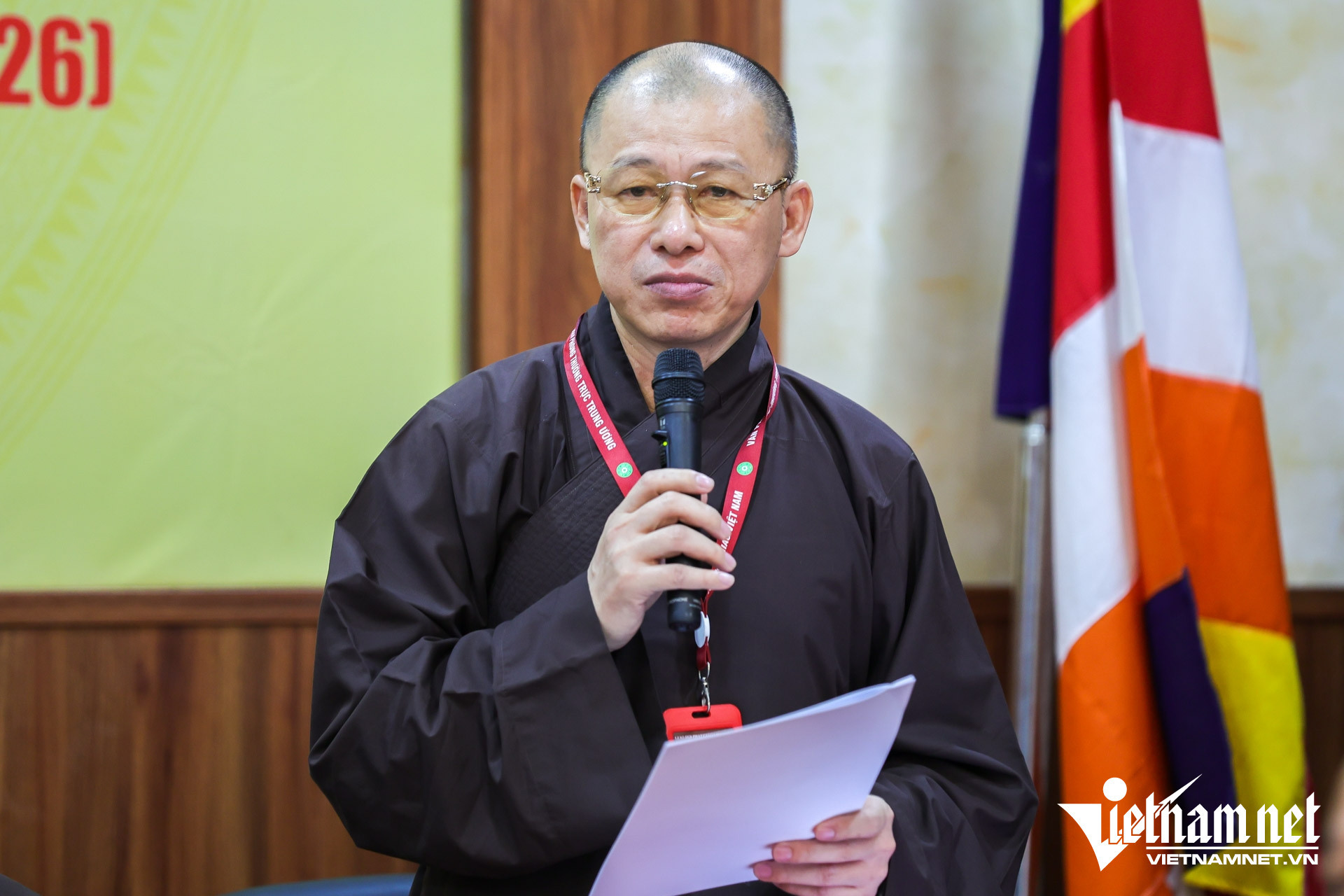
Venerable Thich Minh Nhan said such platforms could help people access Buddhist teachings, practice meditation and gain basic religious knowledge. However, they could not fully replace in-person worship, spiritual guidance and religious practice at temples.
As part of its digital transformation efforts, the VBS plans to launch an updated version of its Buddhist social networking platform, Butta, during the 10th National Buddhist Congress.
The platform will feature a Digital Meditation Hall, a Virtual Buddhist Worship Space and a Buddhist Teachings Library, providing users with access to authoritative religious information.
Referring to a message from Most Venerable Thich Thien Nhon, Vice Supreme Patriarch and Chairman of the VBS Executive Council, Thich Minh Nhan said Buddhist communications should focus on spreading positive and trustworthy content.
He recalled the message that Buddhism should strive to "plant fragrant flowers to keep weeds from spreading," emphasizing that misinformation could gain influence when reliable sources were absent.
The monk acknowledged that some individuals had exploited the popularity of online religious activities, while others had created digital Buddhist content with good intentions but insufficient understanding of Buddhist teachings.
Buddhist communication should inspire kindness, not chase views
Venerable Thich Minh Nhan believes that technological advances have created unprecedented opportunities for Buddhist teachings to reach wider audiences.
A sermon delivered at a temple can now reach thousands of people through smartphones and social media platforms.
However, this accessibility also presents challenges, including misinformation, teachings taken out of context and controversial statements that could undermine public confidence in Buddhist institutions.
"The value of communication should not be measured only by views or how widely content spreads. What matters more is whether it helps people develop a correct understanding, cultivate goodness and behave better in everyday life," he said.
As Editor-in-Chief of the Buddhist news platform Phat su Online, Venerable Thich Minh Nhan has spent years bringing Buddhist information to the public through news articles, features, videos, Dharma programs and livestreamed broadcasts.
He has helped direct, organize and edit more than 30,000 programs, articles and other media products.
Despite this extensive output, he maintains that the quantity of content is not the most important measure of successful Buddhist communication.
Every piece of religious information should have a clearly identified source, undergo verification and use accurate, accessible language.
Even the incorrect use of a Buddhist title, monastic rank or religious term could distort the intended meaning.
For Venerable Thich Minh Nhan, communication is also a way of practicing Right Speech, a Buddhist ethical principle emphasizing truthfulness, appropriate timing and thoughtful expression.
When confronting misinformation, communicators should calmly verify the facts and provide authoritative information rather than turning corrections into hostile arguments.
"Compassion does not mean remaining silent in the face of wrongdoing. Compassion means speaking the truth with good intentions, so that others can understand and have an opportunity to change," he said.
He stressed that monks and nuns must maintain proper conduct not only in their everyday religious lives but also through their social media activities, public statements and interactions with online communities.
Technology cannot replace the moral example of Buddhist teachers
Beyond his communications responsibilities, Venerable Thich Minh Nhan serves as Deputy Head and Chief Secretary of the VBS Central Dharma Propagation Committee.
He believes that spreading Buddhist teachings involves more than explaining religious doctrine. It should help people apply Buddhist principles to everyday life.
A sermon about filial piety, for example, should connect its teachings to relationships between parents and children, while discussions of compassion should encourage kindness within families, communities and society.
Between 2022 and 2026, he helped coordinate nearly 100 Buddhist retreats and approximately 200 lectures and Dharma propagation programs, attracting around 30,000 attendances.
These activities have reached diverse audiences, particularly young people and those seeking emotional and spiritual support amid the pressures of modern life.
Online lectures have made Buddhist teachings more accessible, especially for people unable to visit temples.
However, Venerable Thich Minh Nhan warned that short video clips designed for rapid consumption could oversimplify complex teachings or remove important context.
He called for the development of authoritative digital Buddhist learning resources with carefully reviewed content, supported by younger monks and nuns who combine strong religious knowledge and ethical conduct with communication and technological skills.
He also emphasized the importance of teaching through personal example.
Whether a sermon is delivered in a lecture hall or through an online platform, the person delivering it must first practice the principles being taught.
"Technology is only a means. It cannot replace the role of those who teach the Dharma," he said.
Strengthening oversight of Buddhist activities online
As religious activities increasingly move into digital spaces, the VBS is also strengthening its management and regulatory framework.
According to Venerable Thich Minh Nhan, Vietnam's new Law on Belief and Religion, scheduled to take effect on January 1, 2027, includes provisions governing religious activities in cyberspace.
To align with the legislation, the eighth revision of the VBS Charter has introduced provisions concerning online activities, along with guidance for monks, nuns and Buddhist followers on social media participation and digital Dharma propagation.
The Sangha has already taken action rather than waiting for the new law to come into force.
During the previous term, regulations issued by the VBS Central Monastic Affairs Committee covered certain online activities, and some monks and nuns who violated the rules while using social media or engaging in digital communications faced disciplinary measures.
Among the 12 priorities identified for the Sangha's 10th term is coordinating the implementation of regulations governing online religious activities to help create a safe and healthy digital environment.
Venerable Thich Minh Nhan has also participated in efforts to modernize the Sangha's administrative operations.
As a Secretary Member of the VBS Executive Council and Deputy Chief of its Central Office No. 2, he has helped digitize records of monks, nuns and Buddhist institutions while improving document management and administrative procedures.
These initiatives include piloting the VBSEID platform in southern Vietnam to standardize data used in Buddhist administration.
Regarding artificial intelligence, he advocates selective adoption, appropriate content controls and clearly defined purposes.
He stressed that digital transformation should not simply involve moving Buddhist activities onto online platforms. It should improve how religious work is carried out while preserving the depth and integrity of Buddhist teachings.
Turning compassionate words into meaningful action
For Venerable Thich Minh Nhan, Buddhist practice must also be reflected in concrete acts of compassion and service.
Alongside his work in communications and Dharma propagation, he has spent 24 years serving as director of the Phat Quang Social Charity Center.
Since 2002, the center has provided care and education for nearly 1,000 disadvantaged children, many of whom have completed secondary school, college or university and gradually established independent lives.
The center currently provides residential care for 50 children.
Venerable Thich Minh Nhan believes supporting disadvantaged children should go beyond meeting their immediate material needs. More importantly, it should create opportunities for education, personal development and long-term independence.
Over the years, charitable and social welfare programs that he has mobilized and helped implement have reached a combined value of VND48.256 billion (approximately $1.83 million).
These initiatives include support for the construction and repair of 60 houses, 35 rural bridges and roads, and the distribution of 30,000 gift packages.
The programs have benefited from contributions by Buddhist institutions, monks, nuns, followers, organizations and volunteers.
In September 2026, Venerable Thich Minh Nhan was nominated for Vietnam's third-class Labor Order in recognition of his contributions to Buddhist affairs and social welfare.
He expressed gratitude to those who had supported the work and regarded the recognition as a reminder to continue serving with responsibility and humility.
For the monk, the guiding principle remains unchanged: preserving his original commitment to Buddhist service and carrying out the responsibilities entrusted to him by the Sangha and the community.
As Buddhism adapts to an increasingly digital society, his message is that technology should help spread compassion, understanding and ethical conduct rather than become an end in itself.
Phuoc Sang - Nguyen Hue - Hong Phuc

