 Vietnamnet.vn

 Podcast



Vietnam has successfully held Party congresses at all levels for the 2025–2030 term, paving the way for the 14th National Party Congress in the context of a nationwide administrative reorganization and the transition to a two-tier local government model (provincial and communal levels).
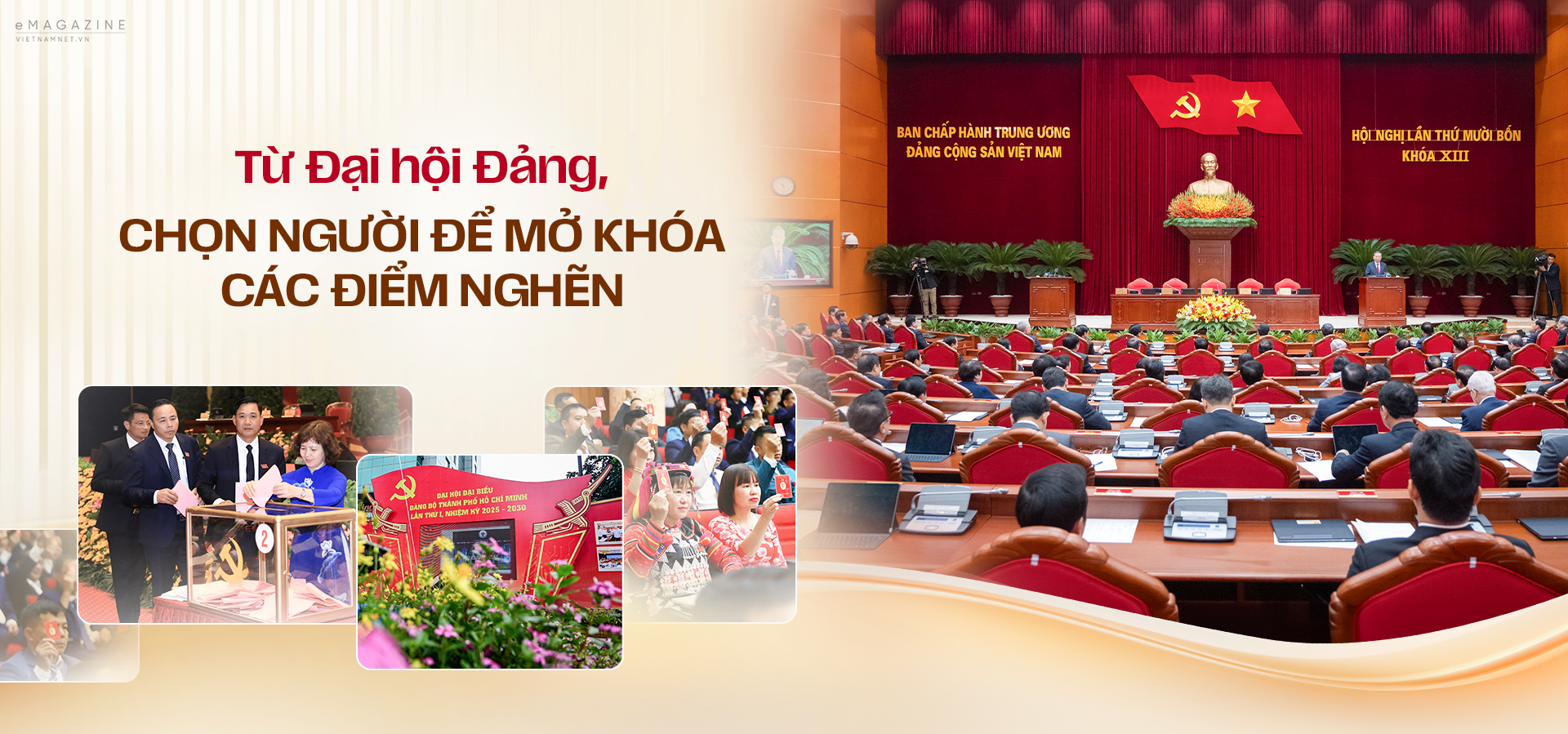
The Party congresses for the 2025–2030 term hold special significance. Beyond being a broad and in-depth political campaign across the entire Party and population, they lay the groundwork for the successful convening of the 14th National Congress.
These local congresses focused on three main tasks: discussing and approving the political documents at each level and contributing feedback to documents for the higher-level congress and the 14th National Congress; electing personnel for Party committees at each level; and finalizing leadership structures from grassroots to the Central Party.
Personnel preparation for these congresses was conducted with careful planning and execution, adhering to the principle of “firm progress with every step.”
In 11 provinces and cities where no administrative mergers occurred, the congresses elected 634 members to Party Executive Committees, 164 members to Standing Committees, 11 secretaries, and several other key positions. Among the elected members, 17.03% were women, and 20.98% came from ethnic minority groups. Notably, 10% were under the age of 42, with the average age being 49.76.
In the 23 merged localities, new Party committee members were appointed by authorized bodies and announced at the congresses. According to compiled reports, these provinces received appointments for 1,669 Executive Committee members, 461 Standing Committee members, 23 secretaries, 99 deputy secretaries, and 23 Inspection Committee chairpersons.
All 34 new provincial and city Party secretaries for this term are non-native to their respective localities, in line with the Central Party’s policy.
Many of these new secretaries are from the 1970s generation and have undergone systematic training, held multiple leadership positions, and proven themselves through real-world experience-equipping them well to shoulder responsibilities in this new phase of national development.
The 14th National Party Congress is scheduled to take place over seven days, from January 19 to 25, 2026. It is a major political event of the Party and the country, a defining milestone on Vietnam’s development path, ushering in a new era described as “the nation’s rise”-a period of independence, confidence, self-reliance, resilience, and national pride.
From early on, the Central Committee established subcommittees to prepare for the congress, with two primary focuses: drafting the political documents and preparing personnel nominations.
At the 13th Central Committee Plenum in early October, the Party approved key documents for submission to the 14th Congress: the draft Political Report, a draft report summarizing 40 years of theoretical and practical implementation of socialist-oriented reforms in Vietnam, and a draft report reviewing 15 years of implementing the Party Charter.
These draft documents were later released for public consultation. Between October 15 and November 15, more than 2.5 million opinions were collected from Party members, officials, and citizens nationwide.
At the same 13th Plenum, the Party also finalized nominations for the 14th Central Committee, including official and alternate members, those seeking re-election, and newcomers. It also selected candidates for the 14th Central Inspection Committee.
During the 14th Plenum in early November, the Party reached consensus on the nominations for the Politburo and the Secretariat for the upcoming term-covering both re-elections and new appointments. These nominations will be presented at the 14th Congress and voted on by the new Central Committee in its first session.
Nominees for the Politburo and Secretariat must meet rigorous standards: possessing a national strategic vision, the ability to uphold Vietnam’s sovereignty, national-scale leadership and command experience, political credibility and integrity symbolic of the Party’s values, the capacity to turn resolutions into measurable achievements, and both physical and mental endurance to manage the intense workload of the term and potentially future terms.
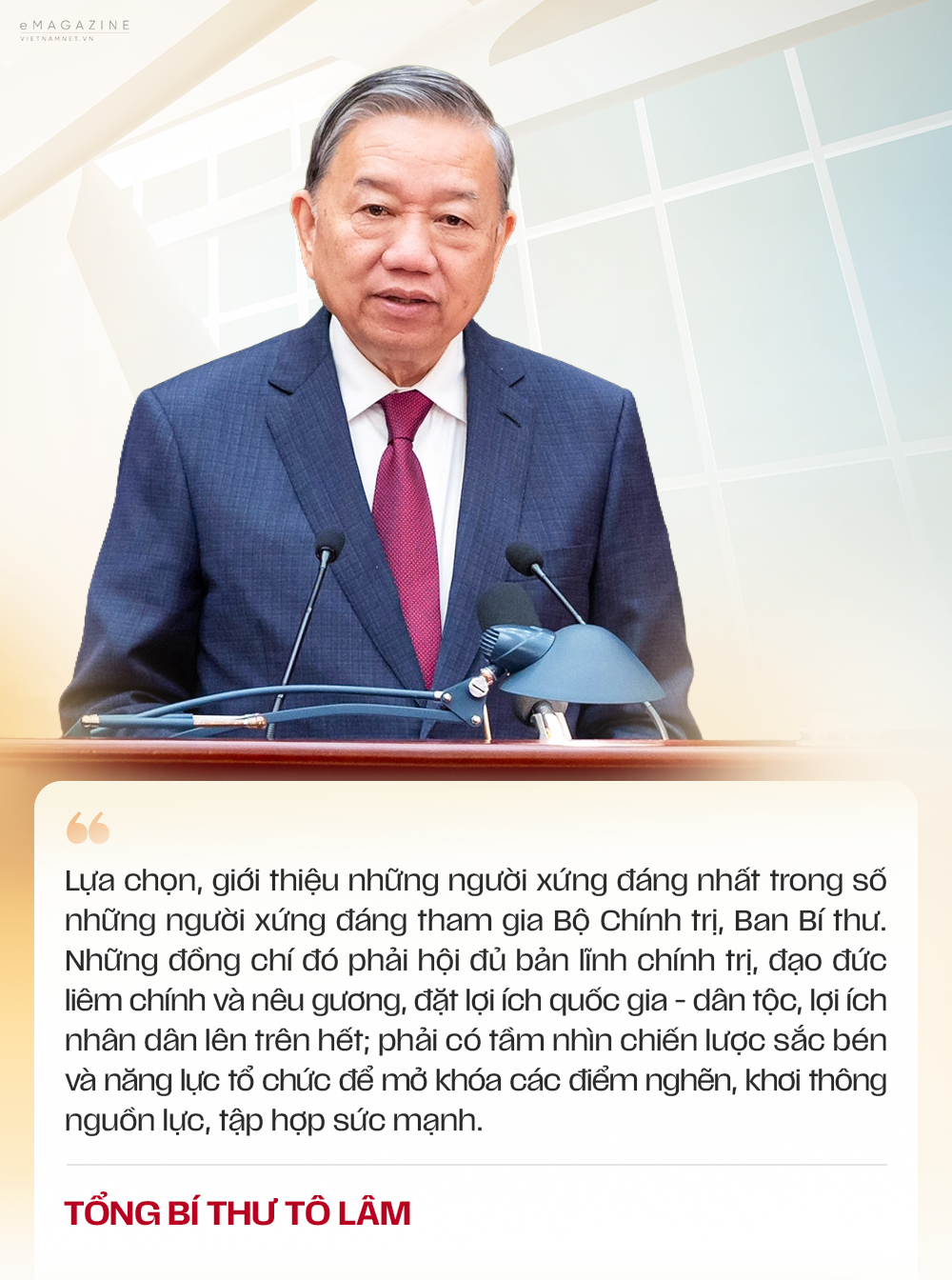
General Secretary To Lam emphasized that “choosing the right person for the right job,” especially at the senior level, is a prerequisite for turning vision into results.
“We must nominate only the most deserving among the deserving to the Politburo and the Secretariat. These individuals must demonstrate political fortitude, moral integrity, exemplary behavior, and a deep commitment to national and public interests above all else. They must possess strategic foresight, organizational capacity to unblock bottlenecks, mobilize resources, and unify collective strength.
“More importantly, they must have strong implementation capabilities-defining clear goals, ensuring accountability, using data-driven assessments, and following through with disciplined governance,” the General Secretary stated.
Huong Quynh
.svg)
