 Vietnamnet.vn

 Podcast



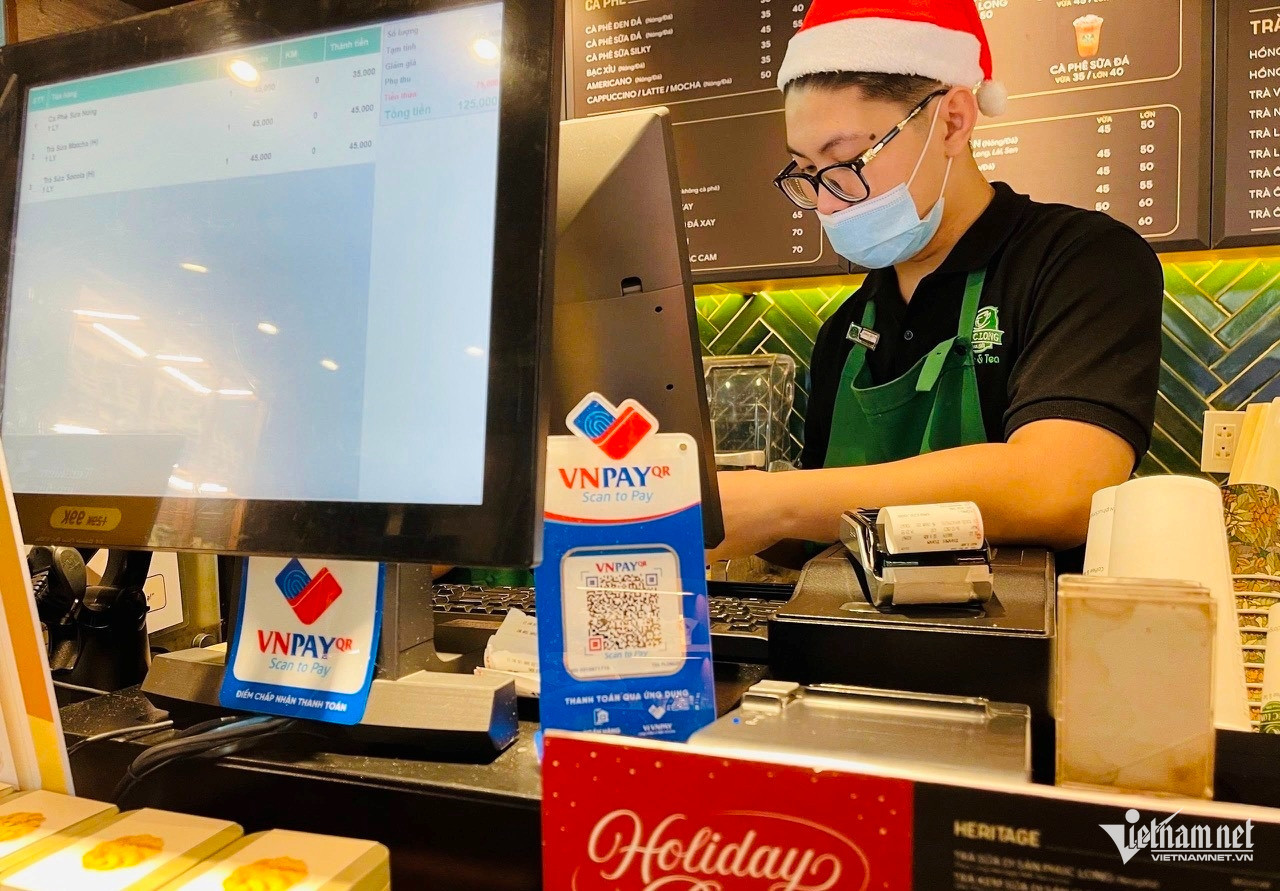
More than 18,300 household businesses have voluntarily transitioned to a self-declaration tax model ahead of the official change on January 1, 2026.
Voluntary shift from flat tax
Resolution No. 68-NQ/TW of the Politburo on private sector development sets a clear deadline to eliminate lump-sum taxation by 2026.
Under the new system, household businesses must declare actual revenue and pay taxes accordingly.
According to Mai Son, Deputy Director General of the General Department of Taxation (Ministry of Finance), this marks a pivotal reform in tax administration and a significant boost to the private sector.
He emphasized that the change enhances transparency and fairness, allowing tax authorities to assess actual business capacity more accurately, while reinforcing the principle of self-reporting, self-payment, and self-responsibility.
This transition also helps standardize the business environment, paving the way for household businesses to scale up into formal enterprises.
To implement the Ministry of Finance's “Proposal for Transitioning Household Business Taxation,” the General Department of Taxation issued directives urging local leaders to coordinate the phase-out of the lump-sum tax and manage the transition.
60-day push and digital tools
Local tax departments launched a “60-day transition campaign” to encourage voluntary compliance.
The effort included public awareness drives, 24/7 hotline support, and collaboration with tech firms to offer discounted or free accounting software.
The Tax Department also rolled out a new user platform for household businesses to practice online declarations before full implementation.
Thanks to these efforts, nearly 100% of household businesses have been informed and prepared for the upcoming transition.
So far, over 18,300 lump-sum tax households have voluntarily switched to the self-declaration method, and more than 3,200 households have upgraded to formal enterprises.
New tax calculation methods
On December 10, the National Assembly passed the 2025 Law on Personal Income Tax, revising thresholds and procedures for small businesses.
Key changes include:
Tax-free income threshold raised from 200 million VND to 500 million VND per year (USD 20,600).
Households below this threshold are exempt from VAT and personal income tax (PIT) but must report actual revenue annually, no later than January 31.
For those earning above 500 million VND/year, tax obligations begin:
VAT is calculated using a direct percentage on revenue, as per the new VAT Law (No. 48/2024/QH15).
PIT is calculated based on net income (revenue minus costs), using tiered tax rates:
15% for income between 500 million and 3 billion VND/year
17% for income between 3 billion and 50 billion VND/year
20% for income over 50 billion VND/year
For businesses earning 500 million–3 billion VND/year, taxpayers may choose between two calculation methods:
Net income × tax rate
Taxable revenue × tax rate, where taxable revenue equals revenue exceeding 500 million VND
If a household has multiple business locations or sectors, they may choose where to apply the 500 million VND deduction - but only once, across all operations.
To avoid frequent changes in tax obligations, the chosen calculation method must remain unchanged for two years.
If tax data shows actual revenue exceeds 3 billion VND for two consecutive years, the taxpayer must switch to the net income method.
For real estate rental businesses (excluding lodging), PIT is set at 5% on revenue above 500 million VND/year.
Transition steps for household businesses
Step 1: Review 2025 revenue and project 2026 income to determine tax group. Choose an appropriate calculation method, accounting system, invoicing software, and tax filing tools.
Step 2: Inventory unsold goods at the point of transition (if revenue exceeds threshold).
Step 3: Register for e-invoices if projected revenue exceeds 1 billion VND (≈ USD 41,000).
Step 4: Prepare accounting records (if applicable).
Step 5: Update business registration and tax filing methods, either online or at the tax office.
Step 6: Set up a separate business bank account (if not already in place).
Step 7: File taxes using the appropriate e-declaration form via eTax Mobile.
Nguyen Le
.svg)
