 Vietnamnet.vn

 Podcast



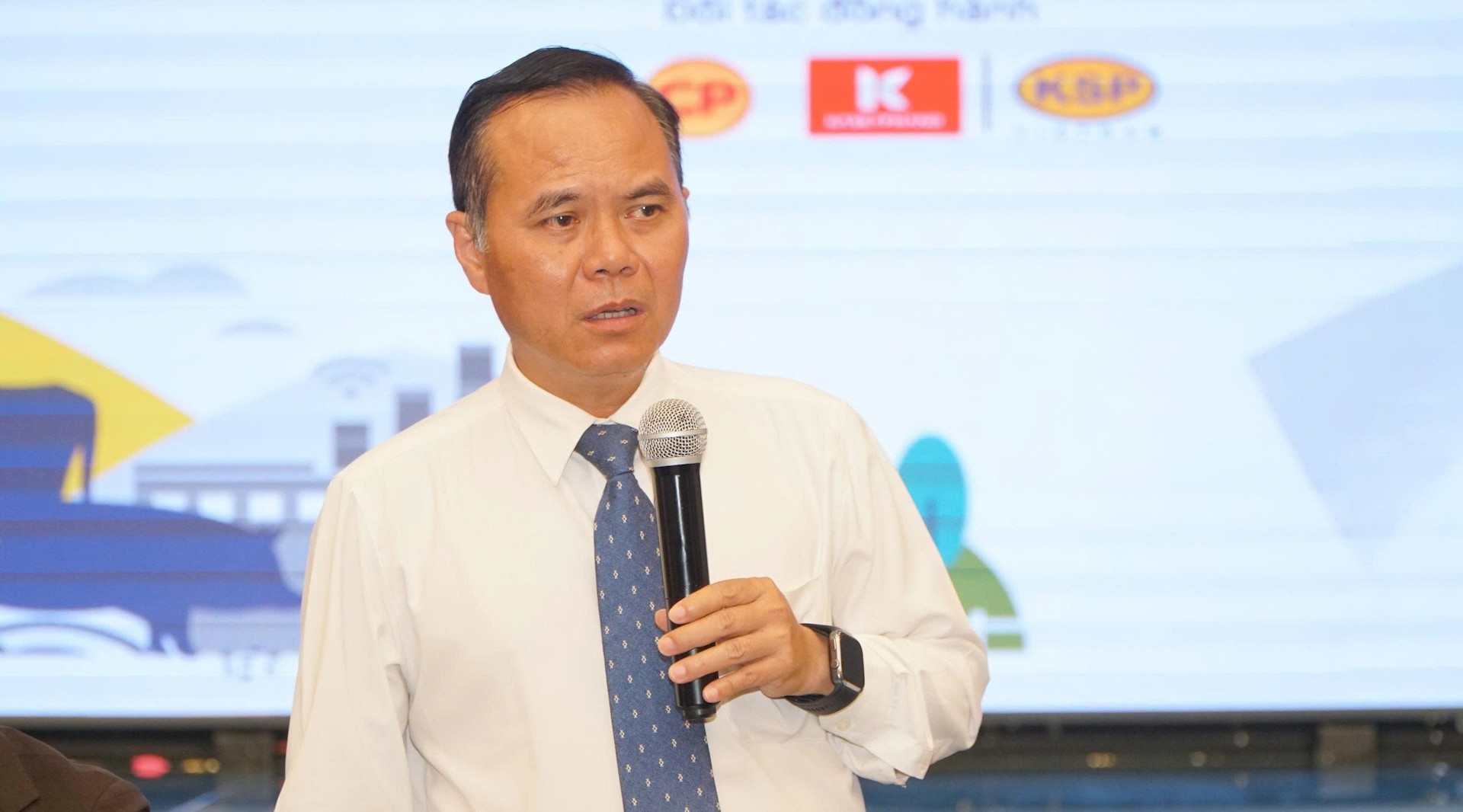
At a press briefing introducing ILDEX Vietnam 2026 on April 24, Pham Kim Dang, deputy general director of the Department of Livestock Production and Animal Health under the Ministry of Agriculture and Environment, said that high-quality livestock breeds in Vietnam are imports through foreign-invested (FDI) corporations.
At the same time, Vietnam also has a rich diversity of indigenous breeds. The livestock and veterinary sector has great potential, but to become the “kitchen of the world,” it must renew itself. After a period of development, the domestic livestock industry still relies heavily on imported breeding sources.
Vietnam’s pig farming ranks fifth globally in herd size and sixth in output, while its poultry population ranks second in the world. However, according to the Vietnam Livestock Association, in the first six months of 2025, Vietnam spent about $113 million importing breeding animals.
Dang said that although breeding stock is imported, key technical know-how and proprietary expertise are retained by suppliers. Over time, genetic quality declines and productivity drops. As a result, the sector has to import breeding stock again to “refresh the bloodline” and boost herd performance.
Under the Scheme for Developing the Livestock Breeding Industry to 2030, the goal is to produce breeding stock on a large, industrial scale.
According to the plan, six industrial-scale breeding facilities are to be established (including three pig breeding centers with 2,000–5,000 great-grandparent sows, and three poultry breeding centers with 1,000–2,000 pure lines and 5,000–10,000 grandparent chickens) by 2030, kmeeting conditions for systematic selection, multiplication, and high-uniformity breeding.
Dang added that countries with limited land resources do not focus on mass production. Instead, they invest in high-value sectors such as breeding genetics.
“A typical example is Denmark. A single breeding pig from Denmark can be sold at a price equivalent to hundreds or even thousands of market pigs. That is the value we should aim for,” he said.
“Other developed countries such as France, Canada, and the US also have their own pig breeds developed through crossbreeding and selection from Danish Landrace and Yorkshire lines,” he added.
Vietnam has yet to develop its own distinctive breeds due to technological limitations. The development scheme aims to adopt advanced technologies, particularly genomic selection.
In terms of institutions and policies, regulations on breed recognition have been eased. Previously, a breed could only be recognized if it resulted from scientific research projects. Now, if a company can provide sufficient documentation of breeding processes and multi-generation data proving distinct characteristics, authorities will recognize it as a Vietnamese breed.
“We hope Vietnam will soon develop its own livestock breeds to reduce input costs,” Dang said.
The 10th International Livestock, Dairy, Meat Processing and Aquaculture Exhibition (ILDEX Vietnam 2026) will take place from May 20 to 22 at the Saigon Exhibition and Convention Center (SECC) in HCMC.
This year’s exhibition will be larger in scale, featuring more than 250 companies from over 25 countries and territories, with nearly 10,000 trade visitors expected over three days of the event.
The Department of Livestock Production and Animal Health said that specialized exhibitions like ILDEX help Vietnamese enterprises stay updated on technological trends, expand investment cooperation, and access advanced global solutions.
Phan Quang Minh, deputy general director of the department, said the animal husbandry contributes about 26–28 percent of agricultural GDP, playing a key role in ensuring food security and livelihoods for millions.
However, the sector still faces many challenges: a large share of smallholder farming, dependence on imported breeds and inputs, complex disease risks, uneven veterinary capacity at the grassroots level, increasing pressure on antibiotic control, food safety and environmental standards, and limited digital transformation and supply chain linkages.
The development strategy to 2030 with a vision to 2045 sets high requirements, including full value chain modernization, effective disease control, enhanced competitiveness, and export orientation. Therefore, science, technology, and innovation must become the central drivers, shifting production from experience-based to technology-, data-, and risk management-based models.
Over the past decade, livestock has been the fastest-growing and most stable segment in agriculture, expanding at about 4.5–6.5 percent annually. Vietnam has also become one of the pioneering countries in successfully researching and producing a vaccine against African swine fever, enhancing its disease control capacity.
Tam An
.svg)
