 Vietnamnet.vn

 Podcast



The next generation of businessman Nguyen Duc Thuy’s family has stepped into the spotlight, drawing attention from Vietnam’s financial community after LPBank Securities JSC (LPBS) completed a major initial public offering (IPO).
According to a board resolution, LPBS successfully distributed more than 141.75 million shares at VND30,000 per share, raising more than VND4.256 trillion (USD163.7 million). The transaction increased the company’s charter capital to more than VND14.086 trillion (USD541.8 million), placing LPBS among Vietnam’s securities firms with charter capital exceeding VND10 trillion.
The most notable development following the IPO was the list of major shareholders. Nguyen Xuan Thai and Nguyen Ngoc My Anh, the two children of businessman Nguyen Duc Thuy, each hold more than 190 million LPBS shares, equivalent to nearly 13.5% of the company’s charter capital. Together, they own more than 380 million shares valued at approximately VND11.4 trillion, or around USD438 million, based on the IPO price.
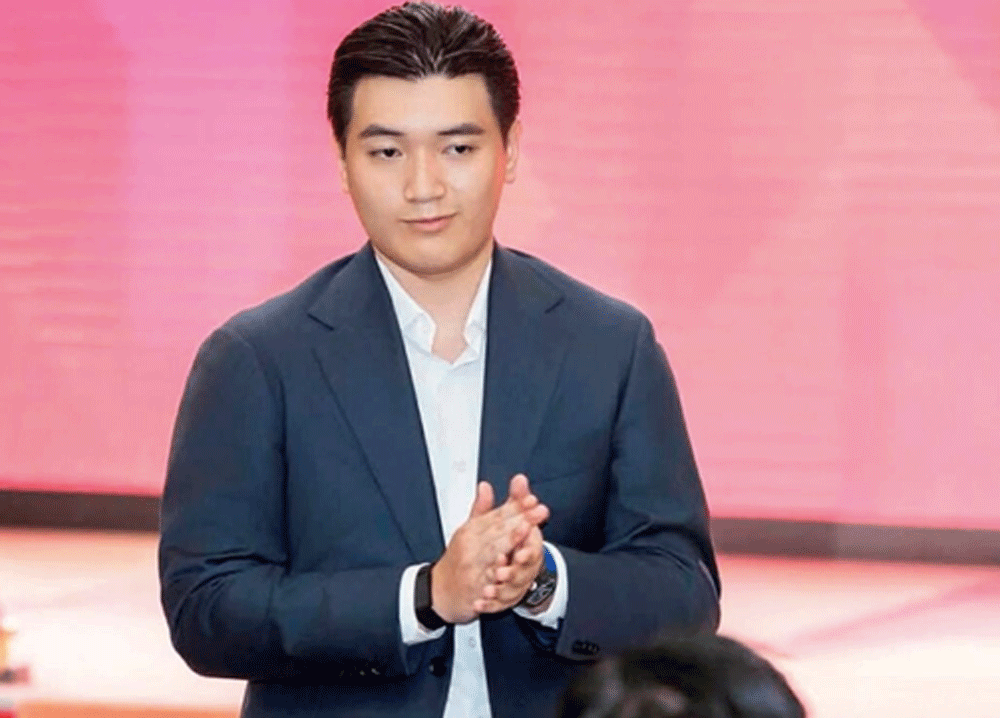
This marks the first time the second generation of the Nguyen Duc Thuy family has emerged with an asset base large enough to become one of the most notable groups of individual shareholders on Vietnam’s stock market.
Beyond their sizeable holdings, both have begun taking on management responsibilities within the family’s business ecosystem.
Nguyen Xuan Thai, born in 2003, has already held several positions across family-linked companies. He was nominated to the LPBS Board of Directors, serves as a board member of Phu Dong Sports Investment JSC, the operator of Ninh Binh Football Club, and is Vice Chairman of Sacom Crypto Exchange JSC (SCEX).
Nguyen Ngoc My Anh, born in 2001, previously served as Chief Executive Officer of ThaiSpace and is currently Chairwoman of Ninh Binh Football Club. Earlier this month, both also joined Sacombank, with Thai appointed as an assistant to the Board of Directors and My Anh becoming an assistant to the Chief Executive Officer.
Their combination of substantial shareholdings and management appointments suggests that the second generation of the Nguyen Duc Thuy family is being prepared for larger responsibilities within the business group.
Vietnam’s business succession trend gathers momentum
The emergence of Nguyen Duc Thuy’s children reflects a broader succession trend that is becoming increasingly visible among Vietnam’s leading business families.
Nguyen Duc Thuy is one of Vietnam’s most prominent entrepreneurs of the founding generation. He previously served as Chairman of ThaiGroup, Thaiholdings and LPBank, and currently holds the position of Permanent Vice Chairman of Sacombank’s Board of Directors. Over more than two decades in business, he has built a presence across sectors including real estate, banking, securities and football.
His family maintains influence across a network of major enterprises. In addition to leadership roles at Sacombank, the business ecosystem extends to LPBS, SCEX, several football clubs and a range of related companies. SCEX is among the enterprises being considered for participation in Vietnam’s pilot digital asset market program, a sector expected to expand significantly as the legal framework develops.
The fact that both of Nguyen Duc Thuy’s children simultaneously hold shareholdings worth hundreds of millions of dollars while assuming management positions indicates that succession is moving beyond wealth transfer and increasingly into executive leadership.
Similar developments can be seen across other major corporations and banks.
At ACB, Chairman Tran Hung Huy is often cited as a leading example of a second-generation leader who successfully took over management responsibilities and guided the bank through its restructuring period.
At Vingroup, billionaire Pham Nhat Vuong has gradually introduced members of the next generation into the group’s ecosystem alongside a professional management team.
At TPBank and DOJI, the children of Do Minh Phu have become part of ownership structures. The family of Ho Hung Anh at Techcombank has also transferred substantial shareholdings to his two children, each controlling assets worth tens of trillions of Vietnamese dong.
Meanwhile, the family of Do Quang Hien has seen Do Quang Vinh assume the role of Vice Chairman at SHB, while at SeABank, Le Thu Thuy remains a key executive associated with the business family of Nguyen Thi Nga.
The growing visibility of second-generation leaders within Vietnam’s largest private business groups suggests that family-business succession is entering a new phase. Rather than simply inheriting wealth, heirs are increasingly being given opportunities to participate in management at an early stage, allowing them to build experience before potentially taking over enterprises valued at hundreds of trillions of Vietnamese dong in the future.
Manh Ha
.svg)
