 Vietnamnet.vn

 Podcast



A string of controversies involving Vietnamese celebrities has reignited debate over cultural awareness and public responsibility, as actions deemed inappropriate at sacred and historical sites continue to draw strong backlash.
Singer Juky San became the latest figure at the center of public criticism on March 30, after sharing photos taken at Gieng Tien (Fairy Well) in Gia Lai. In the images, she wore a bikini, immersed herself in the water and posed in a suggestive manner - actions that many viewers found offensive given the site’s spiritual significance.


Facing mounting criticism, Juky San issued a public apology, admitting she had not researched the cultural and religious meaning of the location and had mistakenly treated it as an ordinary natural setting. She also noted that there were no warning signs at the site at the time of the visit.
The singer acknowledged her lack of awareness and described the incident as a lasting lesson in cultural sensitivity.
“Once again, I bow my head in apology and hope for understanding from the audience and local people,” she said.
The controversy echoes earlier incidents involving other public figures. In April 2013, comedian Hiep Ga sparked outrage after posting photos of himself in casual attire performing playful, even acrobatic poses at what he believed to be the monument of the ten young female volunteers at Dong Loc. In reality, the location was the Xo Viet Nghe Tinh monument at Nga Ba Nghen in Ha Tinh - a site of profound historical significance tied to the 1930-1931 revolutionary movement.

The images, accompanied by a flippant caption, were widely condemned as disrespectful. The Department of Performing Arts described the behavior as unacceptable and lacking respect for history. Despite the backlash, Hiep Ga initially downplayed the incident, comparing his actions to merely touching the statue - a response that failed to appease public opinion.
Similarly, singer Thuy Tien faced criticism in 2011 following the release of her music video “Em da quen,” filmed at the Ho Chi Minh City Fine Arts Museum. In one scene, she appeared in a revealing dress, posing sensually between two statues symbolizing military-civilian unity and collective struggle.

The juxtaposition of suggestive performance and a solemn cultural setting drew strong objections. Thuy Tien later apologized, describing the incident as an unintentional oversight and expressing hope for public understanding.
“In life, everyone makes mistakes. What happened in the clip was an unintentional oversight. I will learn from this and hope for sympathy,” she said.
Another case involved singer Chi Pu, whose old photos resurfaced in 2018 showing her sitting on and kissing a Buddha statue during a childhood trip. While some criticized the behavior as inappropriate, others expressed sympathy, noting that she was only 12 years old at the time and likely unaware of the cultural implications.
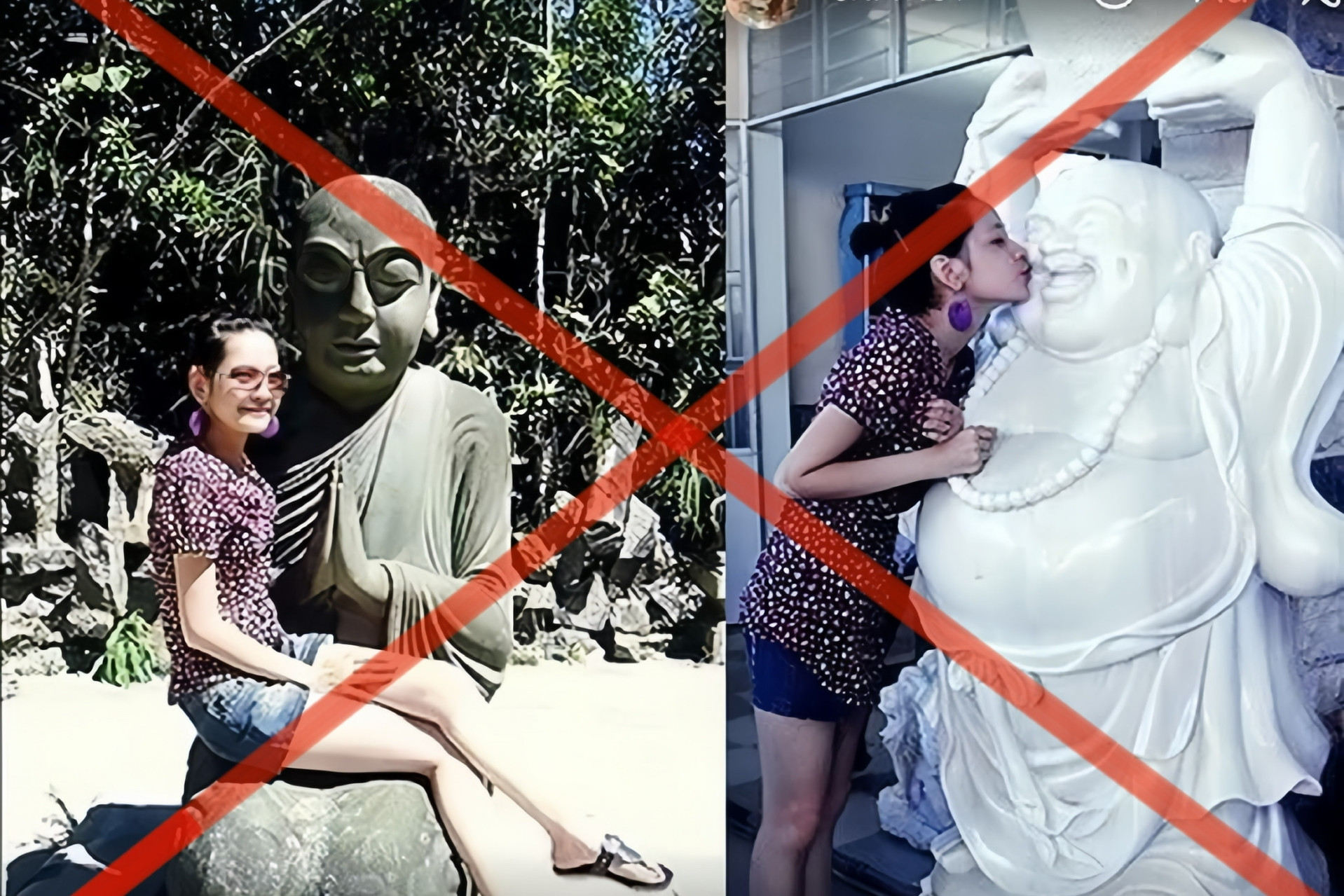
Chi Pu herself later acknowledged that the actions, though taken in childhood, left an unfavorable impression and served as a personal reminder to grow and act more thoughtfully.
These incidents highlight a broader issue within the entertainment industry. Building a public image takes years, but a single act of cultural insensitivity can quickly undermine that effort.
Artists, as cultural figures, carry a heightened responsibility in how they conduct themselves, both professionally and in daily life. Increasingly, public opinion suggests that apologies alone are no longer sufficient. Instead, there is a growing call for genuine awareness, accountability and stricter standards - from both individuals and regulatory bodies - to foster a more respectful and culturally conscious artistic environment.
Khoi Nguyen
.svg)
