 Vietnamnet.vn

 Podcast



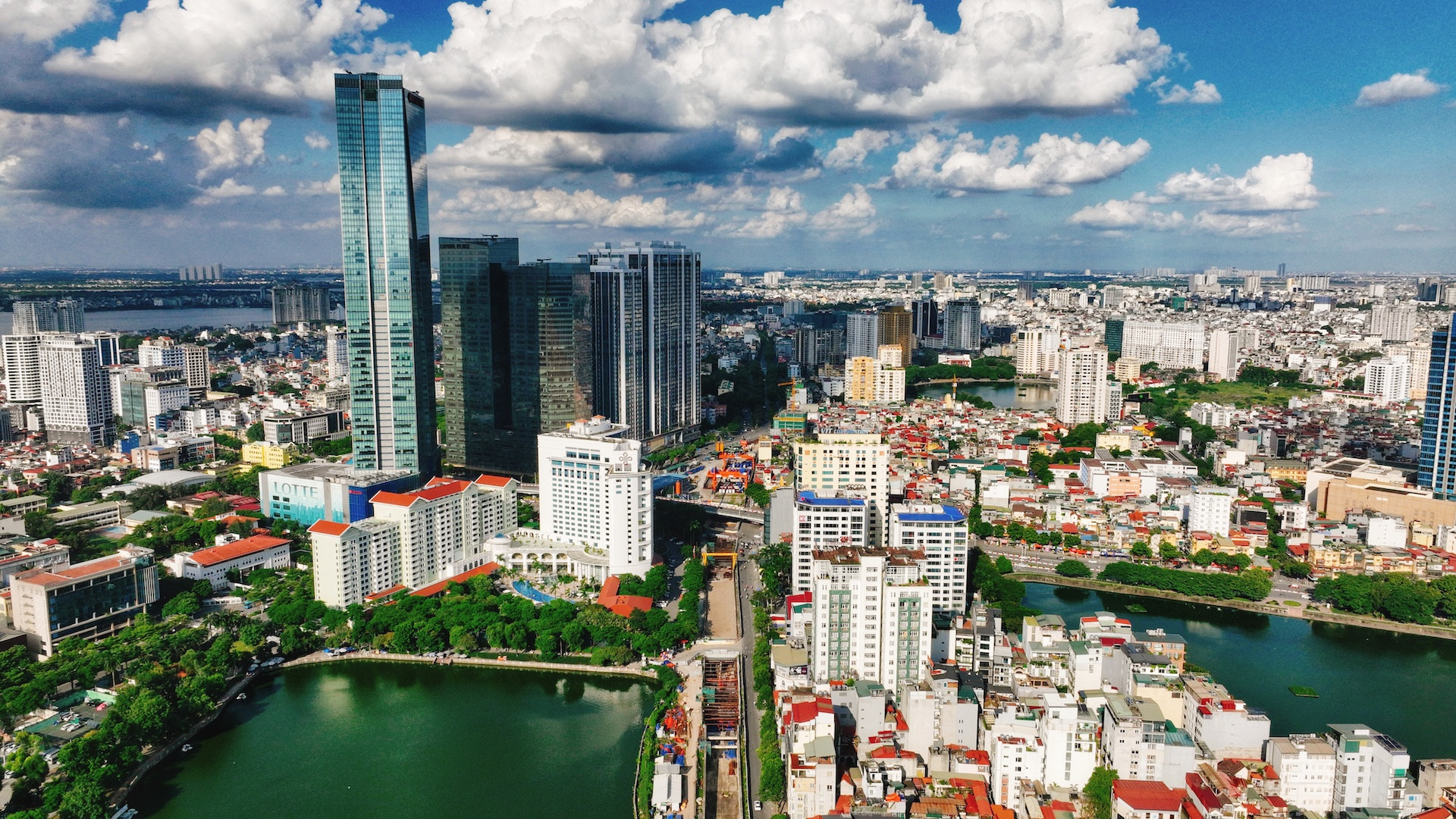
Each time he opens the price list of a new apartment project, the first feeling is no longer “can I afford it”, but rather that prices have once again risen beyond his reach. Many urban workers now share the same feeling: salaries keep rising, yet still cannot catch up with apartment prices.
The man’s story was included in the World Bank’s Vietnam Economic Update – May 2026 report. The institution added data points showing that capital flows in the economy are currently moving very strongly into real estate.
According to the report, real estate credit in 2025 surged by 42 percent, nearly double the entire banking system’s credit growth rate of 19 percent. The sector now accounts for about 25.5 percent of total outstanding credit.
That means that out of every four dong of credit in the economy, more than one dong flew into real estate.
Notably, roughly half of this real estate credit was granted to property developers. Meanwhile, credit for industry and agriculture only grew by 12.1 percent and 9.1 percent, respectively.
It is evident that real estate is sucking capital far more aggressively than the manufacturing sector.
The World Bank also noted that the current credit allocation is structurally inefficient, as banks prioritize low-productivity segments backed by collateral instead of sectors capable of generating sustainable growth and employment. This is the crucial point for discussion, because what matters is not how much credit expands, but where the money flows to.
When money flows into land rather than factories, asset prices will almost certainly outpace workers' income, a reality currently mirrored vividly in the housing market.
The World Bank said housing and land prices in some areas have exceeded 30 times annual household income, while international affordability standards are typically around 3–8 times income.
This makes it increasingly difficult for first-time buyers to enter the market. Rent and mortgage repayment burdens are also consuming a growing share of the remaining disposable income of low- and middle-income households.
Credit is growing very rapidly, liquidity in the economy is abundant, yet home ownership feels further out of reach for many people. Asset prices are rising faster than the income-generating capacity of most workers in the economy.
However, capital flows into real estate are only part of a much larger story.
According to the World Bank, Vietnam’s credit-to-GDP ratio has now reached around 145 percent. The figure itself is already very high, but the bigger issue is that despite the large amount of money in the economy, capital is still not flowing strongly into production and consumption.
While credit continues growing rapidly, the economy’s money circulation velocity has fallen to around 0.6 in 2025, the lowest level in a decade.
The World Bank said liquidity is now circulating mainly within the financial sector instead of creating new momentum for the real economy.
In other words, money in the economy is not actually scarce. The problem is that capital flows are increasingly tilting toward asset markets.
As housing and gold prices continue to rise, money has also started leaving banks for other assets.
The World Bank reported that the share of household deposits in the banking system fell from 48 percent in 2024 to 44 percent in 2025, as people shifted money into real estate, gold, and USD in search of higher returns.
That shift has forced banks to compete more aggressively to attract deposits, pushing 6-12 month deposit interest rates to 6–8 percent in March 2026.
More notably, this trend occurred even without increases in policy rates, showing that actual market interest rates have come under much stronger upward pressure than policy signals would suggest.
Liquidity tensions have also been reflected in interbank interest rates at times exceeding policy rates, indicating that monetary policy in practice has become tighter.
To reduce liquidity pressure, the State Bank of Vietnam had to significantly expand open market operations and inject about $700 million through OMO operations during March and April 2026.
These moves suggest that regulators have become more cautious about capital increasingly tilting toward real estate.
Even so, the World Bank warned that the banking system’s capital adequacy ratio currently stands at only around 12.1 percent, lower than in many ASEAN countries.
Lan Anh
.svg)
