 Vietnamnet.vn

 Podcast



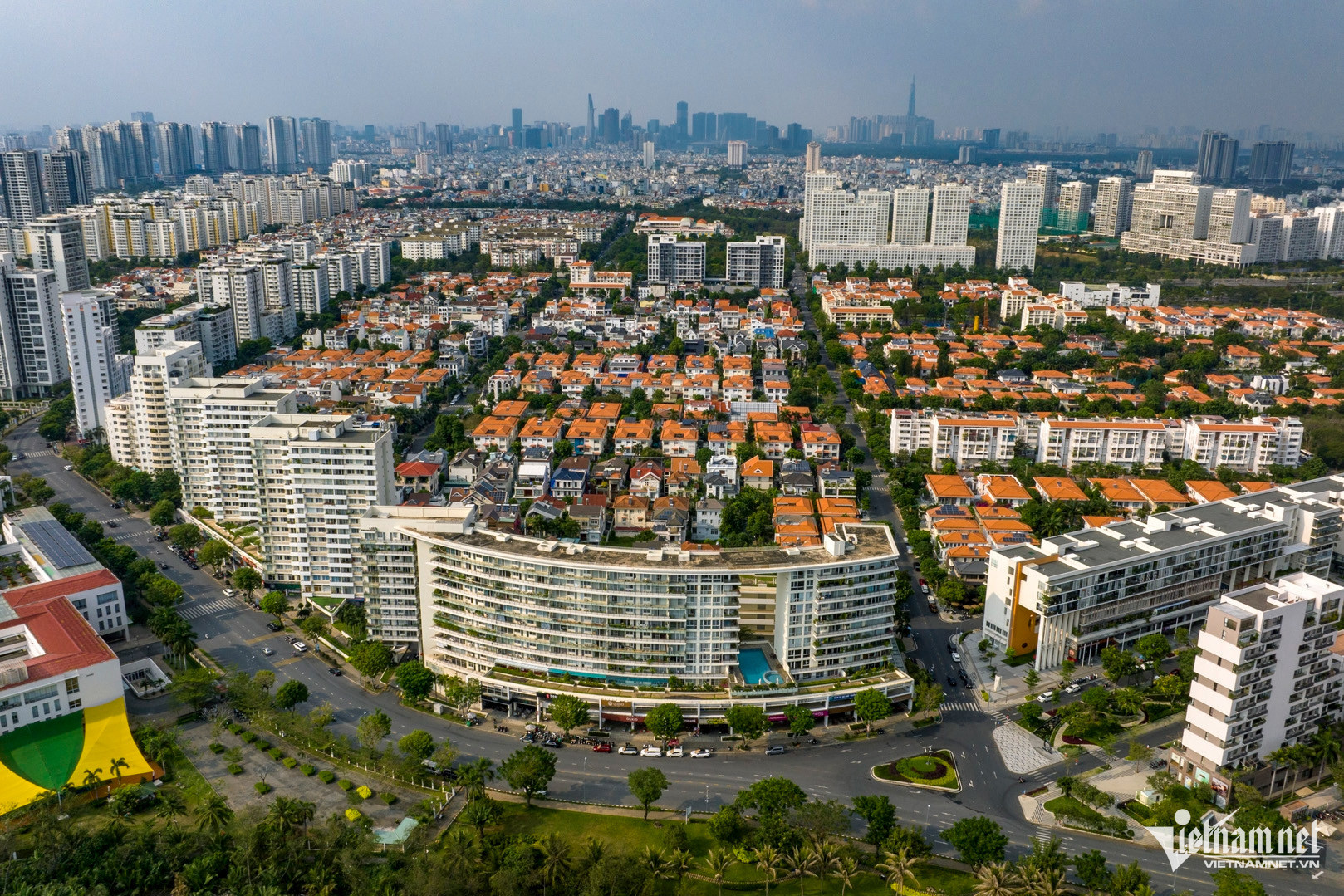
“We can be no longer be competitive. Land costs, which account for about 30 percent of the cost of low-rise urban real estate, have skyrocketed since late 2024, 10 times higher than in 2023 in some places. Housing prices remain exorbitantly high, especially in Hanoi and HCM City - three to five times higher than in 2022. The key issue now is controlling land prices, and if not, Vietnamese goods will lose competitiveness, businesses will be exhausted, and people will lose hope of owning a home,” he said.
The lament was not unusual. Over the past year, state budgets have been recording unprecedented revenue, while many businesses and citizens have become depleted.
Who benefits from record land revenue?
The 2024 Land Law, effective since early last year, was expected to abolish the old land price framework and introduce a “market-aligned” price table.
The new price list has been the basis for calculating land-use fees, land rent, taxes, and fees; it also addresses other costs such as compensation for site clearance, land recovery, and the starting price during auctions.
The result is that the state budget has been "overfed" with land revenue. In the first half of this year alone, land revenue reached VND198,300 billion, an increase of 105 percent over the same period last year.
Hanoi led with a staggering figure: VND86,751 billion, nearly 6 times higher than the same period last year, exceeding the revenue estimate for the whole year of 2025. Of this, land use fees accounted for 75 percent, an increase of more than 600 percent.
HCM City collected VND65,319 billion, reaching 90 percent of the year's target after only six months. For the nine projects with approved land prices alone, the city is expected to collect an additional VND52,599 billion.
The state reaps massive budgets, but at what cost? Businesses are buckling under soaring land costs, prices are pushed too high, citizens can’t afford homes, and investors are retreating in frustration.
New law, old bottlenecks
Over a year after its enforcement, the 2024 Land Law still has persistent procedural and regulatory bottlenecks.
Reports from localities to the central government indicate that land clearance remains the biggest obstacle to public investment. Complex land recovery procedures, spanning multiple agencies, and opaque compensation pricing lead to public dissent.
Many localities lack resettlement funds, resulting in prolonged disputes.
Nationwide, 2,887 projects have been “frozen,” with total investment of $235 billion and 347,000 hectares, an enormous resource stalled due to legal entanglements.
A public investment official noted that land procedures remain heavily bureaucratic. Converting agricultural or forest land to commercial land is still arduous. “Even major national projects have been halted because land clearance deadlines can’t be met.”
Not only is public investment stalled, but private real estate is also suffering. The Ministry of Construction’s warning that applying market-aligned land prices would sharply increase investment costs has become reality. Housing prices have skyrocketed, buyers are giving up, and real estate firms are struggling, with many projects delayed or abandoned.
3 bottlenecks to loosen
The basic causes lie in long-standing institutional flaws. First, land ownership regulations remain vague. The land-use rights of citizens and businesses lack firm guarantees: establishing ownership is difficult, and transfers are costly.
Second, the primary land-use rights market is still controlled by administrative measures. Land allocation and leasing rely heavily on bureaucratic orders rather than market principles.
Third, the secondary market is distorted and fragmented. Transactions primarily serve speculation rather than production, while land consolidation is nearly impossible. Agricultural land remains fragmented and mostly unchanged due to inefficient transfer mechanisms.
An economist observed that a market-based land economy barely exists. Land prices aren’t determined by supply-demand dynamics or resource efficiency. Land has become a policy tool, favoring certain investors, while most private businesses face prices too high to compete.
The State has clearly stated that land is a special national resource, a critical driver of socioeconomic development, and must be managed transparently to ensure the collective benefit of the people.
But to make this vision a reality, simply adjusting the land price list is not enough. Real institutional reform is needed. Land must be treated as a production input. Only when land truly becomes a resource for investment and production can long-term growth be sustainable.
Nguyen Le
.svg)
