 Vietnamnet.vn

 Podcast



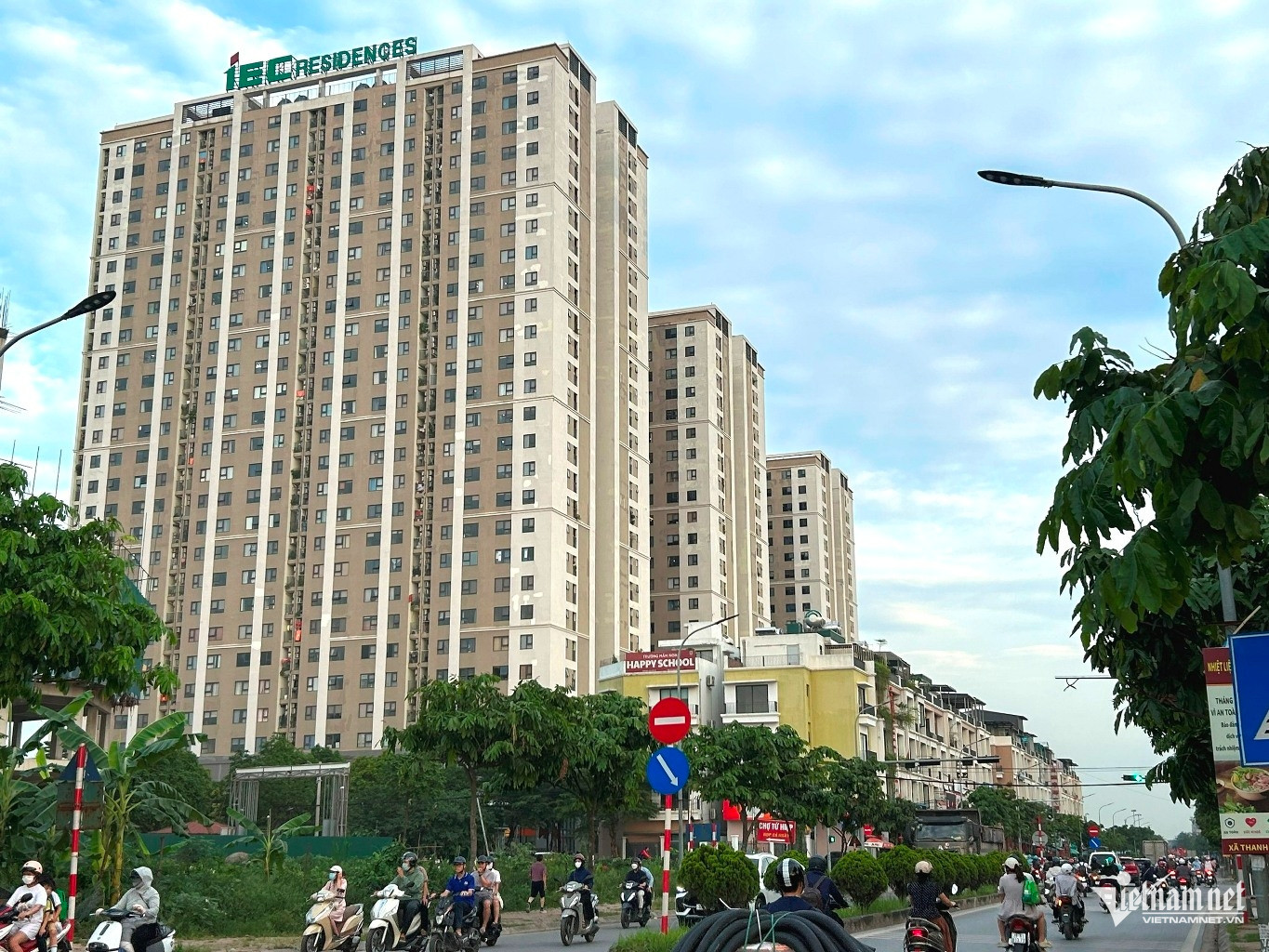
Building a rental apartment complex requires enormous upfront investment, while rental income comes in gradually and payback periods are long.
Pham Duc Toan, chair and CEO of EZ Property Investment and Development JSC (EZ Property), noted that the current rental housing market is predominantly supplied by households and individuals in the form of mini-apartments or boarding houses within existing residential areas.
This segment satisfies the demands of students, trainees, and middle-to-low-income employees with monthly rents starting from a few million VND.
Real estate firms are uninterested in rental housing due to low investment efficiency. According to Toan, developing a rental building requires an immense upfront capital investment, but the returning cash flow is small and fragmented, which drastically prolongs the capital payback period. On top of that, developers must maintain a long-term operational framework for maintenance, management, and leasing operations.
“If you build to sell, you recover capital quickly. But with rental housing, you have to maintain an entire operating system, so businesses do not find it attractive,” he said.
Nevertheless, Toan believes the government’s policy of developing rental housing by 2030 is the right direction, suitable for people who cannot yet afford to buy homes, including social housing.
He said strong government involvement through special policies is essential for this segment to develop.
Financing is biggest barrier
Nguyen Anh Que, chair of G6 Group, noted that rental housing is common in many developed countries, especially in Europe, but remains underdeveloped in Vietnam.
From 1954 to around 2000, Vietnam had a common rental housing model in the form of collective housing blocks and old apartment complexes built by the state or state-owned enterprises for government staff and workers.
However, after 2003, this model nearly disappeared, replaced by condotels, officetels, and privately built rental rooms.
According to Que, the biggest reason businesses avoid rental housing is financial feasibility. Most Vietnamese real estate companies rely heavily on bank loans with interest rates ranging from 8–11 percent, and sometimes as high as 13–14 percent, while rental yields are only around 3–7 percent annually.
In contrast, households developing rental rooms have advantages in the market because they already own land and rely less on borrowed capital. Even if rental profits are modest, they still accept the model because it generates stable cash flow while preserving an asset that appreciates over time.
Que also argued that the Vietnamese preference for homeownership is another major obstacle to the rental housing market. He said people still prioritize buying homes over renting, even when rental properties offer better living conditions.
Special incentives
Toan proposed three approaches to developing rental housing:
First, the government should support businesses through incentives such as providing cleared land, low-interest loans, or even interest-free financing. Authorities should also establish suitable rent-pricing mechanisms so businesses can recover capital and earn profits.
Second, the government could directly invest in rental housing through state-owned enterprises or national housing funds, treating it as a social and political mission rather than a profit-driven activity.
Third, he believes public-private partnership (PPP) or BT (build-transfer) models are the most feasible solutions. Under this approach, the government would handle land clearance and provide clean land to developers for rental housing projects, then compensate developers with other land parcels for commercial market-rate projects to offset costs.
He stressed the need for specialized credit policies for rental housing, including very low or 0 percent interest rates over long periods, enabling developers to use rental income to repay bank loans.
Additionally, he suggested that the National Assembly should issue a dedicated resolution on rental housing, along with detailed implementation decrees and separate preferential credit packages similar to previous support programs.
Regarding taxes, he argued that corporate income tax generated from rental housing activities should be reduced or exempted for a certain period to support investors.
“Where there is grain, pigeons will gather there,” Toan said, implying that businesses will only participate when they see real incentives in credit, land, and tax policies.
Que also thinks that if the government wants to encourage private-sector participation, it must provide extraordinary incentives such as zero percent interest loans, land-use fee exemptions, ready-to-build land, pre-approved planning, and “green-lane” administrative procedures.
Even under ideal conditions, with land costs fully waived and interest rates at zero, businesses would still need around 10 years to recover investment capital for a rental housing project.
Nguyen Le
.svg)
