 Vietnamnet.vn

 Podcast



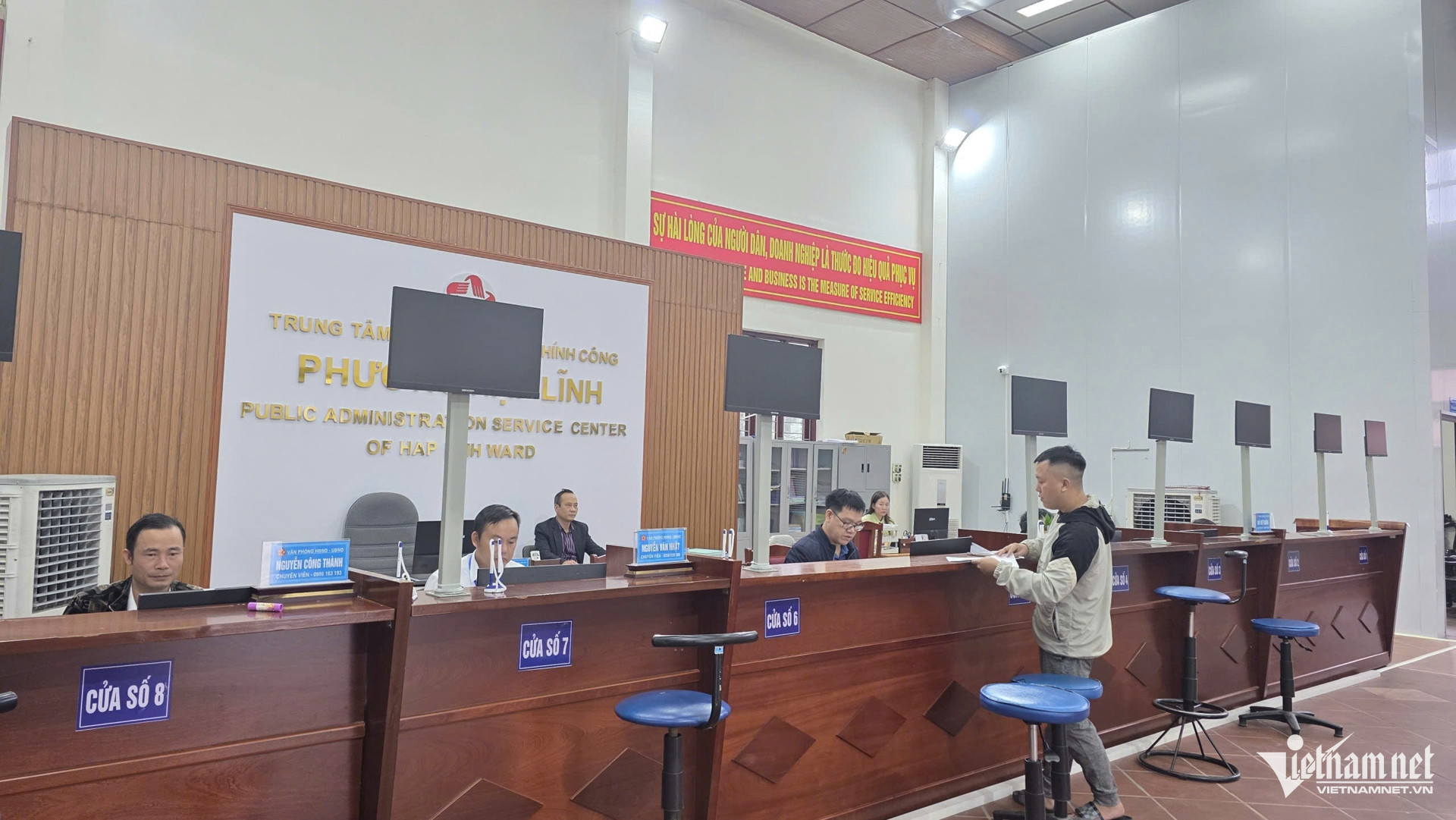
While the Institute of Natural Resources and Environment Economics in HCMC has recommended that provincial-level land registration offices should be the sole focal point for receiving and processing land procedures under the new two-tier local government model, local authorities have shared various views.
Shorter travel time
Nguyen Dinh Manh, an officer at the Economic Division of Hap Linh Ward, Bac Ninh, told VietNamNet that after the two-tier local government model was implemented, the issuance of land-use right certificates (LURCs) became more convenient for residents.
Previously, Manh worked for the Department of Agriculture and Environment. After July 1, he was reassigned to Hap Linh Ward. Although his professional duties remain largely similar, the new model shortens procedures and increases proactivity in handling administrative tasks for residents.
“Delegating first-time LURC issuance to local authorities reduces travel time for residents and brings them closer to management agencies. Communication and verification of land information are now carried out faster and more directly,” he said.
He added that the ward People’s Committee is currently responsible for two main groups of land procedures: first-time issuance of land use right certificates and correction of errors on existing certificates.
From July 1 to November 4, the ward issued 54 certificates and corrected 24 cases with errors. All applications were processed in accordance with the required procedures and timelines.
“Only five cases are still being processed, and none are overdue,” Manh said.
Regarding procedures for land-use conversion, he explained that there are two main categories: conversions by households and individuals (such as from perennial tree land to residential land), which fall under the authority of the ward People’s Committee; and conversions by project investors for commercial or production purposes, which fall under the local land registration office branch.
Under the Land Law implementation guidelines, these procedures typically take 20 to 30 days depending on the type.
“Strong decentralization under the two-tier model has made grassroots land administration faster and more effective,” Manh said.
In Yen Trung Commune, Pham Duc Dinh, Head of the Economic Division, said that for first-time LURC issuance, residents must provide documents proving clear land origin, compliance with planning, stable use, no existing disputes, and completion of financial obligations to the State.
Once these conditions are met, the commune will consider issuing the certificate.
“We have prepared photocopied application templates and detailed instructions so residents can easily complete their paperwork. If they face difficulties, they can visit the Economic Division or Yen Trung public service center for support,” Dinh said.
The office receives a large volume of applications, many of which involve complex land origins or inheritance issues.
“In many cases, the original landholder has passed away, requiring additional time for inheritance verification. We must guide each case carefully to ensure residents complete their documents,” he said.
Two specialized officers are assigned to assist residents daily. He emphasized that the staff handling these tasks are professionally trained in land management and work closely with the Yen Trung People’s Committee to ensure timely progress.
Greater responsibility, stronger land-management capacity
Many commune and ward officers expressed support for relocating land registration office branches to the commune level to align with the two-tier local government model.
Manh believes that stronger decentralization, i.e if higher-level authorities decide to move land registration offices to the commune level, will allow land procedures to be handled “right on the spot,” avoiding the multi-layered transfers as previously required.
“Residents only need to visit the commune or ward office to complete most procedures. Travel distances and time will be greatly reduced,” he said.
In Yen Trung commune, Dinh believes this model enables local officers to better grasp land conditions in their area, resulting in faster and more accurate processing.
“We work directly with residents and understand the origins of each land plot, so placing the land registration unit at the commune level will make verification and comparison much smoother. This is an appropriate step that aligns with streamlined administration and improved public service delivery,” he said.
Many grassroots officers agree that when registration, issuance and certification of land-use changes are handled at the commune level, local authorities naturally become more responsible and capable in land-management tasks.
Thu Hang
.svg)
