 Vietnamnet.vn

 Podcast



Vietnam is entering a period in which it is pursuing double-digit GDP growth, bringing with it enormous investment needs for infrastructure, manufacturing, industry, urban development and the energy transition.
GDP grew 8.18% in the first half of 2026. To achieve the full-year growth target of 10%, GDP would need to expand by around 11.5-12% in the second half, based on estimates using the size of GDP in each period. That puts considerable pressure on investment, consumption and exports alike.
One of the biggest challenges is securing long-term capital. Outstanding credit across the economy reached nearly $778.6 billion as of July 31, 2026, up 8.98% from the end of 2025. Meanwhile, credit grew by around 19.2% in 2025, significantly faster than the 14.1% growth in deposits. The figures suggest that demand for capital is rising faster than the banking system’s ability to expand its deposit base.
The issue is not necessarily that Vietnam “lacks money,” but rather how to mobilize medium- and long-term funding on a scale large enough to meet its investment needs. Credit-to-GDP is already high, at around 150%, meaning that continued heavy reliance on banks will leave increasingly limited room for further expansion.
The second challenge is electricity. The revised Power Development Plan VIII aims to ensure sufficient electricity for an economy projected to grow by an average of around 10% a year between 2026 and 2030. Commercial electricity output is targeted at 500.4-557.8 billion kWh by 2030.
This is a formidable task, with electricity demand forecast to rise by 10-12% annually and potentially even faster under stronger growth scenarios. Vietnam not only needs to develop additional generation capacity but must also invest heavily in transmission grids, storage and power system operations. The current plan targets 10,000-16,300 MW of battery storage capacity by 2030.
Put simply, if Vietnam wants GDP growth to accelerate, it must have both “enough money” to invest and “enough power” to keep the economy running.
Broadening capital channels, accelerating energy investment
To address the funding challenge, Vietnam is seeking to expand multiple financing channels rather than relying solely on bank credit.
Within the banking system, a strong wave of capital increases is already under way. SHB has been approved to raise its charter capital to about $2.05 billion; ACB has increased its capital to more than $2.22 billion; while OCB plans to issue nearly 399.5 million shares to lift its capital to about $1.17 billion. MB is also increasing its capital, while VPBank is targeting charter capital of more than $4.07 billion, including a plan for a private placement to foreign investors.
The stock market is also expected to become an increasingly important source of capital. FTSE Russell has confirmed that Vietnam will be upgraded from frontier-market to secondary emerging-market status from September 21, 2026. Vietnam will be phased into the FTSE Global Equity Index Series in four stages between September 2026 and September 2027.
The upgrade is expected to create further growth opportunities for securities companies such as SSI, VCI, HCM, MBS and VND if market liquidity, margin lending, IPO activity and capital raising improve.
On the energy front, the Ministry of Industry and Trade estimates that total investment needed for energy development between 2026 and 2030 will amount to around $187.9-211 billion.
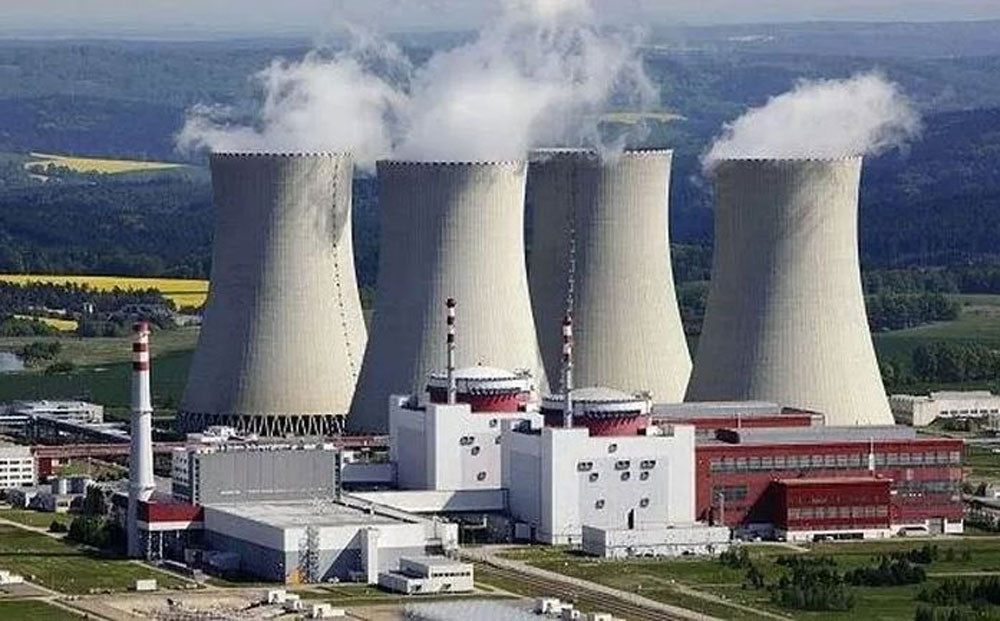
That capital will flow into a wide range of areas, including LNG-fired power, thermal power, hydropower, wind and solar energy, nuclear power, transmission grids and energy storage. Vietnam is also aiming to bring the Ninh Thuan 1 and 2 nuclear power plants into operation between 2030 and 2035, with combined capacity of 4,000-6,400 MW.
The scale of investment is already substantial. EVN alone disbursed about $4.82 billion for construction investment in 2025, up 14.7% from the previous year.
From here, a new investment cycle could take shape, creating opportunities for businesses across multiple sectors.
In banking, MBB, TCB, VCB, ACB, SHB, VPB and OCB are among the well-capitalized institutions that could benefit if credit demand continues to rise.
Among securities companies, SSI, VCI, HCM, MBS and VND stand out for their potential to benefit from the development of Vietnam’s capital market.
In energy and power generation, POW, NT2, REE, GEG and QTP are among the companies that could benefit from rising electricity demand. In the gas and LNG segment, GAS, PVS and PVD could gain from the expansion of the gas-to-power value chain and large-scale energy projects.
Perhaps even more notable are companies involved in construction, infrastructure and electrical equipment. PC1 has strengths in electrical construction, transmission and renewable energy; GEX has an ecosystem spanning electrical equipment and infrastructure; while TV2 has expertise in consulting and engineering for power projects. CII and HHV could also benefit from the broader wave of infrastructure investment.
Among private conglomerates, Vingroup (VIC) is expanding aggressively into green energy, while T&T Group has set ambitious targets for developing large-scale power capacity.
Overall, “enough capital” and “enough power” could become two of Vietnam’s defining investment stories for years to come. If the economy is to grow faster, capital will need to come from a wider range of channels, including banks, equities, bonds and private investment. At the same time, substantial resources will have to be directed toward new power generation, transmission grids and energy infrastructure. The opportunities therefore extend beyond electricity producers themselves to businesses providing goods and services throughout this investment cycle.
Manh Ha
.svg)
