 Vietnamnet.vn

 Podcast



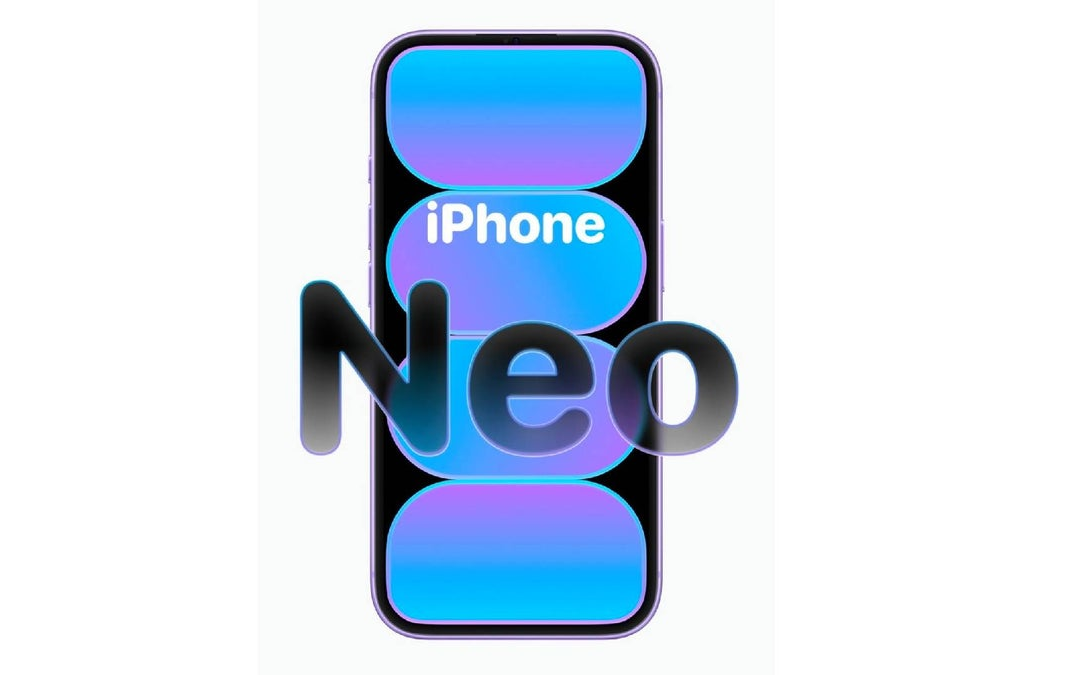
The MacBook Neo has been an excellent strategic move for Apple, and the company deserves credit for the success the product has achieved.
That does not mean, however, that Apple can simply apply the same formula to other product categories without careful consideration.
And many calls for an “iPhone Neo” appear to overlook the real reasons behind the MacBook Neo’s success.
What makes the MacBook Neo so attractive?
It is a solid laptop at a highly competitive price point, featuring a youthful design and carefully balanced hardware.
Apple accepted compromises in areas many users could overlook, such as the trackpad or multi-core performance, while maintaining quality in core elements like appearance, display and everyday usability.
That may sound simple, but in reality it is extremely difficult.
Market context is the first factor worth considering.
Before the MacBook Neo arrived, Apple’s cheapest Mac was the $599 Mac mini, which did not include a display or keyboard.
Anyone wanting a Mac laptop had to spend at least $999, a figure that even rose to $1,099 shortly before the Neo launched.
As a result, when Apple introduced a MacBook priced lower than analysts expected, the product was immediately seen as an unusually attractive deal.
The secret behind MacBook Neo’s surprisingly low price
One major reason Apple managed to lower the price of the MacBook Neo was its use of defective A18 Pro chips with disabled GPU cores.
These chips were originally produced for the iPhone 16 Pro lineup but failed to meet full specifications.
Instead of discarding them, Apple repurposed the chips for the MacBook Neo.
In essence, these components were almost “free,” similar to reusing leftover water from handwashing to flush a toilet - an efficient cost-saving solution.
But the problem is this: if the MacBook Neo becomes too successful, the supply of defective chips will no longer be enough to meet demand.
Apple would then be forced to use fully functional chips and disable portions through software in order to maintain consistency.
That would significantly increase manufacturing costs.
Ironically, although the MacBook Neo was designed for the mass market, it is not particularly easy to scale.
The more successful the product becomes, the less efficient its underlying economic model grows.
At the same time, component prices are also rising sharply because of the global AI boom, which continues to drive up memory and semiconductor costs.
What would an iPhone Neo actually look like?
Some industry insiders and technology writers, including 9to5Mac, believe Apple should release a low-cost iPhone Neo next year, either replacing or accompanying the iPhone 18e lineup.
Under that scenario, the iPhone Neo would sit below the $599 “e” segment and could cost as little as $399 - a price once associated with the original iPhone SE.
At first glance, the idea sounds attractive.
The issue, however, is that Apple has already tried something similar before.
Still, the iPhone Neo would not resemble the iPhone SE.
The SE lineup focused on placing newer hardware inside older designs, while the “Neo” philosophy emphasizes modern aesthetics while sacrificing internal specifications.
That means a hypothetical iPhone Neo could feature an attractive modern design similar to current iPhones while relying on older hardware such as an A17 chip, an LCD display, a 12MP camera and several other outdated specifications.
Would consumers like it?
Possibly.
But they also might not.
Unlike the MacBook Neo, the concept of a $399 iPhone no longer feels especially surprising.
Consumers could still buy an iPhone for around $429 as recently as last year.
Because of that, a $399 price tag may not generate the same psychological excitement that MacBook Neo created in the Mac laptop market.
Color and design also present a challenge.
MacBook Neo stood out because of youthful color options like blush, citrus and indigo, bringing freshness to a MacBook lineup traditionally known for conservative styling.
But Apple has already offered colorful iPhones for years.
The iPhone 17 lineup introduced shades like sage and lavender, while the iPhone 16 came in teal and pink.
In other words, iPhone users are not lacking colorful options the way Mac users once were.
Why it may be impossible to create a truly compelling iPhone Neo
The biggest challenge lies in component costs.
The smartphone market today is far more competitive than the laptop market.
Manufacturing costs continue to rise, while lower-cost smartphones tend to sell in significantly larger volumes.
That means Apple’s supply of reusable “defective” chips would quickly run out.
In reality, Apple is already using these chips across several devices, including the MacBook Neo, iPad mini and iPhone 17e.
If the company expands further with a low-cost iPhone Neo, much of the cost-saving advantage could disappear entirely.
Consumers would undoubtedly love the idea of a modern $399 iPhone.
But whether they would actually love the final product Apple would need to build in order to preserve its profit margins is a very different question.
Late Apple CEO Steve Jobs once said innovation means saying “no” to thousands of ideas in order to focus on the few that truly matter.
And in this case, the iPhone Neo may be one of those tempting ideas Apple would be wise to reject.
Hai Phong
.svg)
