 Vietnamnet.vn

 Podcast



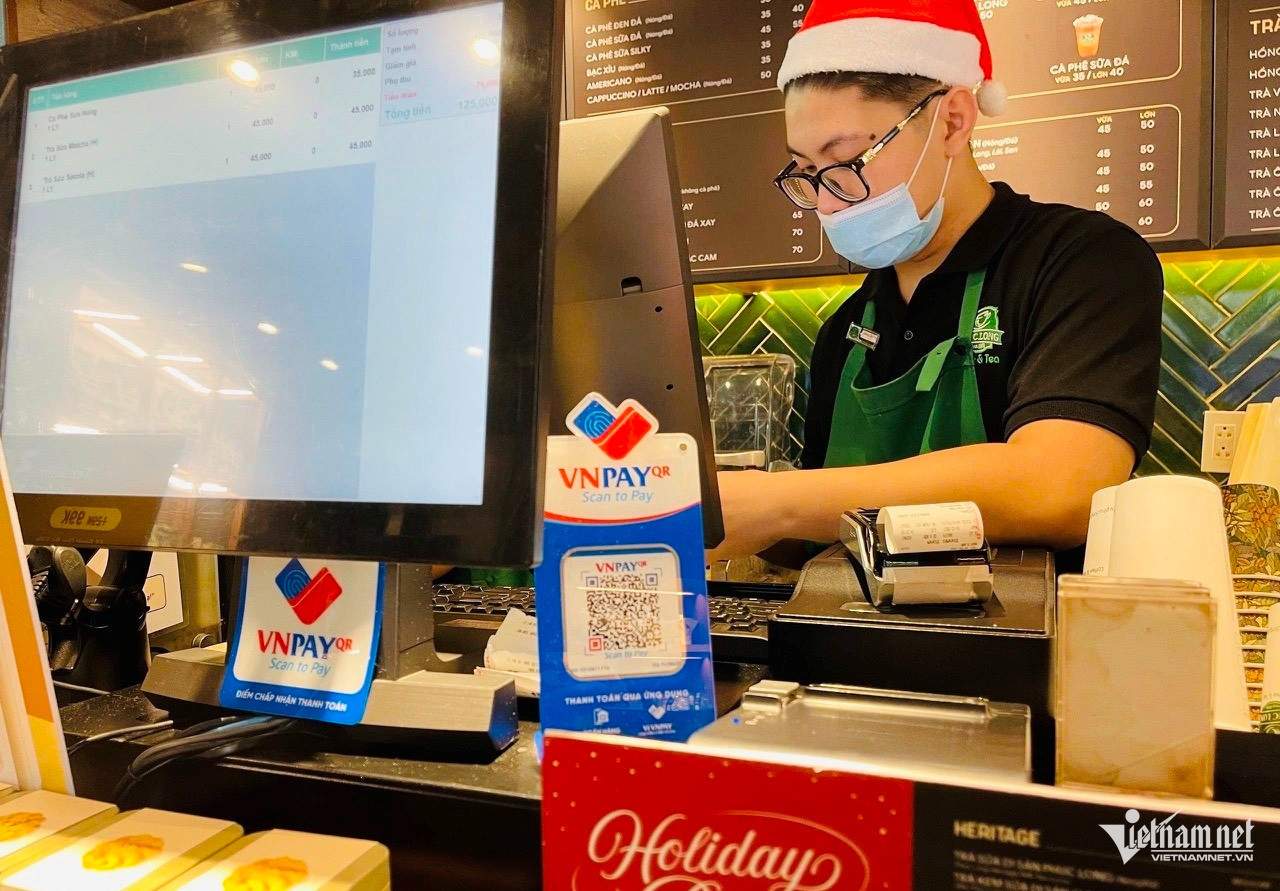
In the draft decree regarding tax declaration, calculation, and electronic invoices for household and individual businesses, the Ministry of Finance proposed that household businesses and individual practitioners must notify tax authorities of all bank accounts related to their production and business activities.
Le Van Tuan, Director of Keytas Tax Accounting, said that eliminating the presumptive tax in favor of revenue-based declarations makes bank account monitoring essential.
Similar to enterprises, companies in the past were often required to notify tax authorities or the Department of Planning and Investment, where they registered their business, of bank accounts used for business transactions. Later, when enterprises opened bank accounts, account information was linked to tax identification numbers, so separate notification was no longer required.
Tax authorities do not know the specific transactions within an enterprise’s bank account. Only when there are signs of tax evasion or tax arrears can tax authorities coordinate with banks to freeze accounts, or during tax inspections request bank statements to cross-check tax obligations.
“Household businesses, like enterprises, incur tax obligations from their operations. Therefore, requiring business households to notify tax authorities of all bank accounts related to production and business is normal. This helps tax authorities clearly understand how many accounts are used for business activities.
“Basically, tax authorities are only concerned with business cash flows to supervise tax obligations. As for personal cash flows of business households, tax authorities are not concerned and have no right to access them, unless there are signs of tax evasion,” Tuan said.
Lawyer Truong Thanh Duc, Director of Anvi Law Firm, also thinks that disclosing business accounts is mandatory and natural. "Business principles require declaring outputs, inputs, invoices, and accounting. Regardless of whether revenue is 10 million or 10 billion VND, the disclosure requirement is the same. Without account declaration, one should not conduct business.”
Separate business and personal accounts
Tuan advised household businesses to use dedicated accounts for business activities. He cautioned against using personal accounts to receive payments for goods or services and recommended limiting transfers between business and personal accounts.
"Mixing these can cause confusion and make it difficult to distinguish between revenue and personal expenses. Household businesses should operate like enterprises: all business-related income and expenditures should go through a dedicated business account," Tuan said.
According to Tuan, separating accounts makes it easier for business households during periodic tax inspections or when dissolving and closing business household licenses. When a business household closes its license, it must complete tax obligations, meaning there must be no outstanding tax debt. To do this, tax authorities often require bank statements for previous periods to verify tax obligations.
"Lack of transparency works against the business owner. If personal and business flows are mixed, there is a risk that tax authorities may assess personal funds as taxable income. After 3 to 5 years, it becomes very difficult to explain the nature of those transactions, leading to the risk of unfair tax assessments," Tuan warned.
At that point, the risk is that these funds may be wrongly assessed for tax obligations, even though in substance no tax obligation arose,” Tuan emphasized.
With only a few days remaining before the new tax mechanism takes effect, Le Thi Duyen Hai, Vice General Secretary of the Vietnam Tax Consultants' Association, highlighted seven key tasks for household businesses transitioning from the flat-rate (presumptive) tax system to the declaration-based method.
Step 1: Revenue review & business categorization
Businesses must review actual revenue from 2025 and project 2026 figures to determine their classification. Based on this, they should select the appropriate tax method, accounting regime, and software solutions for sales, accounting, and e-invoicing.
Step 2: Inventory stock-taking
For businesses with revenue under VND3 billion (taxed as a percentage of revenue), inventory levels do not directly determine the tax amount.
Step 3: E-invoice registration
Step 4: Accounting record preparation
Businesses expecting 2026 revenue of VND500 million or more must establish an accounting book system in compliance with current regulations.
Step 5: Updating registration information
Step 6: Owners must open or designate a separate bank account exclusively for business operations and notify tax authorities by early 2026.
Step 7: Perform tax filing using the appropriate forms based on the selected tax method and business sector, utilizing the eTax Mobile application for convenience.
Nguyen Le
.svg)
