 Vietnamnet.vn

 Podcast



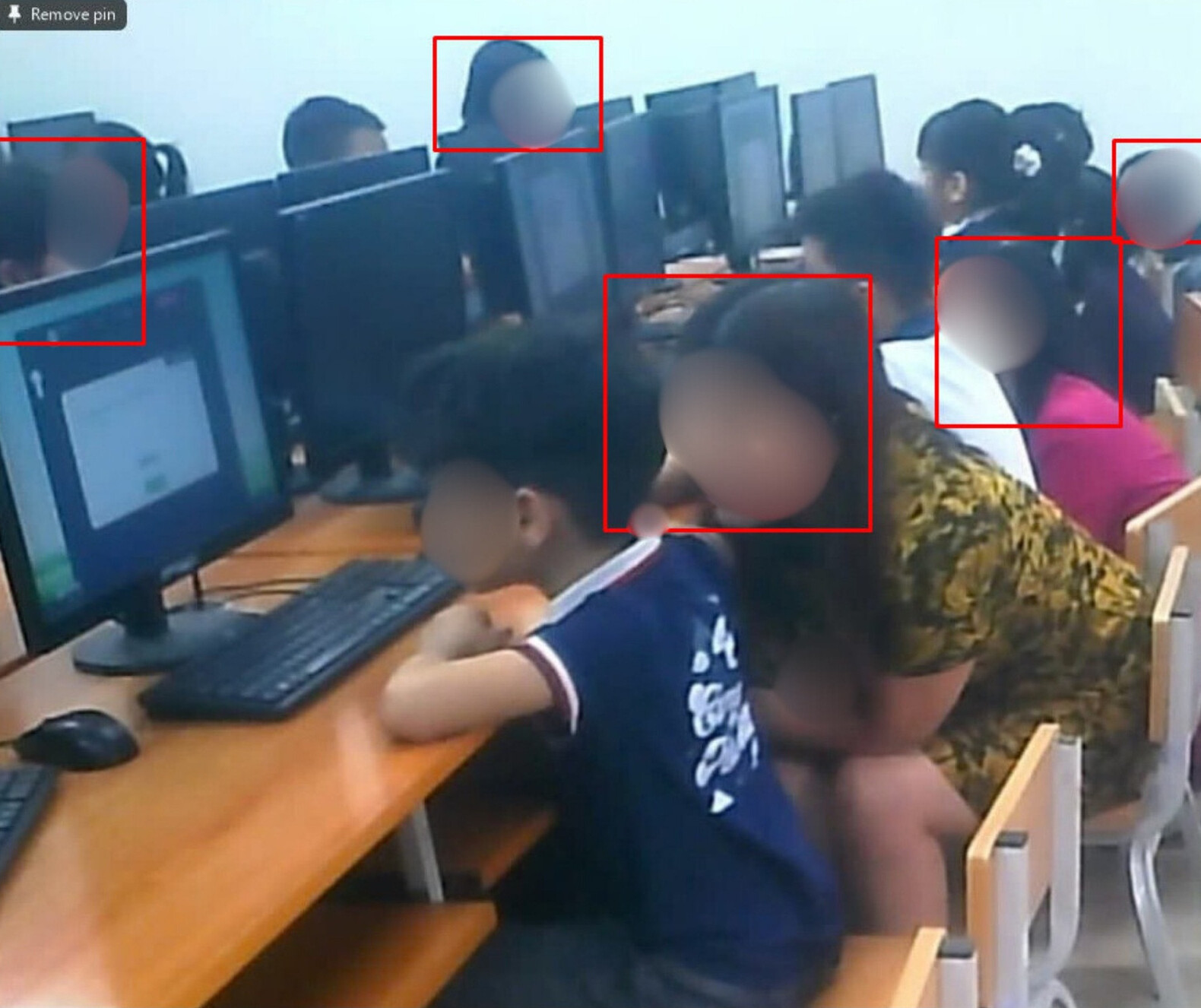
According to the VioEdu Arena organizers, in some exam rooms in Hanoi, online monitoring detected multiple cheating behaviors, such as deliberately placing cameras at incorrect angles to create “blind spots” for interference; photographing, copying, and illegally distributing exam questions and session codes; proctors entering exam areas to prompt answers and assist students, along with various other violations.
Proctors facilitating cheating
After these violations were exposed, many people expressed outrage as the proctors themselves were the ones committing and facilitating the cheating.
Dang Minh Tuan, a lecturer at the University of Education (Vietnam National University, Hanoi), said that the cheating, leading to the cancellation of many exam results, is very concerning. This is no longer a technical issue of an online exam, but a matter of adults’ attitudes toward honesty and the character development of children.
“When misconduct appears even in a competition for young students, it clearly reflects that ‘achievement disease’ is still lingering in the education environment. Some adults no longer see competitions as opportunities for students to challenge themselves, build resilience, and learn honesty, but rather as places to win prizes, achieve rankings, and produce results for reporting or to prove something. When educational goals are replaced by achievement goals, cheating easily arises, even in what should be a positive and gentle playground.
He added that the cancellation of exam results is not the primary concern.
"What is more frightening is that children witness adults teaching them how to bypass rules, receive dishonest help, and win through wrongful means,” he said.
“They will learn a dangerous lesson: that results are more important than the truth; that lying is acceptable if it brings a reward; and that ethics are negotiable. Once that seed is planted at a young age, the consequences will follow them long into their studies, careers, and social interactions," he concluded.
Education expert Hoang Ngoc Vinh commented this is a tragedy of integrity and a wake-up call about teacher ethics.
“Achievement disease and the pursuit of reputation have turned a voluntary playground into a place where teachers abandon professional integrity and directly engage in cheating. The consequences are significant, affecting the core moral values that schools aim to build,” Vinh said.
Polished but hollow results
According to Tuan, adults who provide hints or "back" children in a competition are actually robbing them of the opportunity to show their true abilities.
"A child only truly grows when they know their strengths, weaknesses, and where they need to improve. If adults intervene to create a beautiful but fake result, the child may feel temporary joy, but in the long run, they will lose genuine self-confidence because, deep down, they do not know if that achievement is truly theirs. That is a silent but profound injury," he explained.
While acknowledging the positive values of online competitions, such as wide accessibility for children in remote areas, low costs, and alignment with digital transformation, Tuan emphasized that their large scale demands transparency and strict supervision.
According to Tuan, after this incident, what is most needed is not only handling technical violations or tightening regulations.
“More importantly, we must reaffirm a core principle: education is not about creating impressive records at all costs, but about shaping honest individuals with self-respect who value genuine effort. If a competition helps students become more capable but makes them disregard honesty, it is no longer true education. Conversely, if a competition helps students understand that losing honestly is more valuable than winning through dishonesty, then it is truly meaningful,” he said.
Vinh added that management gaps and possible profiteering must be examined.
“It is not enough to simply cancel test results. Strict disciplinary measures must be imposed on violating proctors, and accountability must extend to leadership, as the cheating may be organized,” he said.
“In particular, authorities must investigate whether there was collusion or bribery behind these actions. Although this competition is not organized by the Ministry of Education and Training, it has still negatively affected the reputation of the education sector, and therefore must be handled seriously,” Vinh said.
Thanh Hung
.svg)
