 Vietnamnet.vn

 Podcast



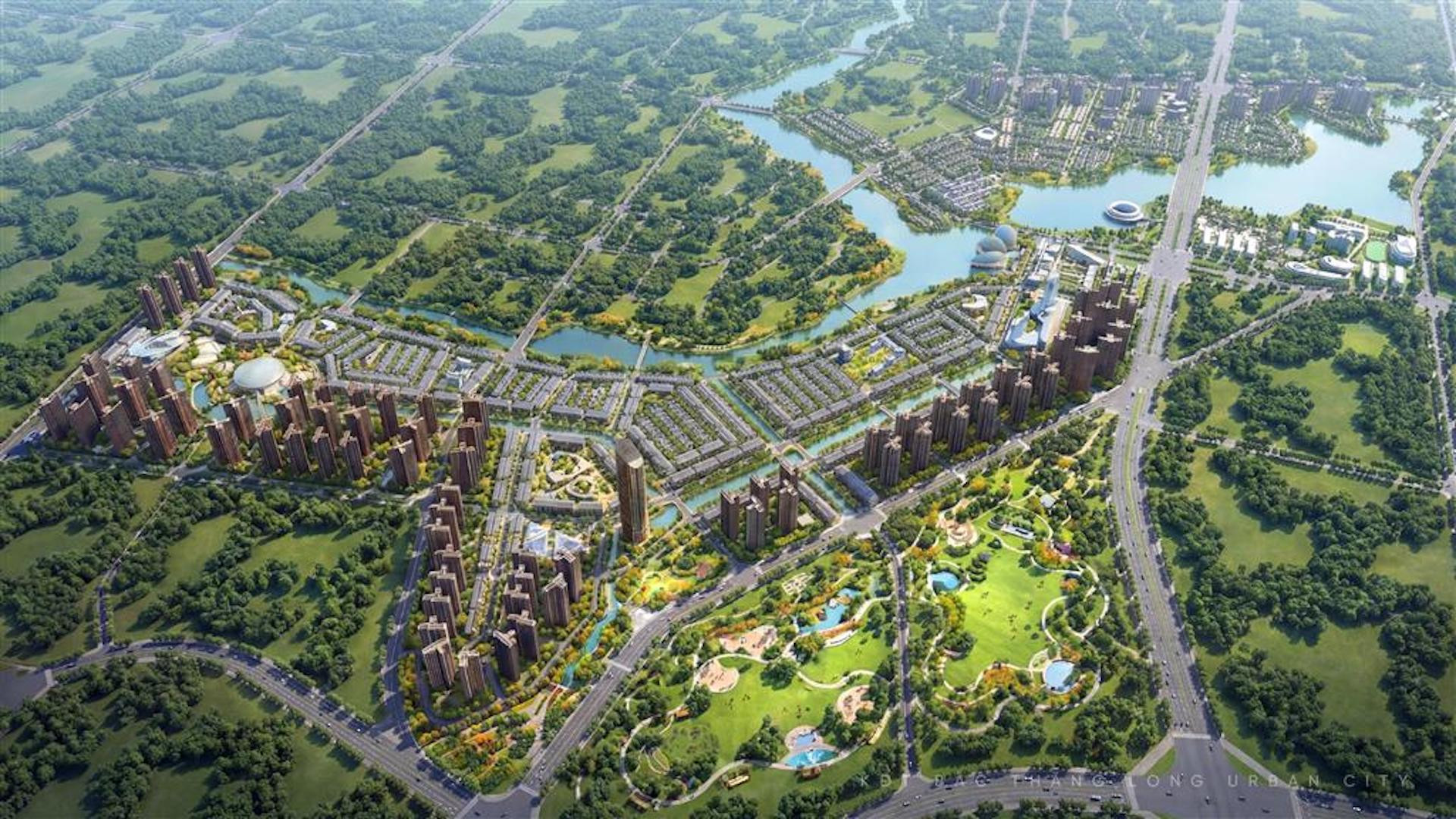
This is because the area combines strong development potential, abundant land reserves, expanding infrastructure, and a strategic location within the capital's northern growth pole.
The pilot project, recently approved by the Hanoi People's Committee, covers two communes of a combined 86.53 square kilometers and nearly 198,700 residents, with average annual income of about VND90 million per person. By 2030, the area is expected to accommodate around 690,000 residents and serve as a model for wider implementation across the city.
At the Hanoi People's Committee press briefing on July 10, Nguyen Tien Thiet, chief of the committee's Office, said the pilot follows directives from General Secretary and State President To Lam. Based on those directions, the Hanoi Party Committee issued Resolution 16 on July 8, 2026, on developing socialist communes and wards.
Thiet said the city has developed 54 criteria to guide implementation. The framework is intended not only for the pilot but also as a reference for other communes and wards to develop roadmaps suited to their local conditions.
During the initial phase, Hanoi chose Phuc Thinh and Thu Lam to assess the feasibility and effectiveness of the criteria before expanding the model. Selecting two adjacent communes will facilitate integrated spatial planning, infrastructure investment, and urban governance under the new model.
Under the Hanoi master plan with a 100-year vision, both communes are located in the capital's northern growth pole (Dong Anh - Me Linh - Soc Son), which is planned as a hub for international services, trade, logistics, and high-tech manufacturing linked to Noi Bai International Airport.
The area is urbanizing rapidly and enjoys direct connections to central Hanoi through major transport corridors, including Ring Road 3, National Highway 3, Vo Nguyen Giap Boulevard, and proximity to Nhat Tan Bridge, Thang Long Bridge, and Noi Bai International Airport.
According to the city government, the two communes were chosen because they "meet all required conditions, retain significant development potential, and are undergoing rapid urbanization toward a green, smart, and sustainable model."
Phuc Thinh area available for development
Phuc Thinh covers 42.69 square kilometers and has nearly 96,000 residents. In 2025, its average annual income exceeded VND90.8 million per person. The commune had eliminated poverty and had only about 57 near-poor households.
It currently has 53 non-budget investment projects covering about 1,144ha. In addition, around 459ha of land remains undeveloped, mainly around Van Tri Lagoon and north of Ring Road 3, where zoning plans designate green space, water bodies, and technical infrastructure.
According to the project, this land reserve will provide an important foundation for new urban areas, infrastructure, and public amenities.
The commune is home to 1,597 businesses and more than 2,200 household businesses. Major developments underway include Long Urban City, Tien Duong social housing projects, G18 Urban Area, and The Golf City near Van Tri Lagoon.
Phuc Thinh is now fully covered by five subdivision plans, providing a solid foundation for urban, commercial, service, and logistics development.
Several major national infrastructure projects also pass through the commune, including the Lao Cai-Hanoi-Hai Phong railway, Ring Road 3, and resettlement areas.
Thu Lam has 600ha awaiting investment
Thu Lam has a population of about 102,800, with average annual income reaching nearly VND87.9 million per person in 2025.
Its economy is dominated by industry and construction, accounting for 53 percent, followed by trade and services at 34.8 percent, while agriculture and fisheries make up 12.2 percent.
The commune still has more than 600ha of land without investment projects, mainly along the Ca Lo River and near the Bac Ninh border, where green space and waterfront development are planned.
The commune has completed all required planning documents, while Hanoi is preparing additional subdivision plans under the revised Capital Master Plan through 2045 with a vision to 2065.
Major projects underway include a multi-purpose urban area, Lien Ha New Urban Area, Dong Anh Industrial Park, five industrial clusters, social housing developments, Ring Road 3, the Hanoi-Thai Nguyen Expressway, the Hanoi-Lao Cai-Hai Phong high-speed railway, and transport links to Gia Binh Airport.
According to the city government, Thu Lam's advantages in land availability, population size, labor force, and transport infrastructure make it well positioned to attract investment and develop modern services, high-tech industry, and urban areas.
Thanh Hue
.svg)
