 Vietnamnet.vn

 Podcast


Sacred mascots symbolize protection and good fortune
With nearly a month remaining before the 2026 Ooc Om Boc Festival and Ngo Boat Racing Festival in Can Tho City, preparations are already underway at Khmer Buddhist pagodas across the region.
Racing teams are working to ensure their traditional boats are ready for the upcoming competition.
Newly built Ngo boats are being completed and decorated with colorful patterns and intricate designs reflecting the distinctive cultural identity of the Khmer people.
At pagodas that have not commissioned new boats, repairs to existing vessels are being carried out.
At Phu Giao Pagoda in My Xuyen Ward, Can Tho City, skilled craftsmen and racing team members are working together to restore a boat used during the previous racing season.
Over time, Ngo boats have undergone significant improvements in design and construction.
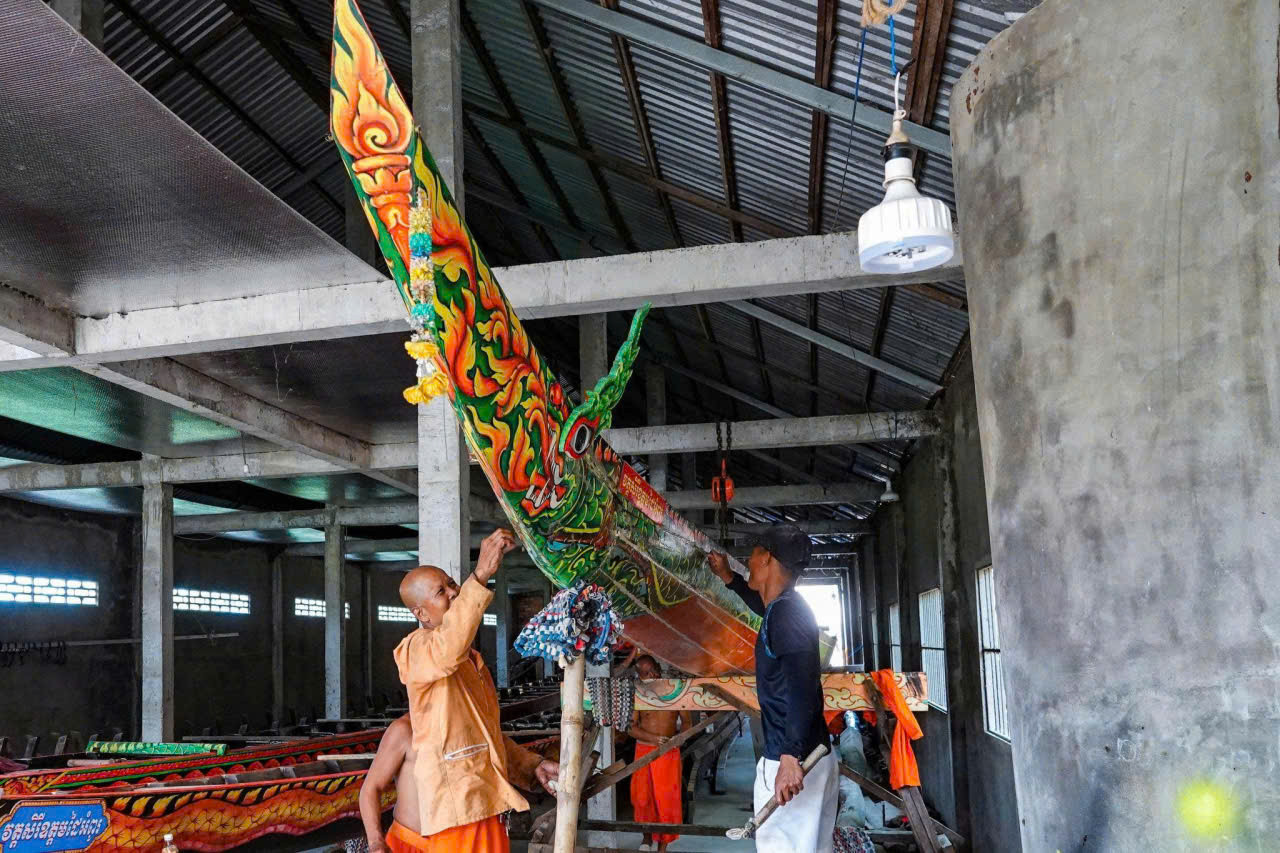
Modern vessels typically measure between 22 and 27 meters long, with gracefully curved bows and sterns resembling dragons in flight. Each can accommodate approximately 50-60 paddlers.
A distinctive feature is the cay can cau, a long wooden beam running along the boat's length that helps maintain balance and improve propulsion during racing.
For the Khmer community, however, a Ngo boat is far more than a racing vessel.
It is regarded as a sacred object, traditionally used only during festivals and honored through solemn ceremonies before being launched.
Each pagoda generally chooses a particular animal or mythical creature as its symbolic guardian, incorporating its image into the boat's design as a protective spirit.
The choice of mascot is sometimes associated with the pagoda's name or the Khmer name of its locality.
Common figures include dragons, the mythical bird Krud, the sacred Naga serpent, elephants and tigers.
Each carries its own artistic characteristics and spiritual meaning, expressing hopes for strength, protection, good fortune and victory.
At Phu Giao Pagoda, the chosen mascot is a green dragon.
Its image is prominently displayed along the boat's hull, creating a powerful and sacred presence whenever the vessel enters the water.
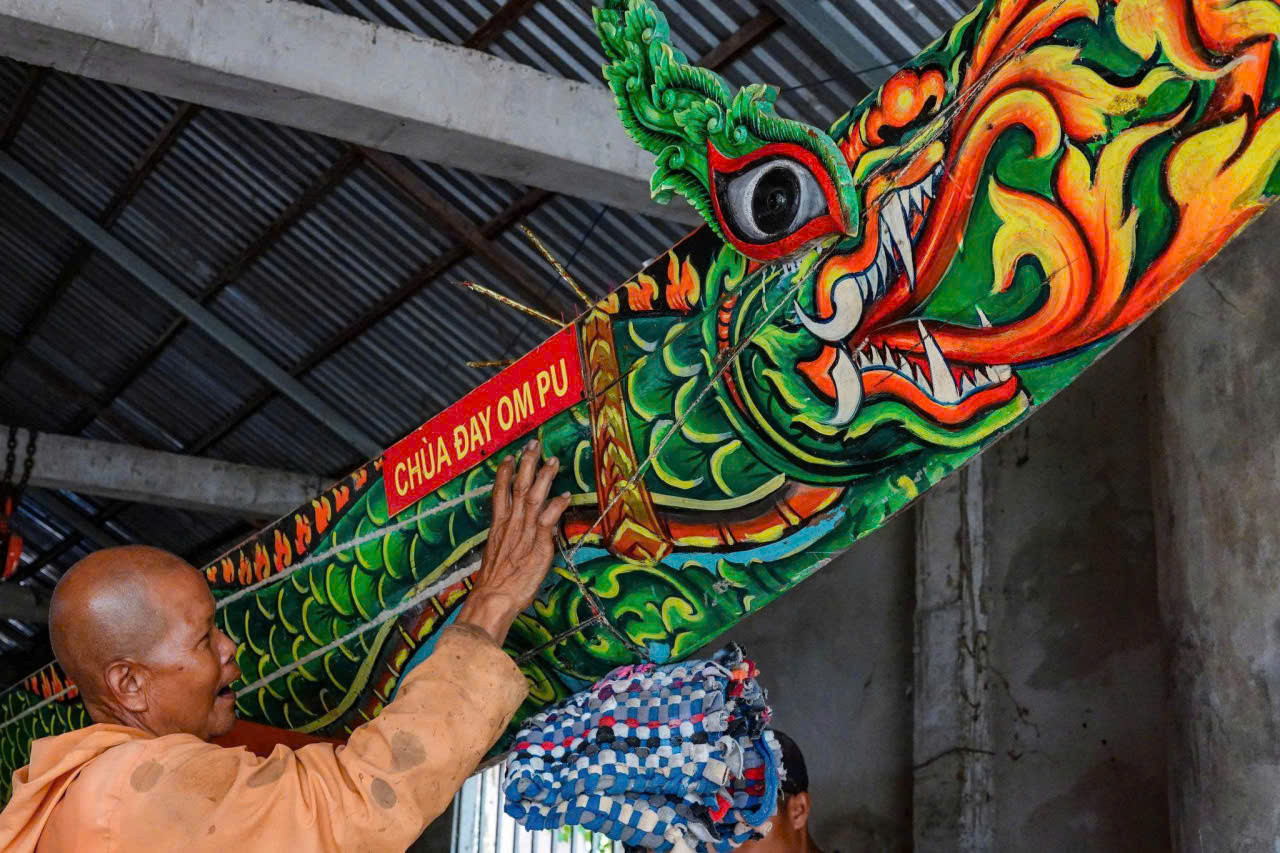
The pagoda currently owns four Ngo boats. One is undergoing repairs, while the remaining three are ready to compete.
Alongside the mascots, the eyes decorating the boats hold particular spiritual significance.
In the past, artisans painted raised eye designs onto the vessels. Today, the eyes are often intricately carved and attached to the bow.
Danh Thu, a member of the management board of Po Thi Wone Wong Sa Pagoda in Hamlet 4, Xa Phien Commune, Can Tho City, explained that the eyes must be crafted with exceptional care.
They are designed to resemble dragon eyes, reflecting the belief that the boat needs eyes to see its way, avoid danger and ensure a safe journey.
"This is the most important part of decorating a Ngo boat. Every detail is carefully crafted, not simply for aesthetic reasons, but also to express the community's reverence, faith and hopes," Thu said.
A symbol of Khmer culture and community strength
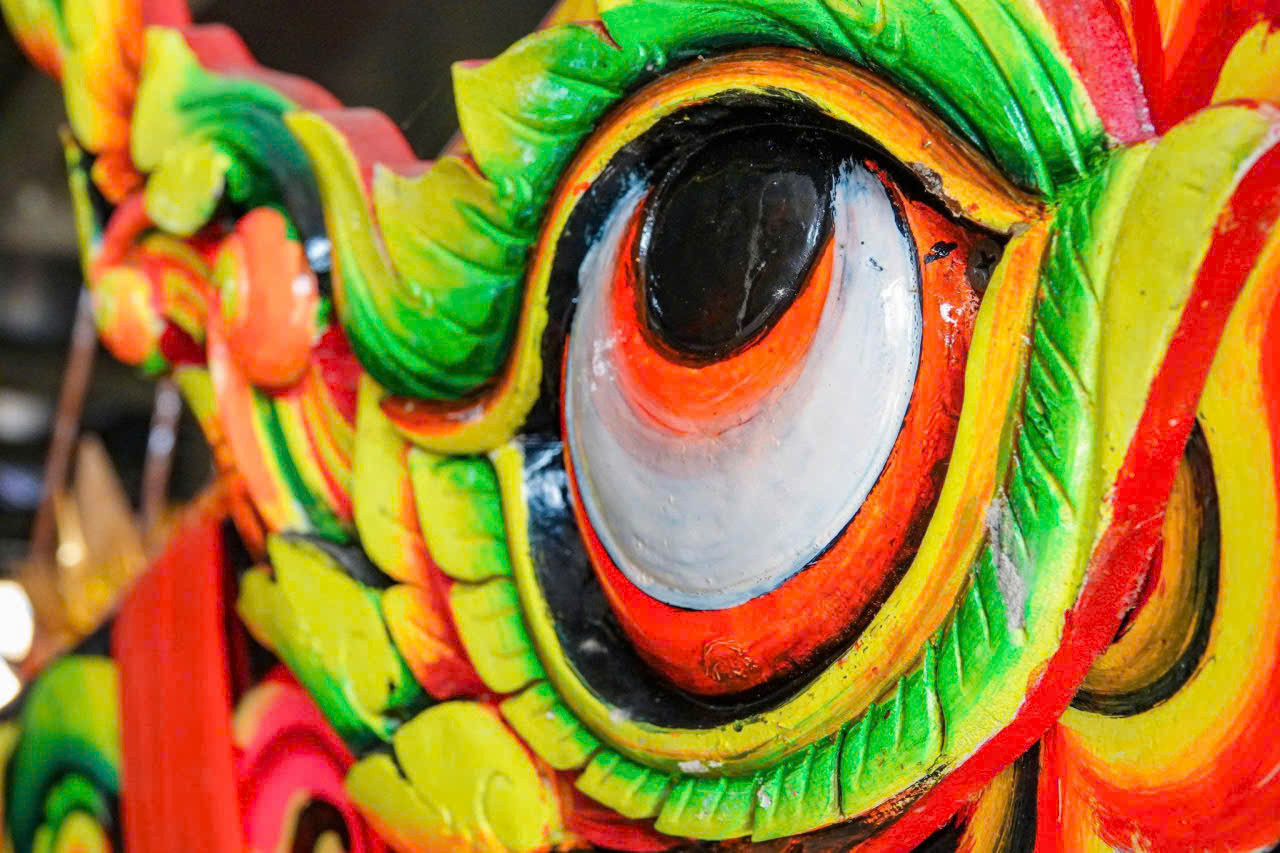
From their flowing silhouettes and vibrant patterns to their sacred mascots and expressive eyes, Ngo boats are works of traditional craftsmanship deeply rooted in Khmer village life.
Each vessel reflects the community's spiritual beliefs, artistic skills and collective identity.
Most Venerable Tang No, Deputy Supreme Patriarch of the Vietnam Buddhist Sangha's Patronage Council, president of the Can Tho Association for Solidarity of Patriotic Monks and an adviser to the municipal Vietnam Buddhist Sangha Executive Board, explained that Ngo boats originated in the everyday lives of rice-growing communities.
According to the senior Buddhist monk, Khmer people traditionally used dugout canoes as a primary means of transportation.
In earlier times, forests were home to dangerous wild animals, while rivers were inhabited by crocodiles.
Traveling through forests exposed residents to the threat of tiger attacks, but using waterways also carried the risk of encountering crocodiles.
Drawing inspiration from the sacred Naga serpent, a mythical creature believed to frighten crocodiles away, Khmer communities developed boats resembling this protective figure.
The design gradually evolved into the traditional Ngo boat.
Over the generations, boatbuilding techniques have changed to suit practical conditions and the demands of competitive racing.
Previously, Ngo boats were carved from single large tree trunks, making them extremely heavy and leaving them sitting low in the water.
As large timber trees became increasingly scarce, craftsmen began assembling boats from wooden planks.
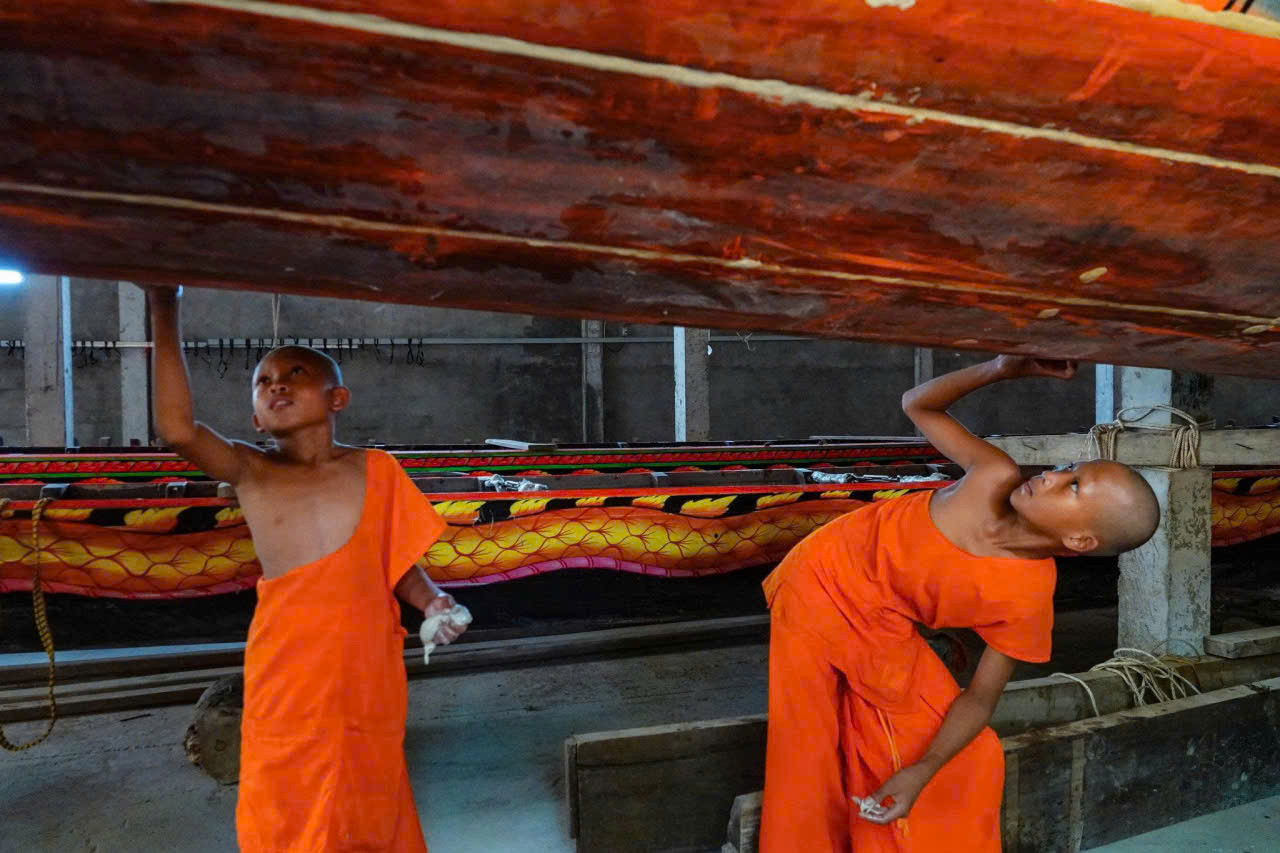
This construction method produces lighter, more maneuverable vessels while preserving their characteristic dragon-like appearance.
"An Ngo boat is not merely a product of skilled craftsmanship. It is also a symbol of the faith, determination and strength of Khmer communities in the Mekong Delta," Tang No emphasized.
Today, the boats continue to represent the close relationship between the Khmer people, their spiritual traditions and the waterways that have shaped their lives.
Every festival season, Ngo boats once again race across the rivers to the sound of drums and enthusiastic cheers from spectators.
Their sacred mascots, elaborate decorative patterns and carefully crafted eyes remain visible expressions of Khmer cultural heritage passed down through generations.
Can Tho to host 2026 Ngo boat races on November 23-24
The 2026 Ooc Om Boc Festival and Ngo Boat Racing Festival in Can Tho City is scheduled for November 23-24 on the Maspero River in Soc Trang Ward.
The annual event brings together Khmer racing teams and local communities, celebrating traditional sporting skills and cultural identity.
The continued organization of Ngo boat races also reflects efforts by Vietnamese authorities to support the cultural and spiritual life of Khmer communities.
By preserving the racing tradition and the craftsmanship associated with it, the festival helps ensure that these distinctive cultural values remain relevant to contemporary life.
Tao Dat

