 Vietnamnet.vn

 Podcast



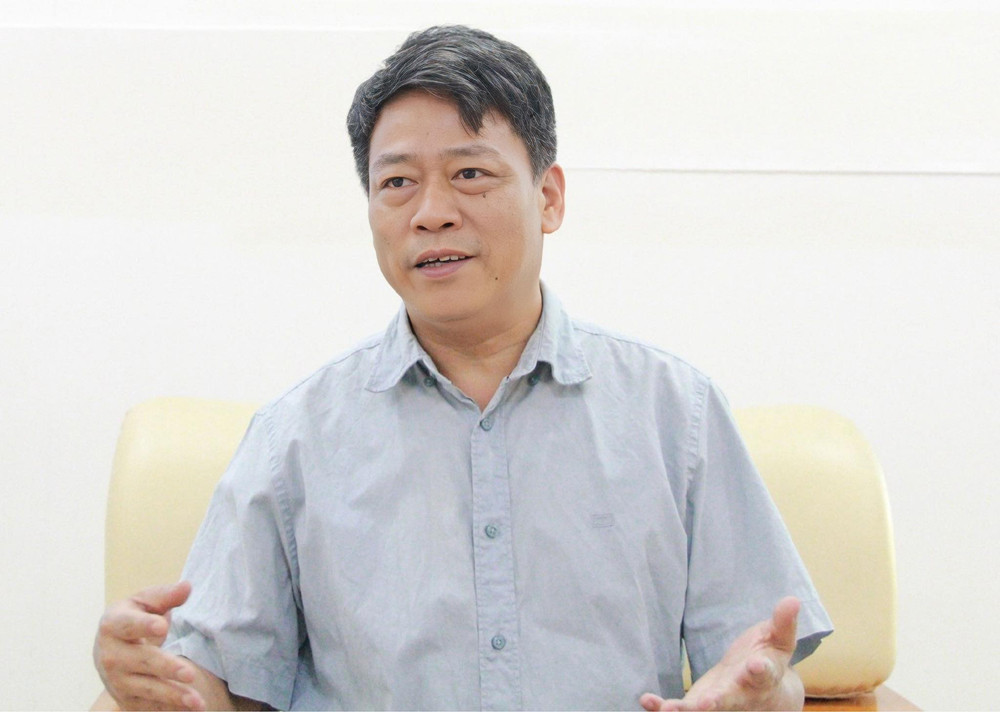
Marking World Meteorological Day on March 23, 2026, themed “Observing today, protecting tomorrow,” Nguyen Thuong Hien, Director General of the Vietnam Meteorological and Hydrological Administration, shared key insights into the importance of global data connectivity and emerging technologies in disaster forecasting and warning.
According to Nguyen Thuong Hien, weather systems do not respect national boundaries. A storm forming far out in the Pacific Ocean or a cold air mass from the north can directly impact Vietnam.
“To forecast these phenomena accurately, we need not only local data but also information from a global observation network,” he emphasized.
He noted that no country, regardless of its resources, can independently monitor and forecast weather comprehensively without international cooperation. Over decades, the global meteorological community, coordinated by the World Meteorological Organization (WMO), has built a worldwide system for observation and data exchange.
Vietnam plays a dual role in this system, both contributing data from its domestic meteorological and oceanographic stations and benefiting from information gathered by thousands of international stations and satellites, thereby improving the accuracy of its forecasts.
In the digital era, early warning capabilities have made significant strides, supported by two key pillars.
The first is automated observation. Networks of automated stations, radar systems and satellites, combined with IoT technologies such as rainfall gauges, soil moisture sensors and low-cost water level monitoring stations, enable real-time tracking of atmospheric conditions and early detection of anomalies like extreme rainfall or storms.
The second is artificial intelligence, which acts as a “brain” to process vast datasets. Deep learning algorithms can rapidly identify dangerous weather patterns, shorten processing time and help correct model errors.
Despite these advances, Nguyen Thuong Hien stressed that experienced forecasters remain indispensable, especially when dealing with unprecedented events such as super typhoon Yagi.
“When historical data is insufficient to ‘teach’ AI, human intelligence and sensitivity become the final factor in making critical decisions,” he said.
To meet evolving demands, the meteorological sector is intensifying specialized training, combining practical experience with the ability to master modern technologies, with the ultimate goal of maximizing public safety in the face of climate change.
Bao Anh
.svg)
