 Vietnamnet.vn

 Podcast



For more than a decade, the Realism Group has left its mark on the public through regular exhibitions.
Is realism appealing simply because it is easy to view, or does it carry deeper significance in today’s context? VietNamNet spoke with painter Pham Binh Chuong about the issue.
More than a decade ago, Vietnamese painting had long moved away from realism. What prompted you and other artists in the group to return to it?
I had the opportunity to speak with painter and critic Phan Cam Thuong at one of our exhibitions. He shared the view that Vietnam has never truly had a fully developed realist painting tradition. I agree. During the Indochina period, Vietnamese students were only beginning to familiarize themselves with Western art - from figure study and anatomy to perspective, oil and pencil techniques. Everything was new to artists coming from an agrarian civilization.
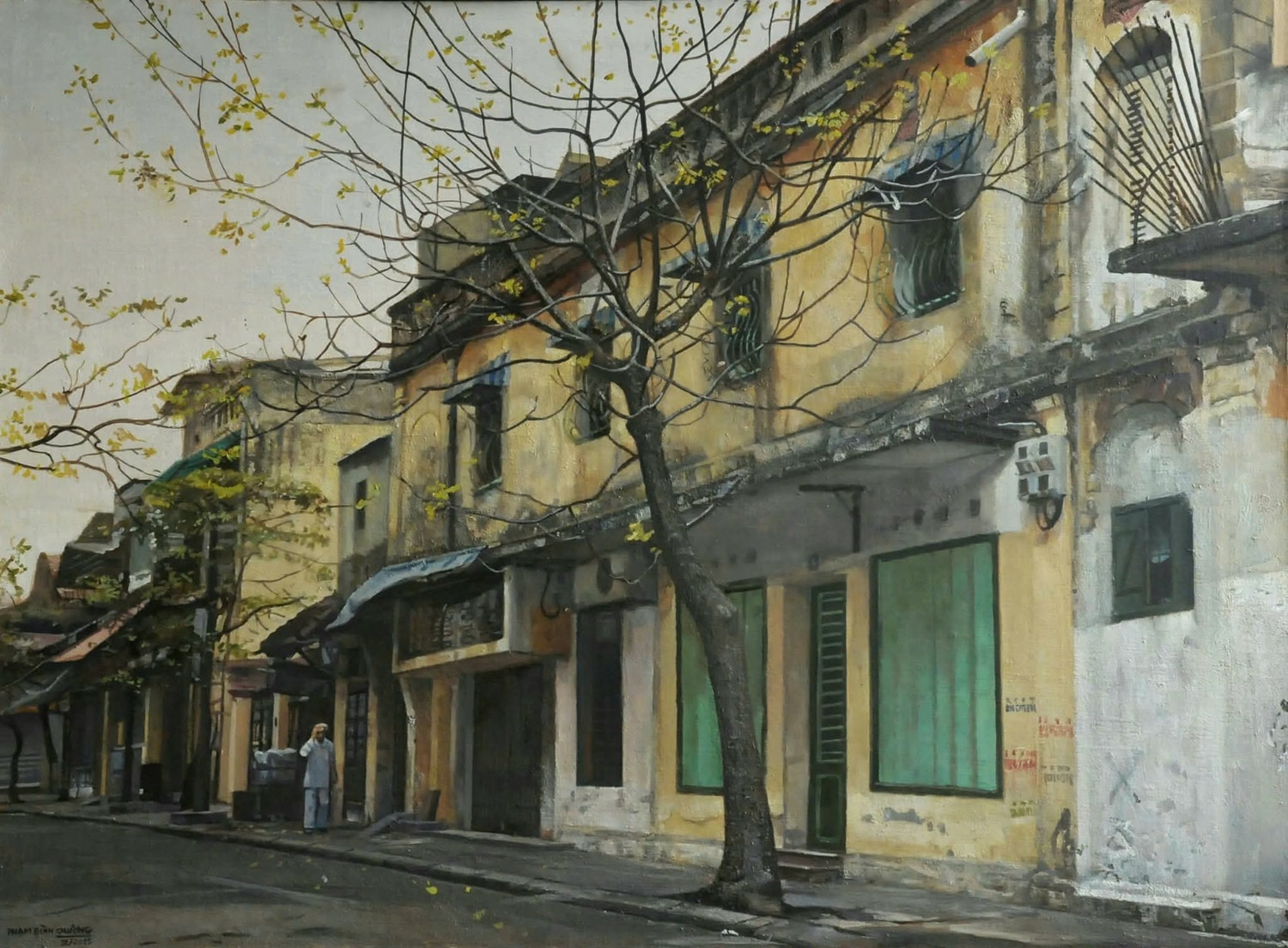
“Early Spring Morning” by painter Pham Binh Chuong.
At that time, realism only reached a level sufficient to convey basic volume and simple space. Vietnamese painters excelled more in graphic art and decorative forms. As long as line dominated, realism did not truly emerge. After the resistance wars and the restoration of peace, the country entered a difficult postwar period. Artists lacked both the conditions and the mental space to deepen their technical skills. Later, with the opening of the market economy, painting took a turn toward modernity and market orientation, drifting further away from realism.
Contemporary art then flowed in, almost marking the end of realism as a tendency in Vietnam. The Vietnam University of Fine Arts once intended to develop a more complete and advanced realist training program, but it was never fully realized due to the social circumstances mentioned earlier.
Returning to realism has been a personal, unofficial path chosen by a small number of individuals driven by inner need. It is not that we “moved away” from realism - rather, we never truly entered it in the first place.
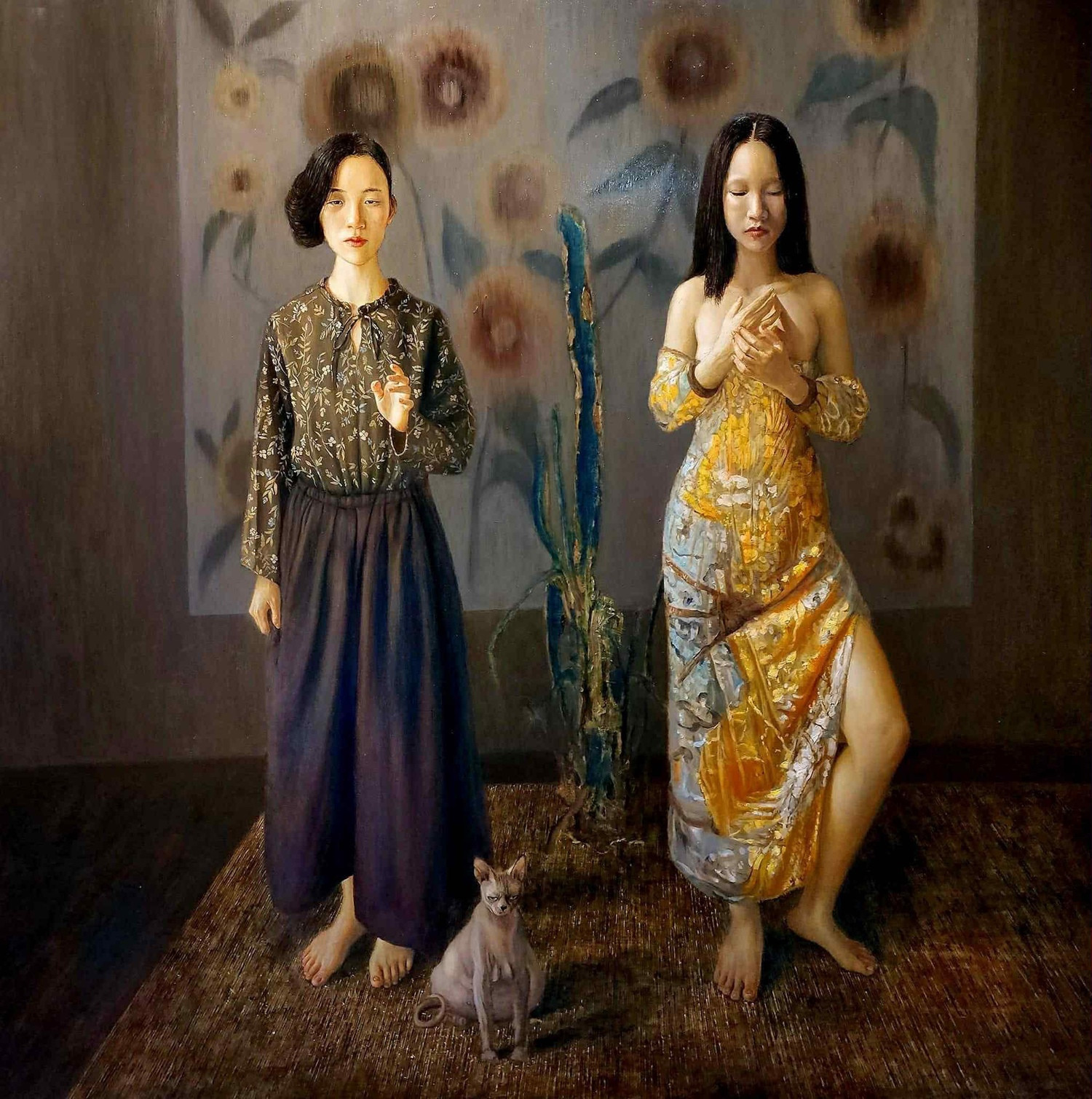
“Dreamlike” by painter Vu Ngoc Vinh.
In short, how does the realism of your generation differ fundamentally from realism before 1986?
The most fundamental difference lies in purpose. Before 1986, realism primarily served content. For us, realism is first and foremost about form, though content and form remain unified.
Could you elaborate?
Before 1986, socialist realism functioned as both a goal and a duty. Artists were expected to contribute to nation-building, so they painted subjects aligned with the criteria and missions of literature and art at the time. Form remained at a basic level - sufficient to convey meaning.
Some pioneering artists did apply modernist approaches, such as distorting the figure. There was a fascinating period when Vietnamese painting combined realist content with modernist form. Our focus, however, is on mastering technique at a deeper level - painting with such fidelity that viewers feel they stand before real space, able almost to touch the images.
Over the past 10 years and five exhibitions, your works have attracted large audiences and high acquisition rates. Yet some in the professional art community remain reserved in their assessment. How do you respond?
We formed the group simply to share the difficulties of painting realism - of being solitary practitioners in an art scene largely devoid of it. Evaluation belongs to the public. We may still have many limitations because Vietnam lacks clear standards of realism for reference and assessment. The public naturally embraces realism because it is accessible. For professionals, however, evaluation is more complex, shaped both by our limitations and by lingering preconceptions.
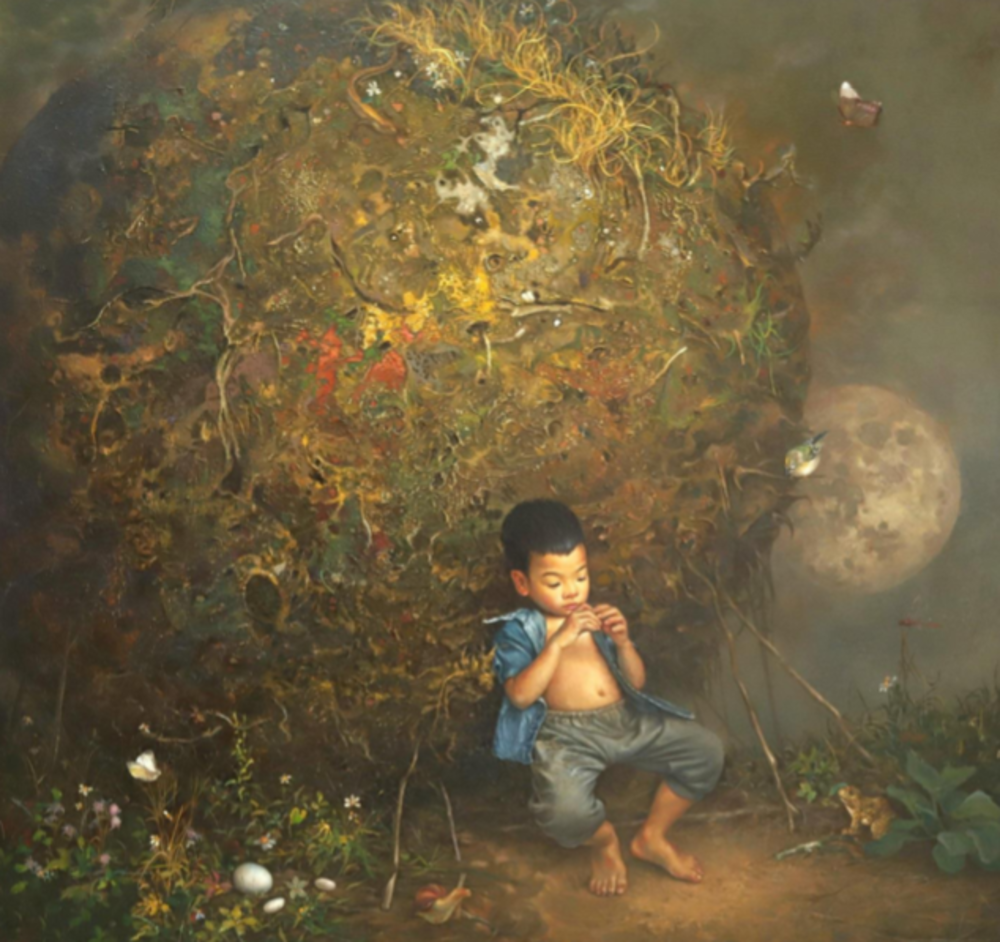
“His Universe” by painter Nguyen Van Bay.
What, in your view, is the group’s most tangible achievement over the past decade? Which names stand out in contemporary realism?
Our greatest achievement is affirming that Vietnam does have realist painting - not only gentle, lyrical or rustic, but also strong, precise and lucid. We aim to dismantle the prejudice that “Vietnam is not suited to detailed depiction” or that “realism is not in the Vietnamese temperament.”
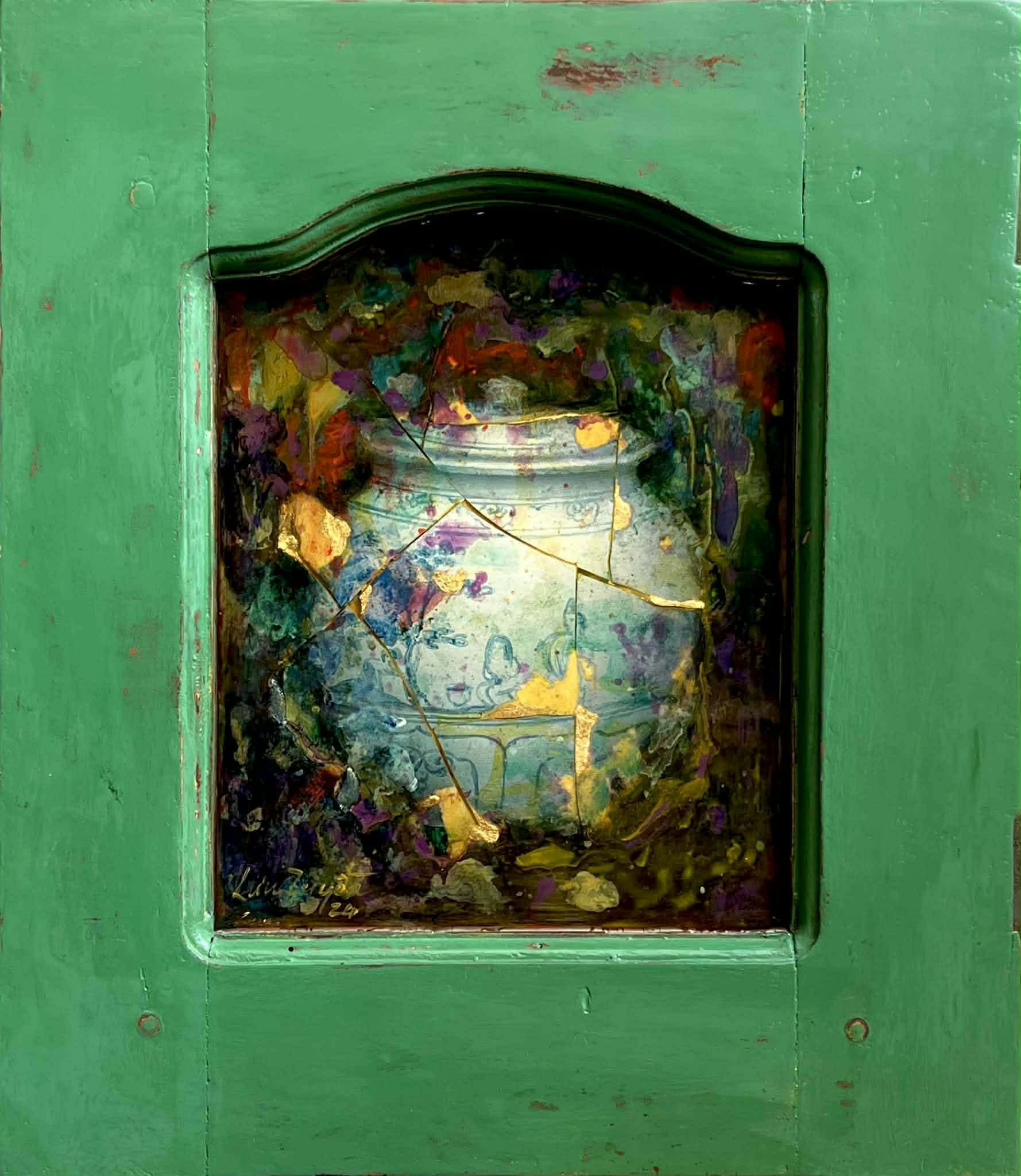
An art scene without realism is incomplete. Realism is an effective mode of expressing ideas, emotions and inner life, though a beautiful artwork requires many elements. As for representative faces, it is difficult for me as group leader to single out names without omission. Each painter has strengths and limitations. In terms of structure and spatial construction, Mai Duy Minh stands out. For color and material sensibility, Vu Ngoc Vinh. In watercolor depth, Nguyen Toan is indispensable. Luu Tuyen has a distinctive language, blending oil and lacquer techniques.
Among notable achievements: Nguyen Toan won Best of the Show from the prestigious US magazine Watercolour Artist in 2023. Trinh Minh Tien received Painting of the Year at the UOB Award 2023. I was honored with the Bui Xuan Phai Award 2025 for my 20-year “Down to the Streets” series. In 2025, my works were also included in the Grade 9 art textbook, Knowledge Connection series. These milestones affirm that realism is gaining recognition in modern Vietnamese art.
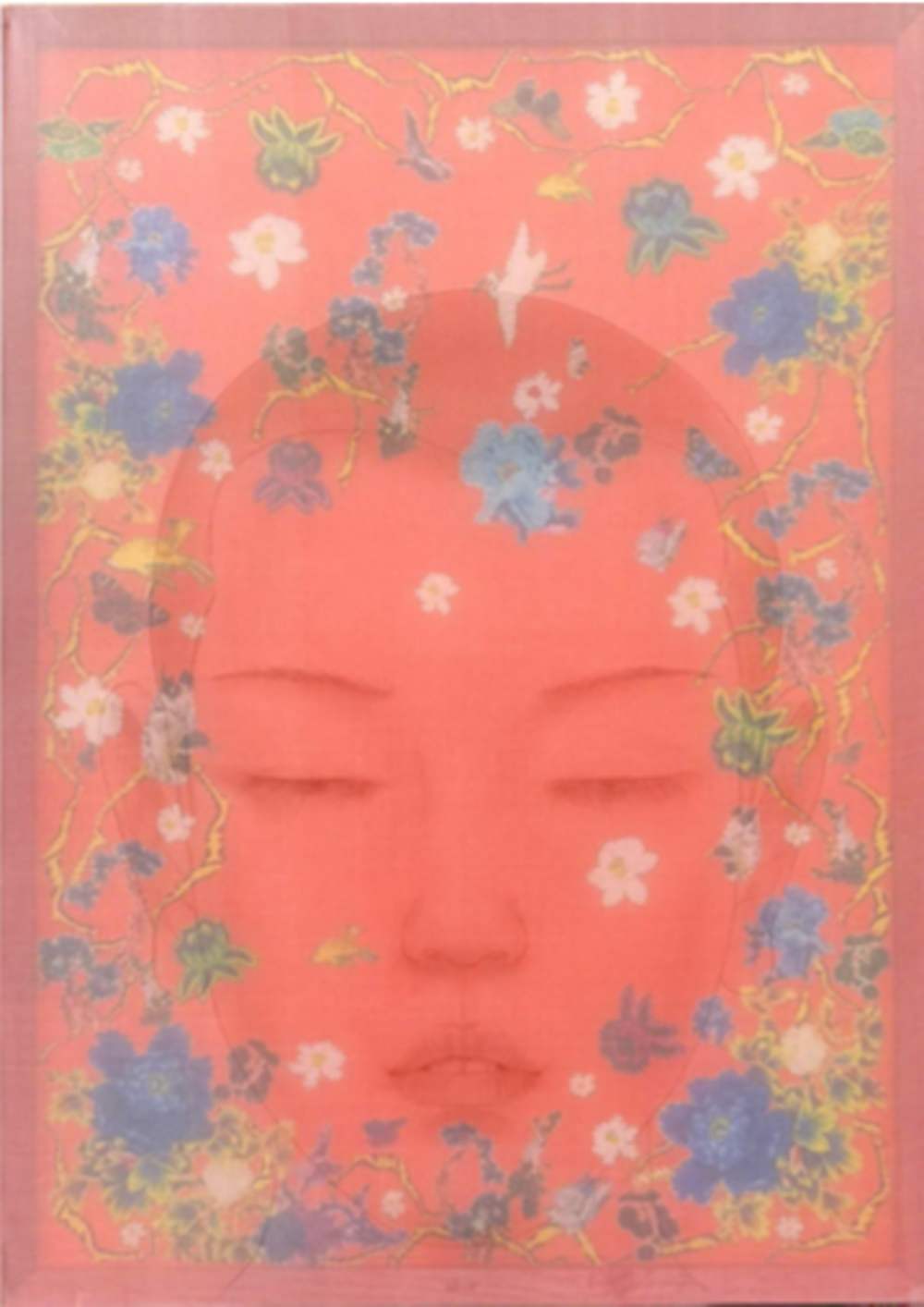
“Nature” by painter Doan Van Toi.
Looking internationally, how do you assess realism today compared with what your group has presented?
Compared with the international scene, we still have a considerable distance to travel. In Europe, realism was resolved as early as the 15th century, with solid theoretical and practical systems completed by the 19th century academies. In Asia, China is also a cradle of realism.
Today, realism addresses different issues - hyperrealist approaches beyond photography, deeper psychological exploration, or social themes. Contemporary realism is less about describing objects and more about expressing an attitude toward them - the artist’s stance toward the external world.
Within our group, clear distinctions have emerged. Social realism includes Mai Duy Minh and Pham Binh Chuong. Academic realism can be seen in Le Cu Thuan and Nguyen Van Bay. Romantic realism in Le The Anh. Photographic realism in Nguyen Toan and Nguyen Le Tan. Expressive realism in Vu Ngoc Vinh. Experimental, mixed-media approaches in Trinh Minh Tien, Luu Tuyen and Doan Van Toi.
Technological integration requires constant updating, but the unique artistic voice remains paramount. We must create a distinctly Vietnamese realism, rooted in our social reality and psychology. Technically, realism demands relentless discipline. It is a field for those who love learning, who are patient, who can endure slowness in a fast-paced society. Weak technique makes a painting feel superficial; overexertion makes it exhausting.
Given the current context, what are your expectations for Vietnamese realism in the coming years?
As mentioned, historical circumstances prevented Vietnam from building a strong realist foundation. Yet this absence also offers freedom: artists are not bound by tradition. They need not adhere strictly to classical multi-layer techniques; they may adopt Impressionist color theory or even the bold palettes of Pop Art.
The Realism Group represents diverse styles, educational backgrounds and independent technical cultivation. This diversity is essential to art.
Photos: Provided by the artists
Vietnam is at a golden moment for realism. Rapid changes in economy, politics, culture and especially society - generational differences, individualization of thought, gender equality - provide countless subjects. Realism has particular advantages in addressing themes such as urbanization. Mastery of perspective and construction materials enables painters to articulate clear viewpoints, making works stronger and more compelling.
Public interest and reception are positive signals that Vietnamese realism is gaining strong momentum.
Khoi Nguyen
.svg)
