 Vietnamnet.vn

 Podcast



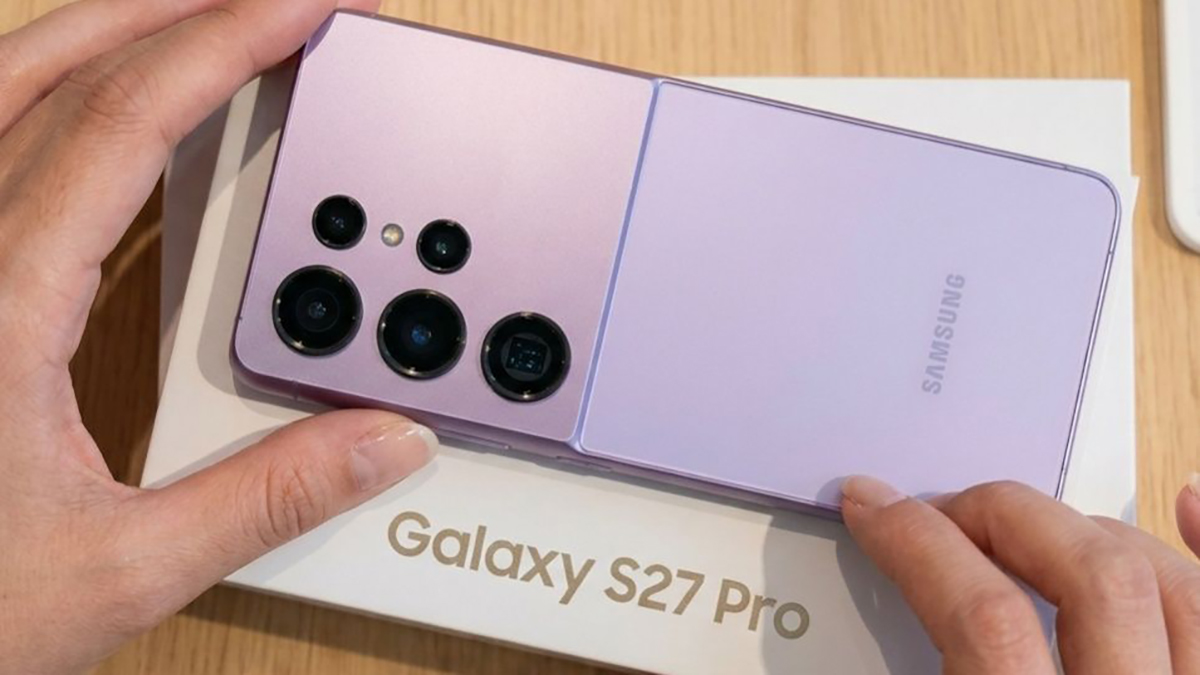
The Galaxy S27 Pro should still feature Samsung’s most powerful chipset. Photo: PhoneArena
Samsung reportedly plans to launch the Galaxy S27 Pro as a model positioned just below the Galaxy S27 Ultra. Early leaks suggest the device will feature a compact 6.4-inch display and essentially function as an Ultra version without the S Pen.
If that proves true, Samsung needs to stay committed to creating a truly powerful compact flagship instead of turning the Galaxy S27 Pro into a stripped-down “affordable flagship” full of compromises.
A compact flagship should not mean a cheaper flagship
This is a mistake many smartphone makers have made for years. Whenever manufacturers release smaller phones, they often assume those devices must also be cheaper, weaker and heavily downgraded.
In reality, users who prefer compact smartphones are not always looking to save money. Many simply want a device that is easier to hold, lighter and more comfortable for daily use while still delivering a premium experience.
Apple experimented with this idea through the iPhone mini lineup, but the devices eventually lost appeal due to weak battery life and hardware limitations.
Products like the iPhone Air and Galaxy S25 Edge have faced similar criticism. Although marketed as flagships, they involved too many compromises to hit target pricing.
As a result, the market still lacks a truly uncompromised compact flagship. That is exactly the gap the Galaxy S27 Pro could fill - if Samsung is willing to commit.
The Galaxy S27 Ultra will undoubtedly remain the star of the lineup. It showcases Samsung’s full technological capabilities through a large display, advanced camera system and the iconic S Pen.
But that does not mean the Galaxy S27 Pro should exist purely in Ultra’s shadow.
A compact flagship only makes sense if it delivers an experience close to the top-tier model while offering a more practical form factor.
If Samsung cuts camera quality, battery capacity, charging speed or premium materials simply to create distance from the Ultra, users will quickly see the Pro as little more than an upgraded Plus model rather than a true flagship.
Unfortunately, this is a strategy many manufacturers still follow. Companies often intentionally make certain models less attractive to push customers toward the most expensive devices.
The problem is that consumers today are smart enough to recognise when a product has been deliberately limited.
If Samsung truly wants the Galaxy S27 Pro to become “a Galaxy S27 Ultra without the S Pen,” then it needs to fully embrace that vision.
Galaxy S27 Pro could become Samsung’s most attractive flagship
One of the biggest problems in the smartphone industry today is that companies often decide pricing first, then design products around that financial target.
Instead of building the best possible device and pricing it accordingly, manufacturers impose strict cost limits from the start. The result is predictable: weaker cameras, slower charging, cheaper materials and smaller batteries.
That is why many so-called “near-flagship” devices struggle with identity. They are not premium enough to compete with true flagships, yet not affordable enough to appeal to mainstream users.
For compact phones, this is especially risky. Buyers looking for premium compact smartphones are usually willing to spend money. They choose smaller devices not to save costs, but because they value comfort and usability.
If Samsung tries to position the Galaxy S27 Pro as a “reasonably priced” device, it risks alienating the exact audience most likely to buy it.
At present, Samsung’s Galaxy S lineup has a noticeable gap.
The Galaxy S26 Ultra, priced around $1,300, is an extremely powerful device but also too large and too expensive for many users. Not everyone needs an S Pen or a nearly 7-inch display.
Meanwhile, the Galaxy S26 Plus still lacks the premium appeal needed to convince high-end buyers. Its camera system remains below Ultra standards, charging is slower and the overall experience still feels like a middle-tier option.
The Galaxy S27 Pro could solve this problem.
Rather than squeezing it between the Ultra and Plus purely by price, Samsung should position the Pro as a true flagship priced only around $50-70 below the Ultra. That gap would be enough to differentiate the products while preserving nearly all major specifications.
That means the Galaxy S27 Pro should still feature Samsung’s best chipset, top-tier cameras, premium display, fast charging and flagship-grade materials. The only real differences from the Ultra should be a smaller size and the absence of the S Pen.
That is what a true Pro smartphone should be.
Hai Phong
.svg)
