 Vietnamnet.vn

 Podcast



The proposal to reserve the far-left lane on expressways exclusively for overtaking has attracted growing public attention in Vietnam. Supporters argue that adopting the widely used principle of "keep right except to overtake" would improve lane discipline and increase traffic efficiency.
The idea deserves serious consideration. However, introducing such a rule across Vietnam's entire expressway network at this stage may be premature - not because the principle itself is flawed, but because it evolved within transportation systems that differ significantly from current conditions in Vietnam.
Two very different experiences on the same road
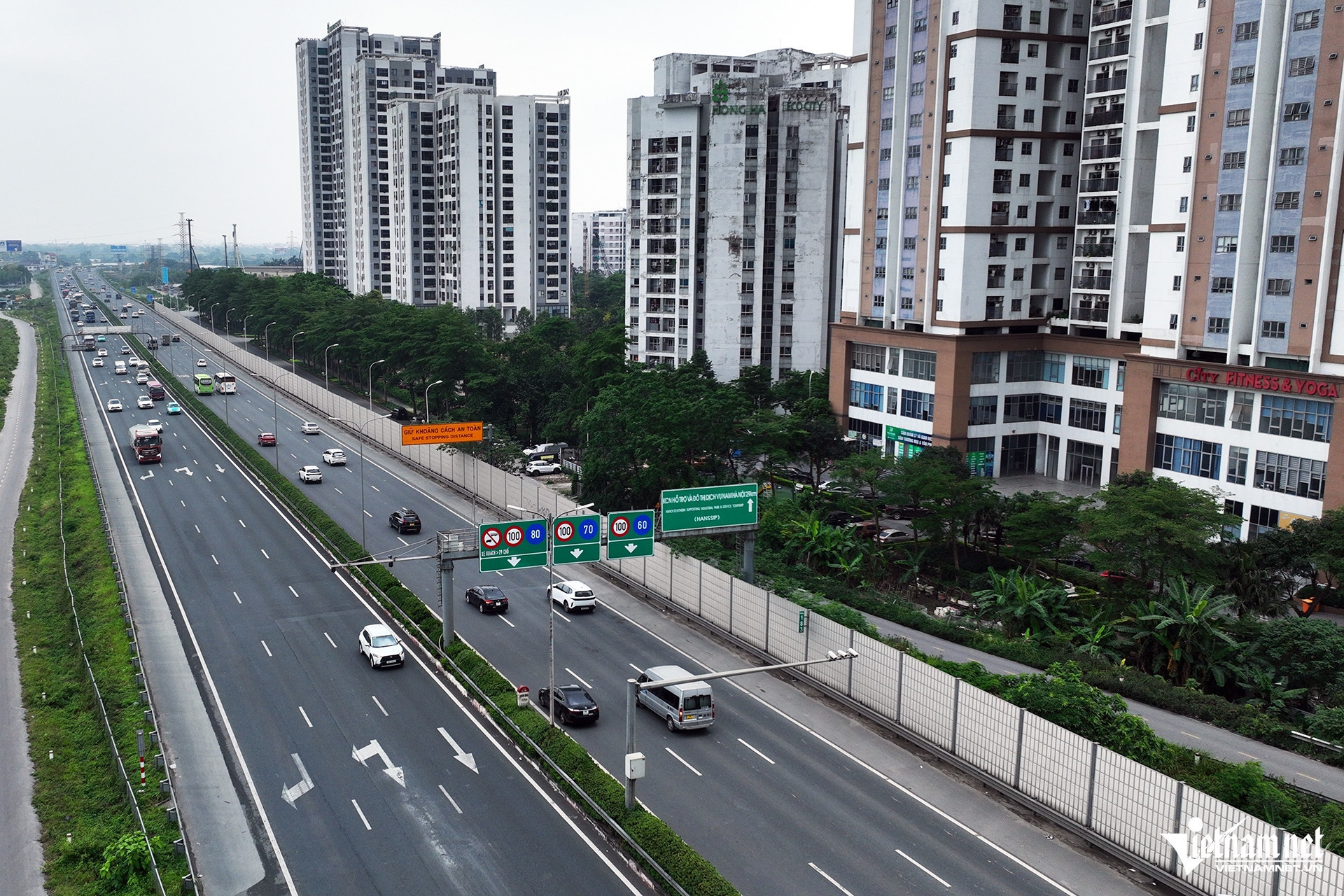
I once drove on the Lang–Hoa Lac Expressway, where the posted speed limit on that section was 60 km/h. Staying in the rightmost lane and traveling at the legal speed, I was suddenly overtaken by a vehicle that entered the emergency lane before cutting sharply in front of me and braking hard.
I slammed on the brakes to avoid a collision.
When I later pulled alongside, the driver rolled down his window and shouted, "This is an expressway with a 100 km/h speed limit. Why are you driving at 60?"
Rather than argue, I continued my journey.
On another occasion, I encountered the opposite problem.
I needed to overtake a slower vehicle but found it impossible because all three lanes were filled with traffic. Even the leftmost lane was blocked.
A little farther ahead, I discovered the cause: a dump truck carrying bricks was crawling along in the left lane beside a container truck traveling at a similar speed in the middle lane. Dozens of vehicles stretched behind them with no opportunity to pass.
Those two experiences illustrate why the debate over overtaking lanes involves far more than lane discipline alone. It also depends on infrastructure, traffic density, enforcement and driving behavior.
Infrastructure remains uneven
Vietnam's expressway network varies widely in design and operating conditions.
Some expressways have only two lanes in each direction, while others have three. Some were built in phases, while others meet full expressway standards. Even roads with similar layouts often experience very different traffic volumes.
Vietnam is also undergoing rapid motorization.
Hanoi alone now manages approximately 1.2 million cars, while vehicle ownership continues to rise sharply in Ho Chi Minh City and other provinces. Major expressways connecting urban centers - including the Phap Van–Cau Gie, Hanoi–Hai Phong, and routes serving Ho Chi Minh City - regularly experience heavy congestion during peak periods.
The principle of "keep right except to overtake" works best when sufficient space exists for overtaking.
When all lanes are already saturated with traffic, however, the left lane inevitably functions as another travel lane rather than an overtaking lane. Under those circumstances, traffic managers are no longer trying to preserve each lane's intended role - they are attempting to maximize the overall capacity of the roadway.
For that reason, any overtaking-only requirement should be considered on a road-by-road basis rather than introduced uniformly across the national expressway network.
Rules alone are not enough
Vietnam is still developing its expressway driving culture.
Within little more than a decade, the number of private cars has increased rapidly, and millions of motorists are still becoming accustomed to expressway driving. Common problems - including remaining unnecessarily in the left lane, changing lanes without signaling, failing to maintain safe following distances and not yielding to overtaking vehicles - remain widespread.
Against this backdrop, introducing a "keep right except to overtake" rule would require much more than revising a few provisions in traffic regulations.
Road signs would need updating. Driver education and licensing examinations would require revision. Enforcement agencies would need new procedures, while millions of motorists would have to adjust long-established driving habits.
Effective enforcement would also require authorities to distinguish between drivers legitimately overtaking, those unnecessarily occupying the left lane and those who have little choice because of heavy traffic.
Achieving that would depend on robust camera systems, comprehensive traffic data and strong enforcement capacity.
At present, several existing traffic violations - including unsafe lane changes, failure to maintain safe distances, improper use of the left lane and failure to yield - are already prohibited under Vietnamese law but remain inconsistently enforced.
The immediate challenge therefore appears to be less about introducing additional rules than about enforcing those already in place.
Strengthening monitoring systems, expanding automated enforcement and improving compliance may yield greater benefits before adopting more advanced lane management policies.
Learning the system - not just one rule
The "keep right except to overtake" principle is only one element of a much broader transportation system.
In countries where the rule functions successfully, it is supported by standardized road design, intelligent transportation systems, extensive camera networks, active highway patrols and driving cultures developed over many decades.
Removing a single rule from that broader system does not necessarily produce the same outcomes elsewhere.
Rather than introducing the policy nationwide, Vietnam could begin by expanding carefully selected pilot programs on expressways with suitable infrastructure and traffic conditions before evaluating their effectiveness.
At the same time, authorities could establish clearer speed ranges for each lane, strengthen enforcement against unnecessary left-lane occupation and expand automated traffic monitoring.
Over the longer term, the goal should not be to impose a single rigid rule under every condition, but to build a more flexible traffic management system.
When traffic volumes are low, the left lane can primarily serve overtaking traffic.
When demand approaches road capacity, intelligent transportation systems could dynamically adjust speed limits, allocate traffic across lanes and provide real-time guidance through electronic message signs.
That would require broader investment in smart transport infrastructure, including cameras, traffic sensors, centralized traffic management centers and real-time data systems.
Ultimately, the debate over left-lane rules extends beyond traffic management itself. It also reflects a broader question of policymaking.
International experience offers valuable lessons, but its real value lies not in copying individual rules. It lies in understanding the conditions that made those rules successful - and adapting them carefully to Vietnam's own infrastructure, institutional capacity and traffic realities.
Tu Giang
.svg)
