 Vietnamnet.vn

 Podcast



Editor's note: Nearly eight years after the adoption of Resolution 36-NQ/TW on Vietnam's sustainable marine economic development, the Party Central Committee is preparing to issue a new resolution on maritime development.
As Vietnam enters a new phase of development with the goal of becoming a developed country by 2045, a new approach is required. While Resolution 36 focused primarily on developing marine economic sectors, the upcoming resolution aims to strengthen governance of Vietnam's national maritime space as a strategic engine for future growth.
This special report examines the evolution of Vietnam's development thinking - from focusing on the marine economy to building a maritime nation - and explores the role of the sea in the country's long-term development strategy through 2045.
Rather than examining individual sectors such as ports, offshore wind, fisheries, logistics or coastal tourism, these industries are used only as examples to illustrate broader strategic arguments.
What distinguishes this series is its institutional and strategic perspective. It views the sea not simply as an economic sector but as an integrated national development space. In doing so, it reflects Vietnam's evolving development philosophy: from resource extraction to creating new growth drivers; from developing marine industries to governing maritime space; and from pursuing prosperity from the sea to building a strong maritime nation for the twenty-first century.
Why has Vietnam still not become a truly strong maritime nation?
The answer may well lie in the recent direction set by Party General Secretary and President To Lam, who called for a fundamental shift in thinking - from a narrow focus on the marine economy toward a broader strategic vision of developing Vietnam's national maritime space.
The sea should no longer be viewed merely as a place for resource extraction or selected economic activities. Instead, it must be recognized as a strategic development space where economic growth, national defense, security, science and technology, and international integration converge.
The time has come for Vietnam to fundamentally rethink its relationship with the ocean - not simply as a resource to exploit, but as an enduring space for national development and future prosperity.
From a resource repository to a strategic space for national development
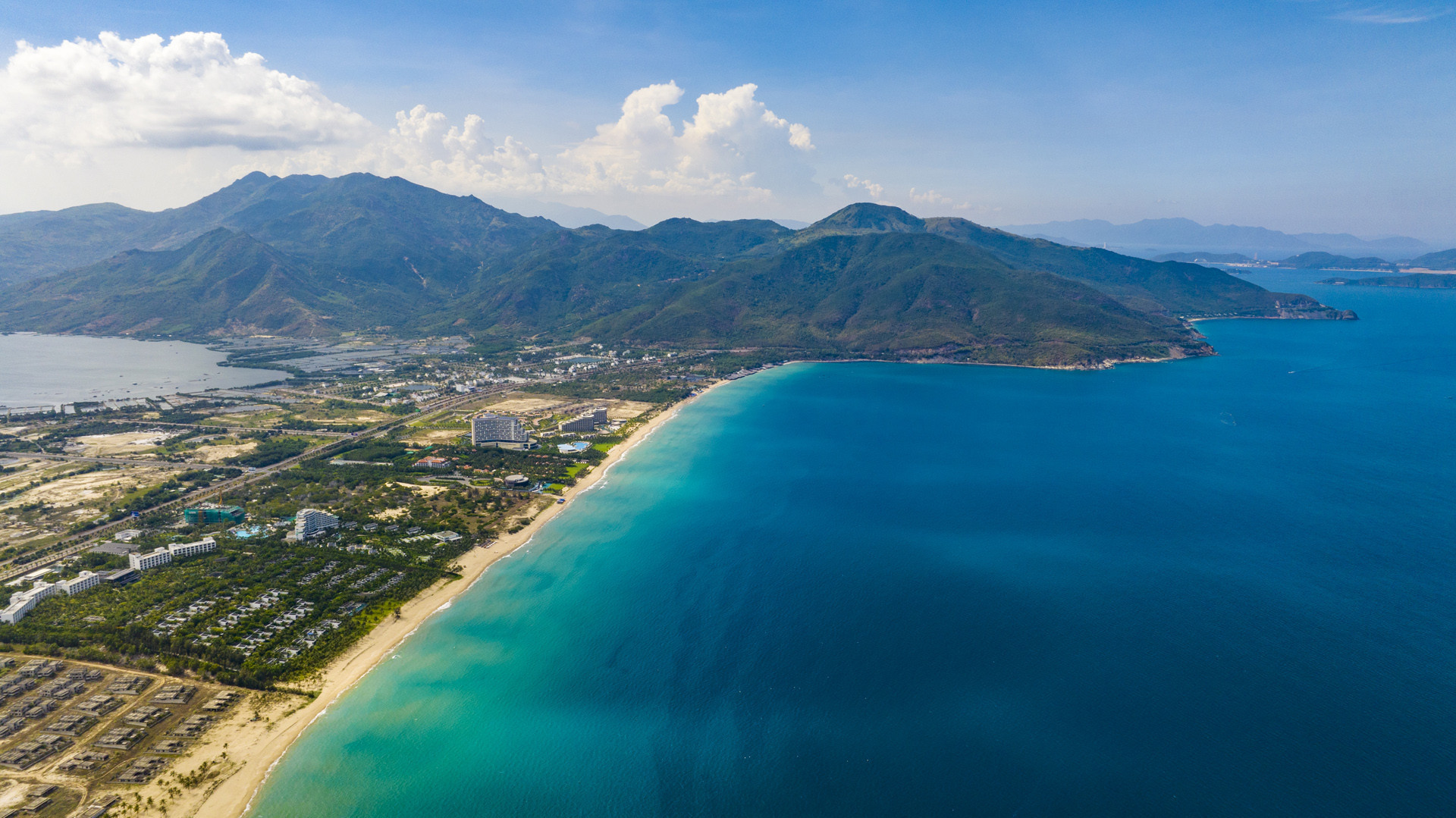
For many years, Vietnam measured the marine economy largely through the output of individual industries: how many tons of seafood were caught, how many barrels of oil were extracted, how many tourists visited coastal destinations, or how many million TEUs of cargo moved through its ports.
These industries have undoubtedly generated significant revenue and supported the livelihoods of millions. However, this approach reflects a development model centered primarily on extracting existing natural resources.
The limitations of that mindset are becoming increasingly apparent.
Overfishing has depleted nearshore fish stocks. Poorly regulated heavy industry has placed growing pressure on marine ecosystems. Meanwhile, value added from maritime services remains relatively modest.
Emerging sectors expected to drive the next generation of marine economic growth - including deep-sea technology, offshore renewable energy, marine biotechnology and integrated logistics - remain largely untapped.
The new development philosophy emphasized by Vietnam's top leadership requires the country to view the sea as an integrated development space.
If the sea is regarded only as a place for fishing or port construction, growth will inevitably reach its limits. But if it is seen as the hub of transcontinental submarine cables, a vast source of offshore wind energy, a global supply chain gateway and a giant laboratory for technological innovation, its development potential expands exponentially.
Many successful maritime nations achieved prosperity not because they possessed abundant marine resources, but because they organized and governed maritime space effectively.
The Netherlands transformed low-lying estuaries into one of the world's leading logistics hubs.
Singapore, despite having few natural resources, became a global maritime and shipping center through excellence in maritime services.
Their common success lies in treating the ocean as a platform for creating new value rather than simply extracting finite resources.
Fragmented governance and the challenge of integrated planning
If one obstacle stands above all others in limiting Vietnam's maritime potential, it is governance.
The ocean has no administrative boundaries, yet Vietnam's development planning remains fragmented along provincial borders.
The result is a patchwork approach.
Every coastal province seeks to build its own deep-water port, economic zone, airport or seaside resort. Without effective regional coordination, unified planning and integrated statistical systems, investments become scattered and often compete against one another.
Within the same bay, aquaculture zones may conflict directly with eco-tourism plans, while coal-fired power projects can obstruct major shipping routes.
Effective maritime governance cannot stop at the shoreline.
It requires integrated planning that connects river basins, estuaries, coastal regions and offshore waters.
Water resource management, infrastructure planning and disaster prevention across major river systems such as the Dong Nai River basin and the Mekong Delta must be closely linked with estuarine and coastal development strategies.
Similarly, inland waterways and road transport networks must connect seamlessly with major seaports.
The proposed new maritime resolution, as directed by Party General Secretary and President To Lam, seeks to address this fundamental question: how can Vietnam establish a unified national maritime governance model based on integrated spatial planning and shared data?
Only by overcoming fragmented administrative thinking and creating interconnected regional maritime economic clusters can Vietnam unlock the full strength of its maritime economy.
Billion-dollar growth engines waiting to be awakened
Against the backdrop of shifting global supply chains and rising demand for green development, Vietnam's maritime opportunities are becoming increasingly evident.
The East Sea carries roughly one-third of global maritime trade, presenting Vietnam with a historic opportunity.
Offshore renewable energy: According to the World Bank, Vietnam's offshore wind potential could reach as much as 600 gigawatts.
Countries such as Norway and the Netherlands have transformed the harsh conditions of the North Sea into highly profitable offshore wind industries.
More importantly, offshore wind is far more than electricity generation.
It creates an entire industrial ecosystem, including engineering design, marine geotechnical surveys, foundation manufacturing, turbine production, submarine cable installation and long-term maintenance services.
This presents Vietnam with an opportunity to build an entirely new marine engineering industry.
International logistics and transshipment ports: Modern shipping increasingly depends on ultra-large container vessels and Green Shipping Corridors.
Rather than spreading investment across numerous neighboring ports, Vietnam should concentrate resources on developing internationally competitive transshipment hubs such as Lach Huyen in the north, the Cai Mep -Thi Vai port complex and the planned Can Gio super port in the south.
Port infrastructure should be accompanied by digital transformation and automated cargo handling systems to reduce turnaround times and lower logistics costs, which remain relatively high in Vietnam's manufacturing sector.
High-tech offshore aquaculture: As wild fish stocks continue to decline, Norway's salmon farming industry provides an important lesson.
The country has developed giant offshore fish cages built from advanced materials capable of withstanding severe storms while relying on automated systems to manage feeding and monitor water quality.
Vietnam should gradually replace its traditional nearshore fish cages, which remain vulnerable to storms and contribute to marine pollution.
Applying modern engineering standards and rigorous environmental monitoring to offshore aquaculture could support the emergence of new billion-dollar seafood enterprises.
Digital oceans, artificial intelligence and maritime soft power
The twenty-first century is becoming the era of ocean technology.
National competitiveness is no longer determined by who extracts the most raw resources, but by who understands and governs the ocean most effectively.
The leadership's emphasis on science, technology and innovation - including artificial intelligence and digital ocean mapping - represents a transformative direction.
Sound planning depends on reliable data.
Vietnam needs a real-time ocean observation network capable of continuously monitoring currents, environmental conditions and seabed topography.
A fully digitized national marine database would improve investment licensing, enhance resource forecasting and strengthen disaster risk assessment.
Transparent and accurate data will become the cornerstone of modern, intelligent maritime governance.
A strong sea for a prosperous and secure nation
In today's world, economic development and national sovereignty are inseparable.
Party General Secretary and President To Lam has stressed that all maritime planning and development strategies must also strengthen the protection of sovereignty, sovereign rights and national defense capabilities.
Every offshore drilling platform, every wind turbine rising above the sea, every modern fisheries logistics center and every steel-hulled fishing vessel supported by satellite communications represents a living symbol of national sovereignty.
Developing a strong marine economy is also a peaceful way of reinforcing the country's presence at sea, creating the physical infrastructure and economic capacity needed to safeguard national interests over the long term.
The sustained presence of civilian economic activities across maritime areas remains one of the most effective and peaceful ways of protecting sovereignty.
Nearly eight years after its adoption, Resolution 36 has largely fulfilled its historic mission.
Faced with rapid geopolitical change, accelerating climate change and the digital era, Vietnam now needs a broader and more comprehensive maritime strategy.
That transformation begins with a fundamental shift in thinking - from viewing the sea as a collection of extractive industries to recognizing it as a strategic national development space and a new engine of growth.
When governance moves beyond administrative boundaries, when science and technology become the guiding principles, and when ocean data is treated as a strategic national asset, Vietnam will not merely reach the open sea - it will truly emerge as a confident and capable maritime nation in the decades ahead.
To Van Truong
.svg)
