 Vietnamnet.vn

 Podcast



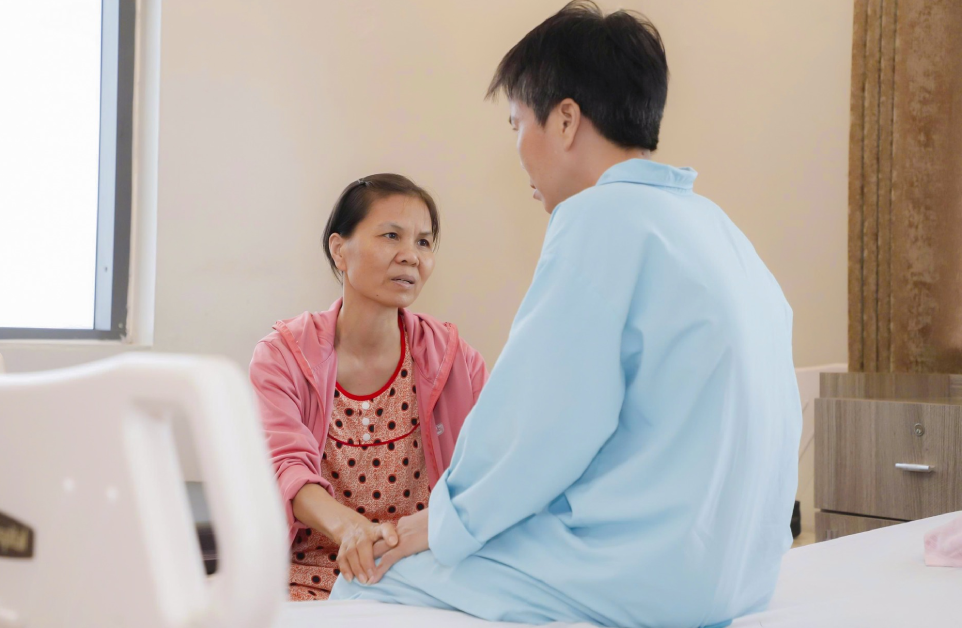
The 45-year-old, from Hoang Hoa in Thanh Hoa, has endured more than 10 years battling illness, facing four cancer diagnoses that might have broken many.
More than 10 years ago, she was first diagnosed with thyroid cancer. The news left her family shaken, putting all plans on hold. After days of anxiety, she quietly accepted reality and began treatment.
What seemed like the biggest challenge was not the last. In 2017, she was diagnosed with breast cancer in her right breast. Shock piled upon shock. There were days she sank into despair, her body exhausted from chemotherapy, her mind weighed down by fear. Yet at her lowest point, she pulled herself back up. Her reason was simple: “My mother is still here. I can’t give up.”
Time passed through long treatment periods, amid the smell of disinfectants and sleepless nights in the hospital. Just when it seemed she could breathe a sigh of relief, in 2025, T. discovered cervical cancer once again.
The doctor's diagnoses fell like "thunderclaps," leaving T. feeling as if she had just stood up only to be pushed down again. Yet, with a survival instinct, the woman wiped her tears and quietly returned to the hospital room, continuing a journey that she herself did not know when would end.
In early 2026, the shadow of illness descended once more as T. was diagnosed with left breast cancer. Confronting cancer four times made many find it hard to believe this was the reality for T. The entire oncology department admired the resilient will of the thin woman who refused to collapse before her illness.
Optimism driven by desire to live joyfully
Before her latest surgery, T.'s voice cracked as if to entrust her faith to the doctors: “I am not afraid of pain. It’s just that sometimes I’m so tired. But I don’t want to give up. I still want to live joyfully.”
Sharing her treatment journey, T. said she was all too familiar with chemicals, scalpels, and persistent pain. After each treatment cycle, the side effects of the drugs sometimes made her feel she couldn't pull through, but she chose to sit up by herself after each infusion, forcing down every spoonful of porridge despite her bitter throat, just to preserve some strength for her body.
During days when the boundary between life and death became thinner than ever, T. still chose to live. Living not just to exist, but to hope, to see her old mother, and to feel the simple joys of life.
According to Truong Xuan Tien, Head of the Oncology Department at Hop Luc General Hospital where T. is being treated, a person suffering from multiple cancers simultaneously is actually not rare. Many studies show that about 2-15 percent of cancer patients may develop another cancer, occurring at the same time or at different times, known as multiple primary cancers.
This risk increases due to many factors. First is genetics, with gene mutations such as BRCA, Li-Fraumeni syndrome, or Cowden syndrome making the body susceptible to multiple malignant tumors.
People who have had cancer also have a higher probability of developing a second cancer, partly due to the effects of previous treatments. Additionally, lifestyles such as smoking and alcohol consumption increase the risk of multiple types of cancer at once.
Furthermore, Tien believes that environmental factors (such as radon exposure), pathogens (HPV, Epstein-Barr), and occupational characteristics (asbestos exposure) also contribute to the increased risk.
The doctor emphasized that periodic screening and maintaining a healthy lifestyle are the keys to early detection, reducing risk, and improving the prognosis of the disease.
Cancer cases in Vietnam could rise by 60–70 percent by 2050, underscoring the urgent need for prevention, early detection, and optimized treatment.
“Population aging, rapid urbanization, and lifestyle changes such as smoking, obesity, and physical inactivity are key factors driving the increase,” said Assoc. Prof. Dr. Bui Dieu, president of the Vietnam Cancer Society, at the Oncology Summit held on April 11.
Vietnam records about 180,000 new cancer cases and more than 120,000 cancer-related deaths each year. The incidence and mortality rates stand at 150.8 and 99 per 100,000 people, respectively, reflecting a growing burden on the healthcare system and society.
Ha Nguyen
.svg)
