 Vietnamnet.vn

 Podcast



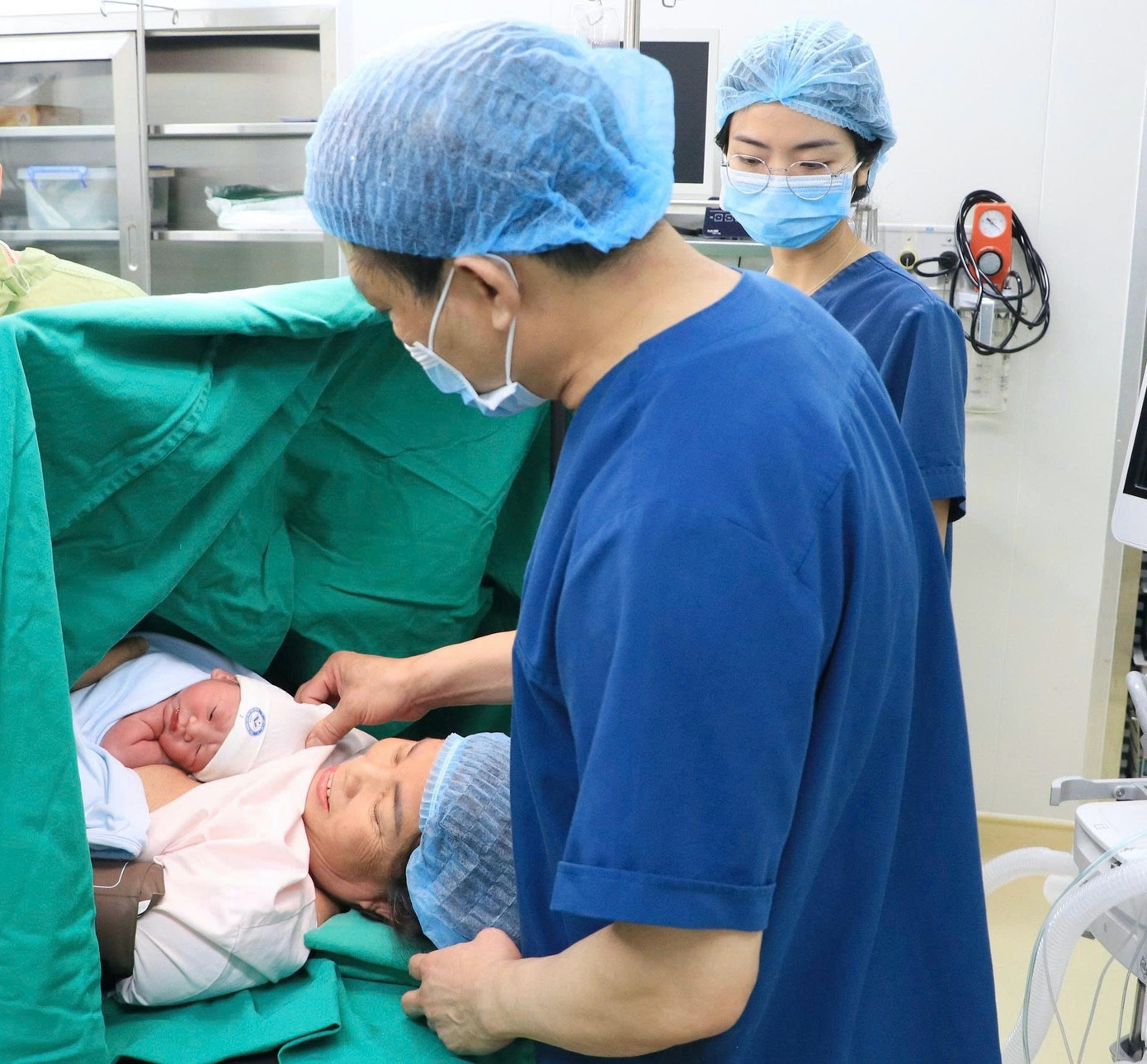
The patient was admitted at 38.2 weeks of pregnancy. Her overall condition was relatively stable, but she faced multiple high-risk factors, including chronic hypertension and gestational diabetes requiring daily insulin control. She also had a history of abdominal surgery for an ectopic pregnancy and uterine adhesion separation.
According to the surgical team, the patient’s vital signs were maintained within a stable range prior to the operation. Throughout the procedure, alongside strict professional focus, Professor Nguyen Duy Anh, Director of the hospital, continuously spoke with and reassured the mother to ease her anxiety, helping her remain calm.
The baby was born on March 20, weighing 2.8kg, crying loudly with good reflexes. The umbilical cord was clamped late - a professional practice that helps prevent anemia and supports the newborn’s immune system.
Doctors noted that this pregnancy fell into a very high-risk category due to the patient’s complex underlying conditions.
At the age of 60, pregnancy and childbirth pose significant challenges to the cardiovascular and endocrine systems, as well as to the body’s recovery capacity, which naturally declines over time. Every clinical indicator must be kept within safe limits, and any change can quickly become unpredictable.
Risks such as cardiovascular complications, stroke due to hypertension, blood sugar instability during and after surgery, postpartum hemorrhage caused by poor uterine contraction, infection, and delayed recovery are all heightened in elderly pregnancies.
In this particular case, the patient’s history of two prior surgeries further increased the risk of adhesions, tissue damage, and bleeding during the operation, requiring extreme precision with virtually no margin for error.
According to Professor Anh, for such special cases, success is not only defined by the safe delivery of a healthy baby. Postoperative monitoring and recovery for the mother remain equally challenging.
Therefore, women who become pregnant at an advanced age should be closely managed at specialized medical facilities to ensure the best possible outcomes.
N. Huyen
.svg)
