A 60-year-old woman in Vietnam suffered life-threatening complications after being chased nearly 2km by a swarm of bees and stung more than 300 times while clearing vegetation in a forest.
A woman in Phu Tho Province has survived a severe bee attack that left her with more than 300 stings, acute liver injury and serious muscle damage, following six days of intensive treatment.
The patient, identified as H.T.M., 60, was clearing vegetation in a forest when her farming tool accidentally struck a giant honeybee nest.
Thousands of bees immediately swarmed out and attacked her.
Despite running nearly 2km and repeatedly attempting to drive the insects away, she was unable to escape the swarm.
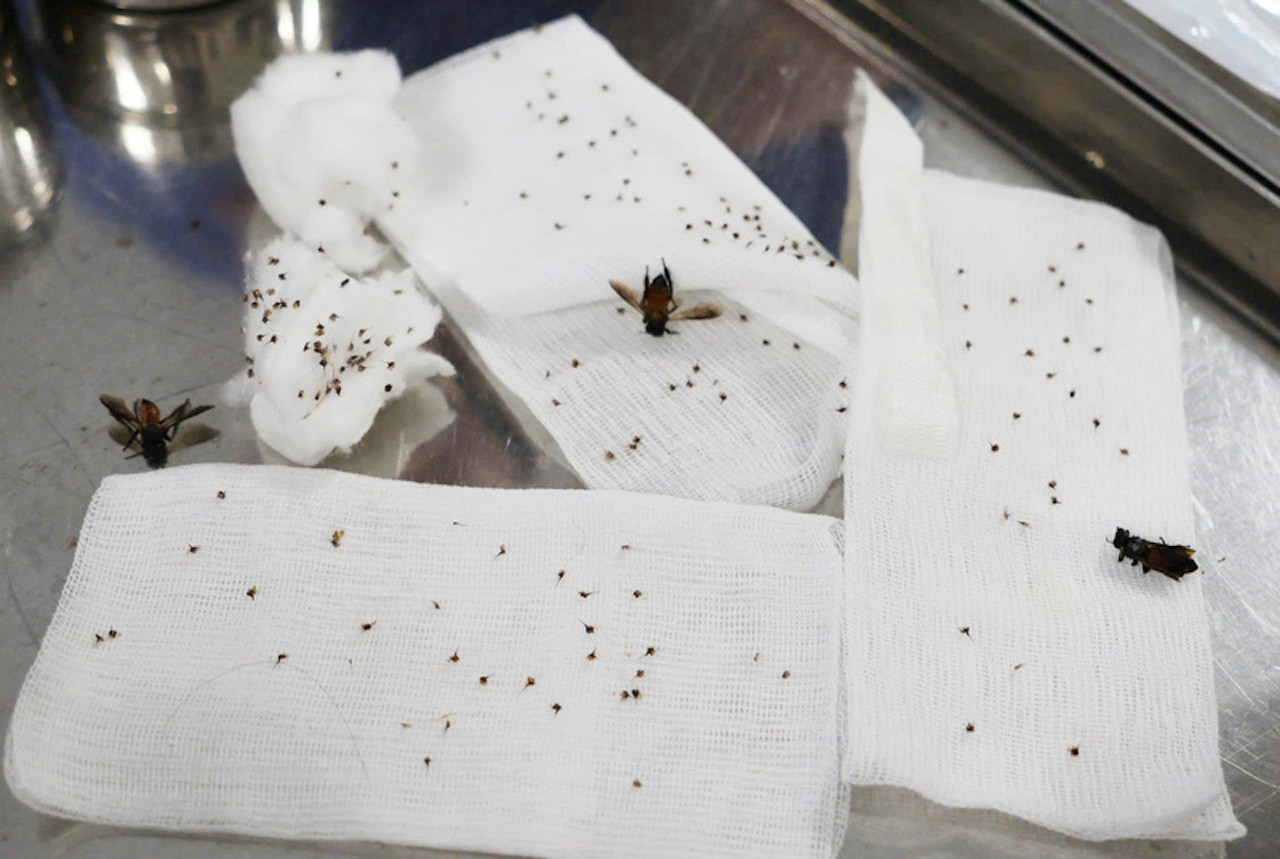
The attack left her with approximately 300 stings across her body, causing excruciating pain, severe swelling and extreme agitation.
The patient suffered hundreds of bee stings across her body during the attack. Photo: Hospital
Her family rushed her to Yen Lap Regional Medical Center for emergency treatment.
At the time of her admission, Dr. Ha Thi Bich Van, head of the Intensive Care and Poison Control Department at Phu Tho Provincial General Hospital, was working at the medical center as a visiting specialist.
Recognizing the potentially fatal effects of the massive amount of venom entering the patient's body, Van immediately assisted local medical staff with emergency treatment.
The woman received oxygen, intravenous fluids, electrolyte replacement and pain medication. Medical staff also urgently removed most of the stingers embedded in her skin before transferring her to Phu Tho Provincial General Hospital.
Severe liver injury and muscle damage
At the hospital's Intensive Care and Poison Control Department, the patient's condition remained critical.
She required oxygen at a rate of three liters per minute through a nasal cannula and experienced severe pain and extensive swelling around the sting sites.
Her head, neck, forearms and back were covered with bruises, while her blood pressure was recorded at 150/90 mmHg.
The 60-year-old woman recovered after six days of intensive treatment. Photo: Hospital
Medical examinations revealed acute liver injury, with liver enzyme levels rising to nearly 10 times the normal range and bilirubin levels becoming dangerously elevated.
Doctors warned that the large quantity of bee venom circulating in her bloodstream could cause further organ damage and potentially lead to multiple organ failure.
The medical team initiated intensive treatment, including plasma exchange, anti-inflammatory medication, pain relief, antibiotics, intravenous fluids and diuretics to help manage the toxic effects and protect organ function.
According to Van, timely plasma exchange helped rapidly remove a substantial amount of circulating bee venom.
After just one session, the patient's liver condition improved significantly, with liver enzymes and bilirubin returning to normal levels.
However, on the third day of treatment, she developed severe acute rhabdomyolysis, a condition involving the breakdown of skeletal muscle tissue that can lead to kidney damage.
Her muscle enzyme levels rose to as much as 100 times the normal range.
Doctors continued intensive treatment using a combination of specialized techniques, aggressive fluid replacement and diuretics to control the muscle damage and preserve kidney function.
The treatment proved effective, preventing serious kidney complications.
After six days, the patient's liver enzymes and bilirubin had returned to normal, while muscle enzyme levels had fallen close to the normal range.
She was conscious, producing urine normally and showing stable liver and kidney function. Swelling around the sting sites had also subsided considerably.
With her overall condition significantly improved, she was discharged from the hospital.
 Vietnamnet.vn

 Podcast