 Vietnamnet.vn

 Podcast



Nearly 30 years in the forest
As the sun breaks through, Lam Nghi, 49, from Tan Khai Ward in Dong Nai Province, picks up a plastic basket packed with rice and food for the day, along with a bottle of water, and walks toward the old motorbike parked outside his home.
He straps a small-bladed hoe to the bike.
Another day of searching for termite queens is about to begin.
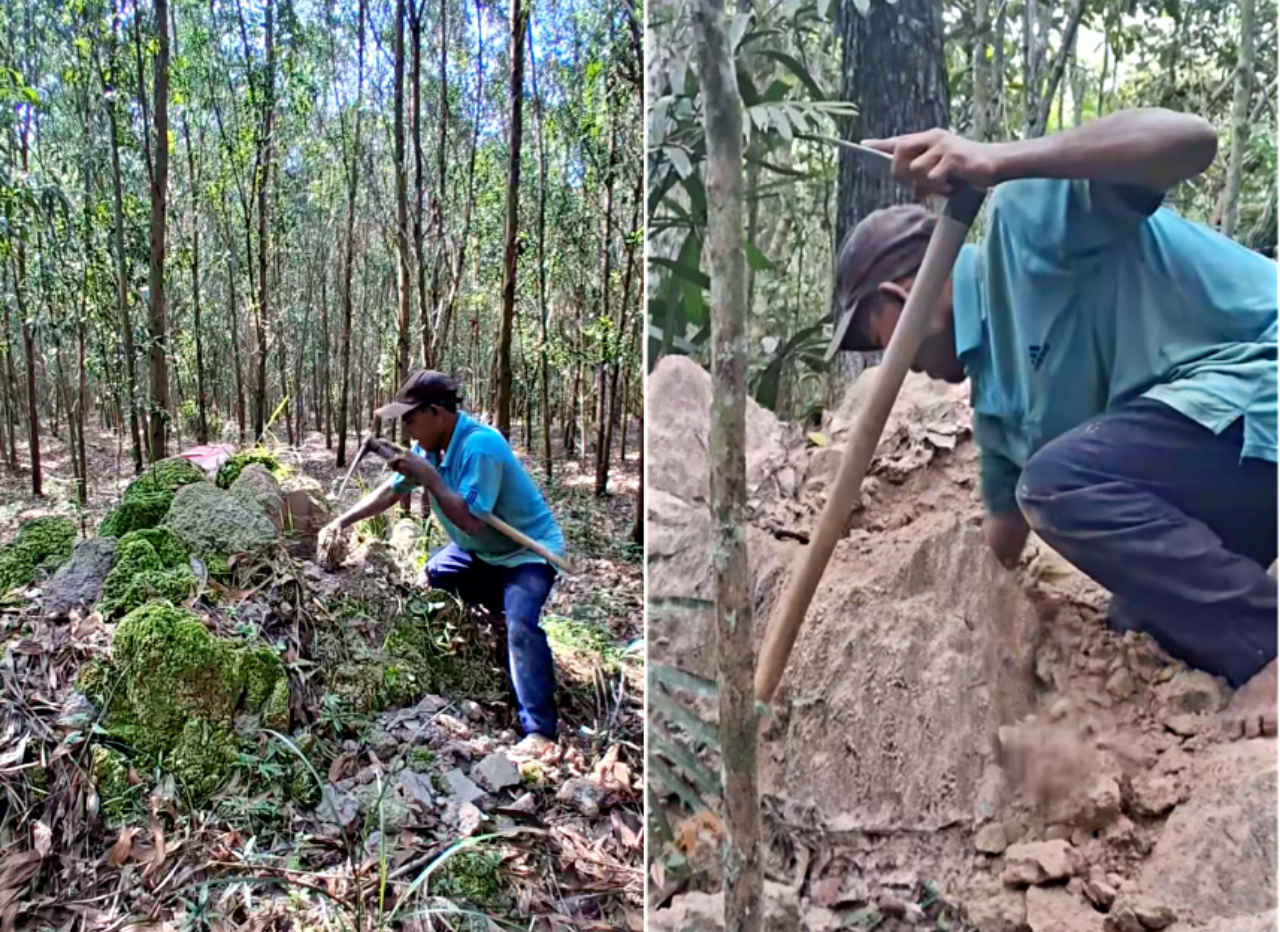
Nghi has been making a living from the forest since he was 18 or 19. In his younger years, he mainly worked on farmland, but the income was unstable. He eventually began following experienced forest workers into the wilderness in search of other ways to earn a living.
He learned how to follow bees to their hives and collect wild honey, gather mushrooms, locate termite colonies and dig for termite queens.
Over time, hunting for honey and termite queens went from being an occasional source of income to his main livelihood, allowing him to support himself and raise a family.
After nearly three decades, Nghi has developed an intimate understanding of termite colonies.
Besides examining mounds for signs of a nest, he says he can hear worker termites moving and feeding on leaves, producing a rustling sound that he compares to falling rain.
Finding a colony, however, is only the beginning.
The real skill lies in locating the queen.
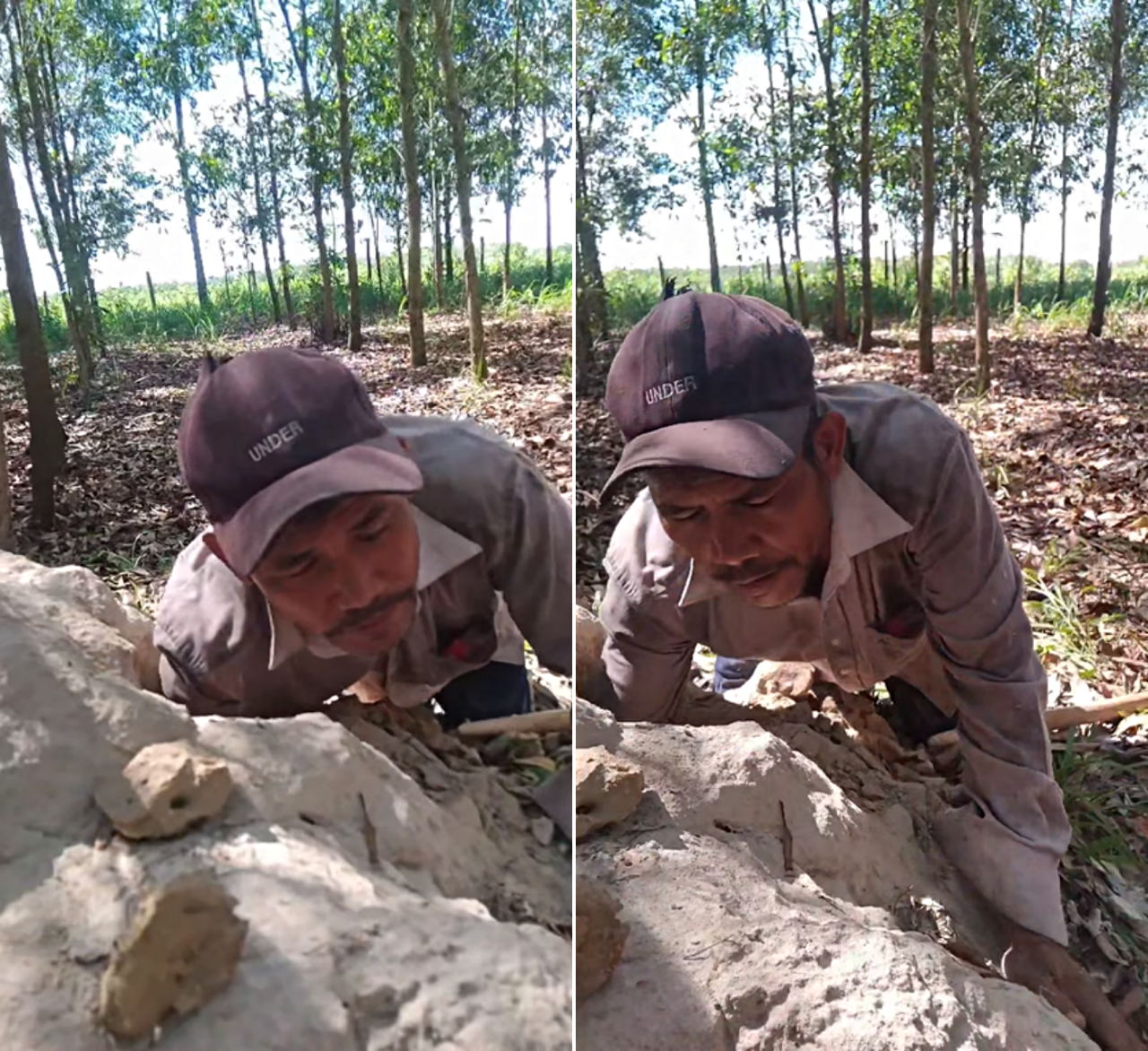
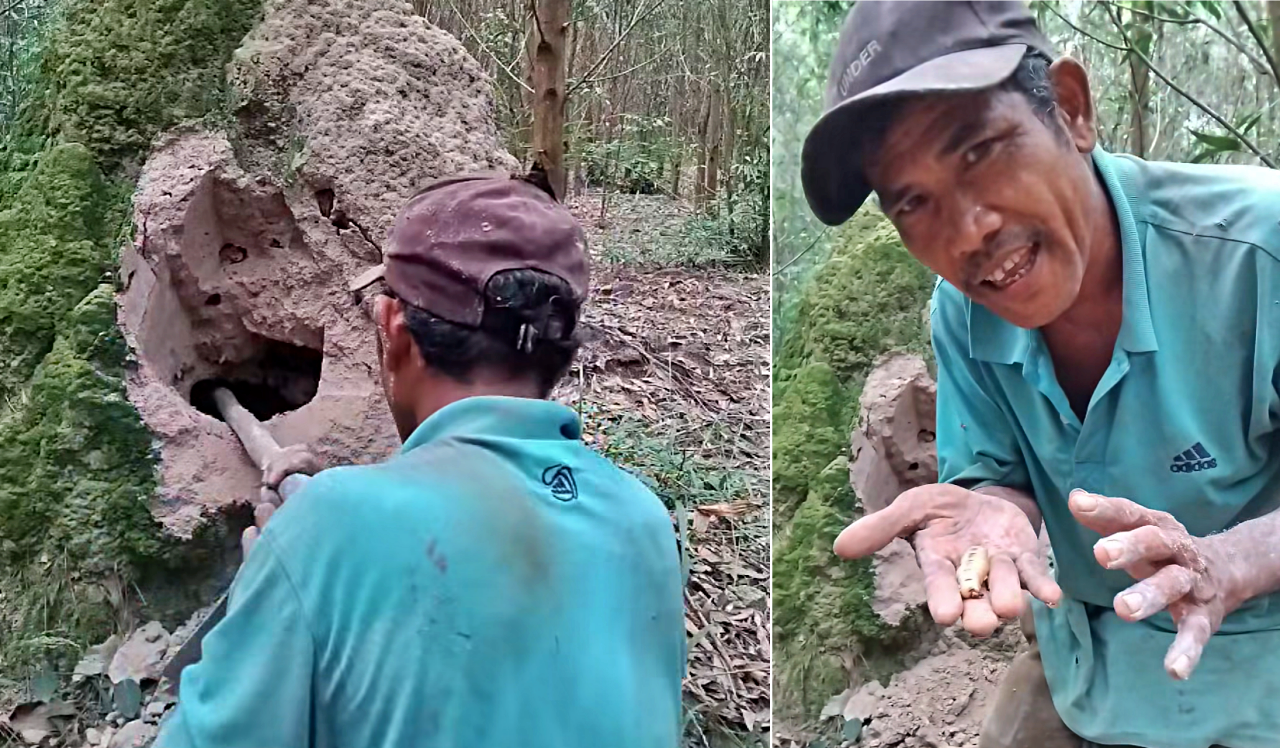
According to Nghi, the termite queen lives inside a particularly solid chamber made of earth, which he calls the “banh,” literally meaning “cake.”
“Identifying the location of the queen’s chamber is extremely important,” he said. “Without experience, you have to dig up the entire termite mound to find it.”
That can turn into exhausting work.
Termite nests are built from a mixture of soil, sand and termite saliva, creating structures that can be exceptionally hard.
“But if you know where the queen’s chamber is, you only have to dig into that particular spot rather than excavating the entire nest,” Nghi said. “It is much faster and more productive.”
Knowing where to dig comes from years of observation.
Nghi says the queen’s chamber does not remain in the same position throughout the year.
During the dry season, termites tend to move it deeper underground, where temperatures are cooler. During the rainy season, the chamber is positioned higher to avoid flooding.
At this time of year, he says, the queen’s chamber is generally located on the side facing the setting sun, helping it avoid direct sunlight.
Before breaking into a mound, Nghi taps it with the head of his hoe and listens carefully to the sound coming back.
From the resonance alone, he says, he can pinpoint where the chamber lies.
A livelihood hidden underground
Once Nghi believes he has found the right spot, he begins digging.
He opens a hole just large enough to reach inside, sometimes using the handle of his hoe to probe deeper until he can pull out the queen’s chamber.
He then carefully splits it open with the blade.
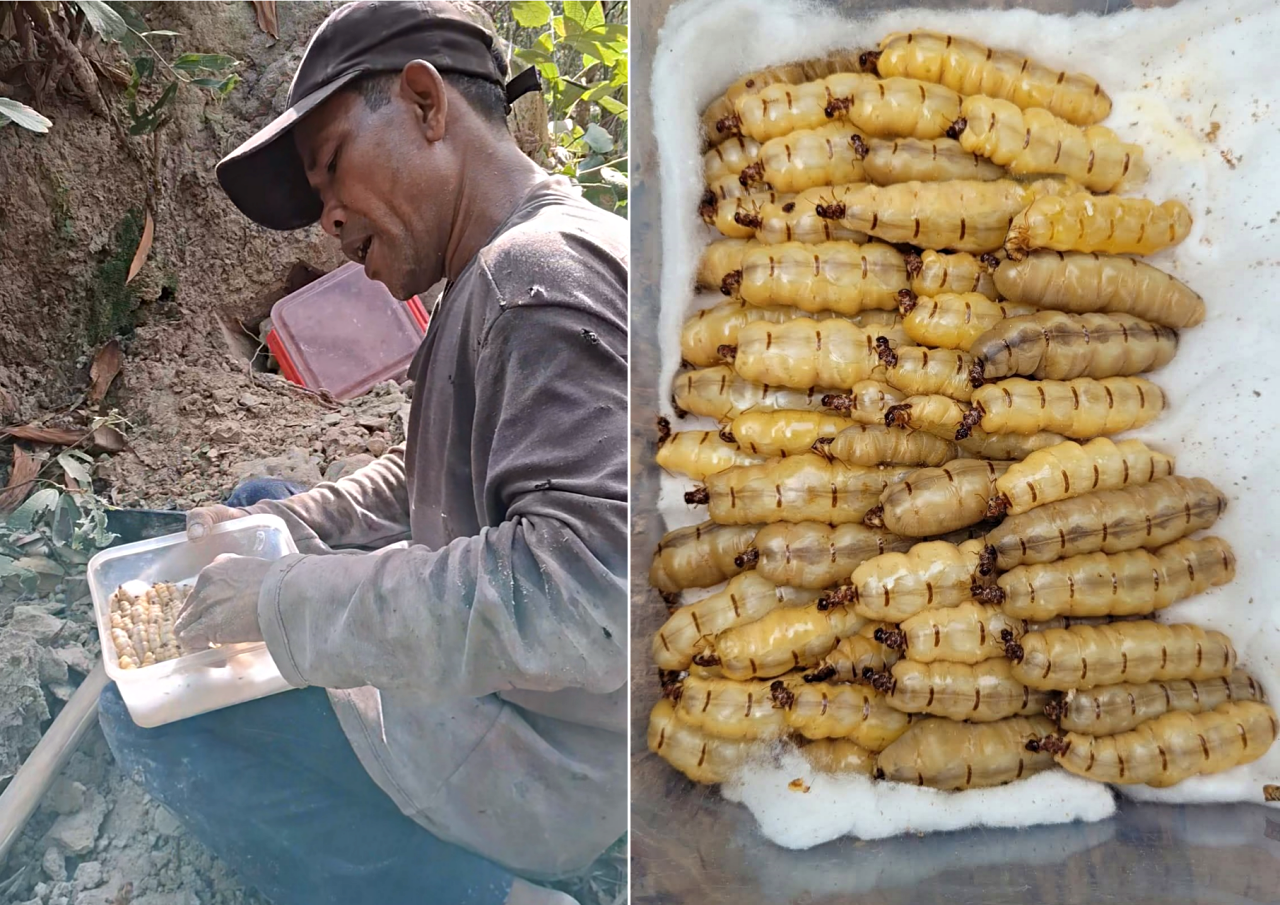
Inside is the prize he has spent hours searching for: a pale, swollen termite queen measuring around 5-12cm long.
He places it carefully into a plastic container and keeps it alive until it can be sold.
On an average day, Nghi can find around 40-70 termite queens, depending on his health and conditions in the forest.
He says termite queens are regarded by some customers as a nourishing traditional remedy and have even acquired the nickname “sung than duoc,” roughly meaning a “miracle vitality booster.” Demand is strong enough that customers often place orders in advance, and his catch regularly sells out.
Nghi sells the queens individually, dividing them into three sizes.
Large queens cost about $0.75 each (VND20,000), medium-sized ones sell for around $0.75 for two, while three smaller queens cost approximately $0.75.
His termite hunting alone brings in around $19 a day (VND500,000).
But termite queens are not the only treasure he searches for beneath the forest floor.
Nghi also collects wild honey and hunts for sam o linh, a rare black fungal sclerotium that develops inside abandoned termite nests.
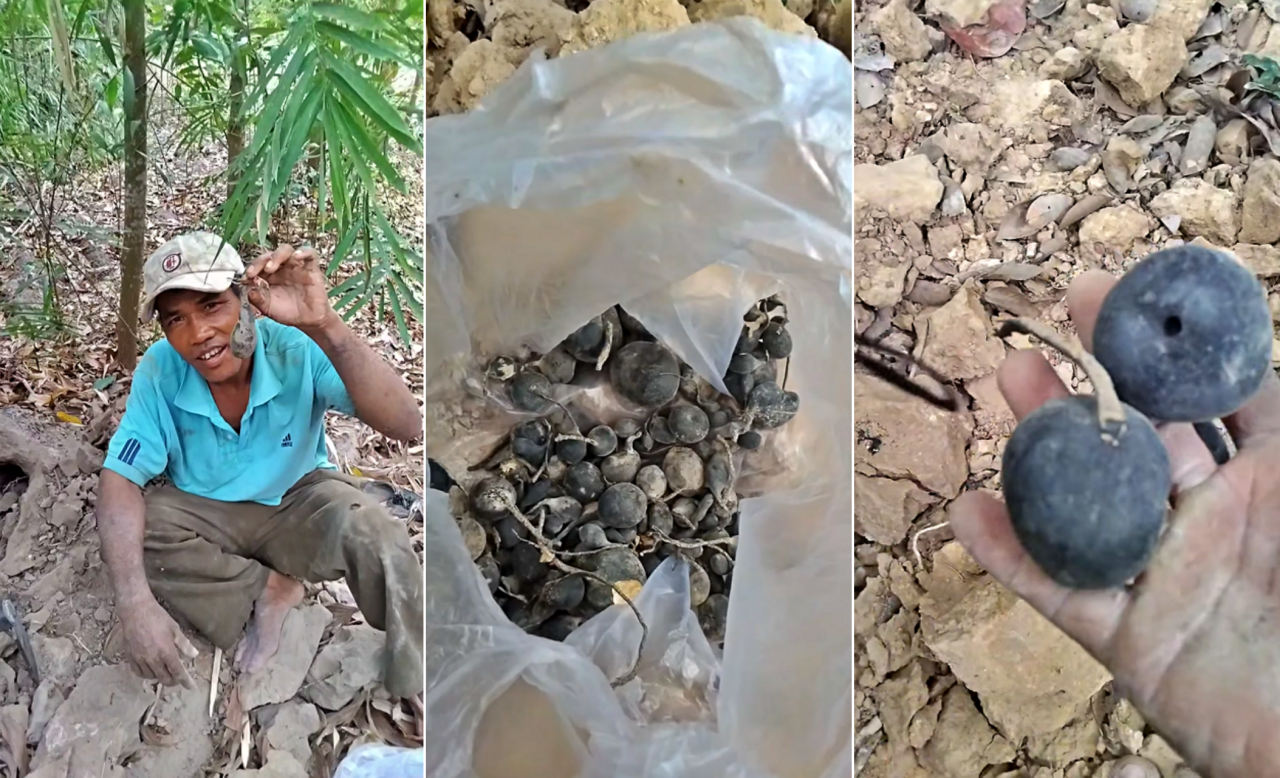
Its dark appearance and high value in traditional medicine have earned it the nickname “black gold.”
According to Nghi, sam o linh can develop in some termite colonies after the queen and male termites have died. It gradually forms from the first through the fifth month of the lunar calendar.
Not every abandoned mound contains it, however.
Recognizing the signs, he says, requires the kind of experience that can only be accumulated through years in the forest.
For Nghi, finding sam o linh, termite queens and wild honey on the same trip can turn an ordinary day in the forest into a particularly lucrative one.
On a lucky day, he can earn several million dong.
A dangerous journey for ‘black gold’
The income comes at a cost.
Termite colonies and wild beehives have become harder to find close to home, forcing Nghi to travel deeper into forested areas bordering what were formerly Tay Ninh, Binh Phuoc and Binh Duong provinces.
The distances mean there is little possibility of returning home for lunch.
He leaves early in the morning carrying his own food, eats in the forest and often does not return until late afternoon or evening.
The work requires physical strength, but experience can be even more important.
The forest carries risks that have become part of Nghi’s working life: snakes, centipedes, bee stings and hidden pits deep enough to cause serious injury.
“Nobody can say this work is easy,” he said.
Yet nearly three decades after he first followed experienced workers into the forest, Nghi continues to return.
“If I’m lucky and collect plenty of termite queens, honey and sam o linh, I can earn good money - several million dong a day,” he said.
More importantly, the forest has provided for his family.
“Over the years, this work has allowed me to support myself, my wife and our three children until they grew up,” Nghi said. “I’ve been connected to the forest for nearly 30 years. I’m used to it now, and I love this work.”
What began as an escape from the uncertainty of farming has become the work of a lifetime.
Each morning, Nghi still packs his food, straps his hoe to an aging motorbike and heads toward the forest.
Somewhere beneath the hard earth may be a termite queen.
And, if he is lucky, a piece of “black gold.”
Ha Nguyen
.svg)
