 Vietnamnet.vn

 Podcast



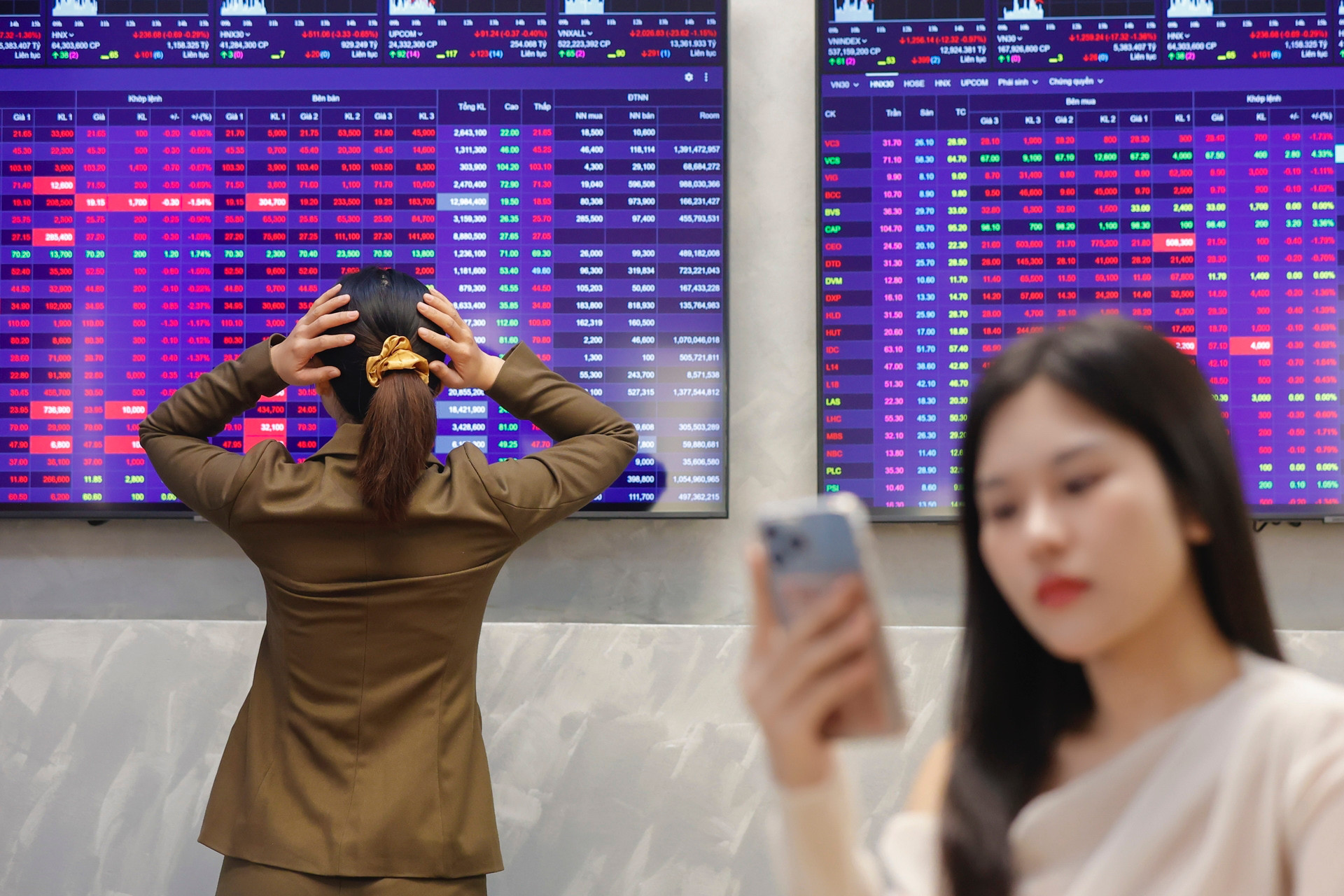
In 2021, as the stock and cryptocurrency markets entered a period of rapid growth, social media was flooded with posts showing off profitable accounts. Tran Thu Trang, 29, began to feel restless. Fear of missing out led her to believe that if she did not make investment decisions immediately, she would fall behind. Ultimately, she decided to withdraw VND500 million from her savings, viewing it as a financial turning point.
Her initial portfolio clearly reflected a trend-driven approach. Most buying and selling decisions were based on the feeling that “if it is rising, it will keep rising,” combined with herd mentality. There was almost no risk management plan in place.
The first few weeks unfolded as expected. Prices increased, her account turned positive, and early gains boosted her confidence. The more profit she made, the less cautious she became. Minor fluctuations were seen as buying opportunities, and each market rebound reinforced her belief that she had chosen the right direction. The surrounding atmosphere strengthened that conviction, as many others were still reporting significant gains.
Then the market reversed. Speculative stocks declined faster than the broader market. In cryptocurrencies, losses were even larger and more rapid as speculative capital quickly withdrew. Within six months, her portfolio had lost nearly 40 percent.
With each passing day and further declines in her account, she felt increasingly out of control. The problem was not only the loss, but also the prolonged psychological pressure, coupled with the fear that her mistake had been fundamental from the start.
As financial pressure mounted, she no longer had the ability to wait for the market to recover, as many advised. She was forced to sell part of her portfolio to ensure cash flow for daily living.
After that period, what exhausted her most was not the loss of money, but the feeling that she had entered a game without understanding the rules. She also realized that profits during a booming market phase did not necessarily reflect genuine investment capability.
The risk of trend-driven investing
According to financial advisor Nguyen Manh Cuong, trend-driven investing often arises from a predictable chain of psychological effects. When stories of profits appear frequently, people tend to overestimate the probability of success and underestimate risk.
The major characteristic of trend-based investing is fast decision-making speed, lack of verification, and often accompanied by high profit expectations in a short time. Investors may not grasp the business model of the enterprise, do not understand cash flow, and do not know why prices are rising, yet they still buy just because prices are increasing and others are buying.
Furthermore, short-term profits during favorable market phases lead many to mistakenly believe they are talented, thereby increasing their proportions, using leverage, or pouring in more savings, making the subsequent drop even more severe.
The expert believes there are three layers of risk in cases like Trang's. The first layer is market risk, which cannot be completely eliminated. The second layer is the risk of ignorance: buying assets without understanding intrinsic value, the factors causing price fluctuations, or having criteria for buy-hold-sell decisions. The third layer is personal financial risk: having no reserve fund and using money needed for daily life to invest, causing investors to lose the right to wait and forcing them to sell at disadvantageous times.
Another important point lies in the confusion between investing and speculating.
In long-term investing, goals are usually tied to sustainable asset accumulation, based on value and the ability to generate cash flow.
In speculation, goals are primarily based on short-term price fluctuations, requiring tight risk management skills, high discipline, and the ability to endure losses in certain periods. The danger is that many people engage in speculative behavior while confidently believing they are investing safely, so they do not prepare for bad situations.
As a consultant, experts often focus on building a foundation before optimizing profits. The foundation includes an adequate reserve fund, a stable personal financial structure, and a clear risk tolerance principle.
Investors need to know in advance what they will do when the market drops sharply, rather than just reacting when panic occurs. If one cannot determine how much loss they can endure, pursuing high profits is very dangerous, because the higher the expected profit, the higher the accompanying risk.
Tuan Nguyen
.svg)
