 Vietnamnet.vn

 Podcast


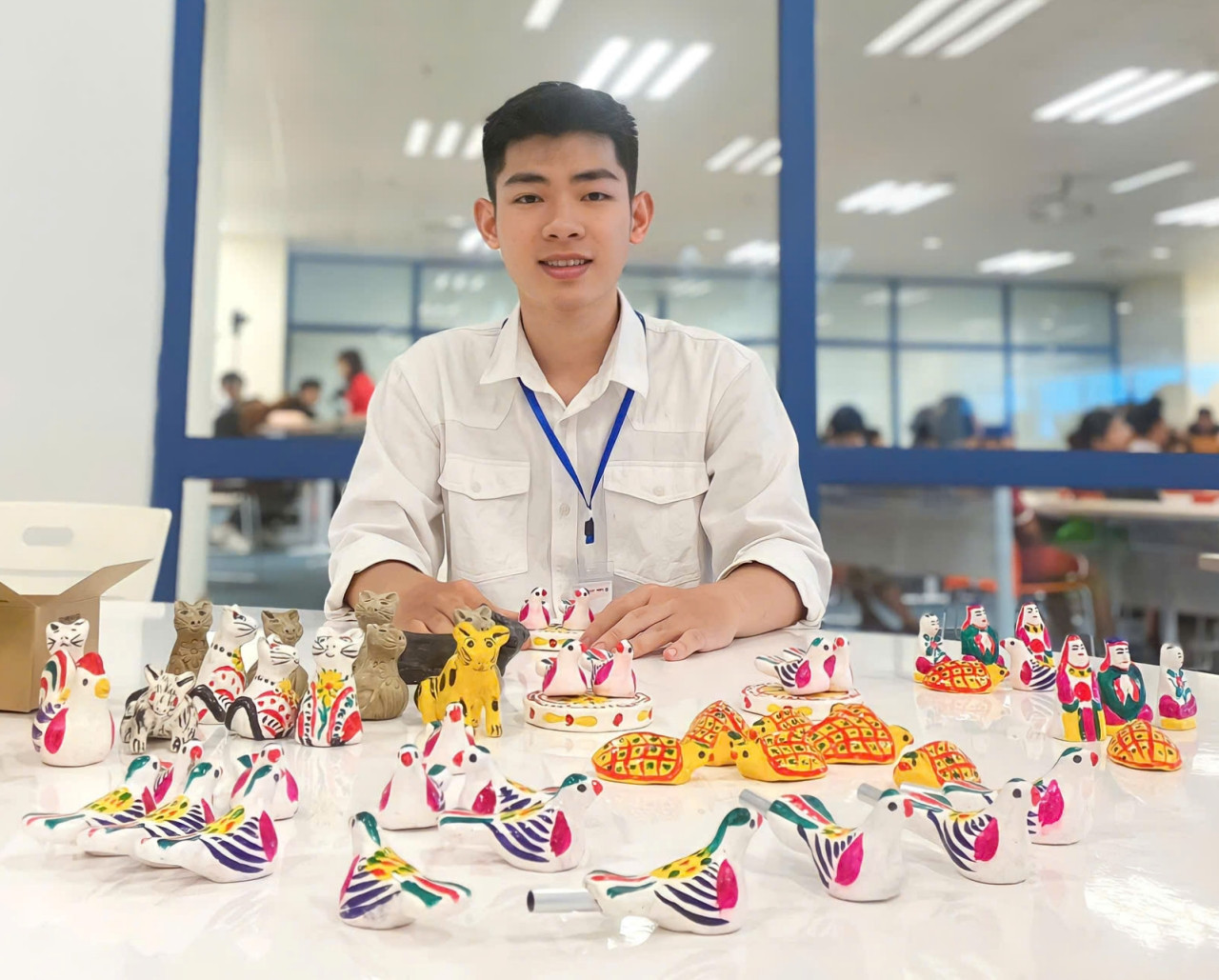
A hereditary craft in the Kinh Bac region
Nestled among households making votive paper products in Thuan Thanh ward (Bac Ninh City), inside a small house, Phung Dinh Dat (born in 2002) diligently shapes each piece of clay, turning them into traditional folk toys.
Locally, Dat is known as the grandson of Phung Dinh Giap (74), one of the last artisans still preserving the craft of making traditional clay figurines. Dat said clay figurines are traditional folk toys displayed on Mid-Autumn Festival feast trays for generations of children in the Kinh Bac region.
In the past, Dat's hometown was famous for this craft, and his family has pursued this traditional vocation for generations.
Even so, Giap does not know exactly when the craft originated. He only remembers seeing his grandfather and father molding clay figurines when he was small. At the age of 7, he also began learning how to shape them. Every Mid-Autumn Festival, the entire village would busily carry shoulder poles loaded with clay figurines to sell at the market.
Dat was taught by his grandfather that a traditional set of clay figurines consists of five characters: the Buddha figurine, the standing elder figurine, the child holding a flower figurine, the pigeon figurine, and the turtle figurine.
“In the past, a traditional set of figurines was respectfully arranged on the Mid-Autumn moon-viewing tray alongside the five-fruit tray and colorful lanterns. Each character in the set carries its own special meaning in folk tradition.
However, clay figurines are a seasonal toy, made primarily during the Mid-Autumn Festival, and do not generate much income. As a result, villagers gradually shifted to other livelihoods such as trading or making votive paper goods.
My family has followed the craft for generations, but my father still had to take up other work to earn a living. Over time, the craft of making clay figurines gradually faded away. Today, very few people in the locality still preserve this traditional craft,” Dat shared.
Preserving the traditional craft
Born into a family devoted to molding clay figurines, Dat grew up watching his grandfather knead clay and create figurines. His childhood was closely tied to stiff clay (a firm clay retrieved from depths of 2–2.5 meters) and traditional paper.
Dat vividly remembers the sessions where his grandfather meticulously guided him through shaping each figurine and explained in detail the meaning behind every character in the set.
On Mid-Autumn occasions, Giap would mold figurines based on the 12 zodiac animals for his children and grandchildren. He even skillfully crafted clay whistles for the kids to blow loudly throughout the neighborhood.
As he grew up, Dat accompanied his grandfather to events promoting the set of figurines and guiding visitors through hands-on experiences. Those memories gradually fostered his deep affection and pride for his family’s and hometown’s long-standing traditional craft.
That pride drove Dat to make efforts to introduce the craft to a wider audience. Since his days as a student at Hanoi University of Civil Engineering, Dat had already created social media pages, taking photos and filming videos to introduce the clay figurines.
After graduating, Dat worked in various fields outside his major, including positions as an industrial park worker, sales staff, and category manager. Throughout his working period, Dat thought constantly about how his family’s craft of molding clay figurines was slowly dying out.
Seeing his grandfather's age while the hereditary craft faced the risk of being lost forever, Dat felt saddened and regretful. After a brief period of reflection, the young man decided to quit his job to focus full-time on learning how to mold clay figurines.
“Having been attached to molding clay figurines since childhood, I hold many cherished memories. To me, even though it is just a toy, the set of figurines carries profound educational significance. Yet, due to various reasons, this traditional craft and cultural beauty is teetering on the brink of extinction.
I realized that if young people like me do not step up to continue it, the craft of clay figurines will disappear. Therefore, I decided to return home and preserve the craft with my grandfather.”
To carry on the tradition, Dat essentially had to relearn everything from preparing the clay to sculpting the figurines.
Wishing to make the traditional craft better known, in recent years, Dat has used social media to spread stories about the trade. Dat's family also organizes experiential workshops for students and tourists to try molding clay figurines themselves and learn about this cultural feature.
Ha Nguyen

