A 4.5-tonne stone pillar commissioned by Vietnamese King Le Dai Hanh in 995 still stands at Nhat Tru Pagoda in Ninh Binh Province.
Bearing ancient Buddhist scriptures and inscriptions, the national treasure offers a rare glimpse into Vietnam's religious history.
Nhat Tru Pagoda, built in the 10th century, is located within the ancient Hoa Lu capital complex in Ninh Binh Province.
Located within the ancient Hoa Lu capital complex in Tay Hoa Lu Ward, Ninh Binh Province, Nhat Tru Pagoda dates back to the 10th century and is home to one of Vietnam's most remarkable Buddhist artefacts.
The pagoda, also known as the One Pillar Pagoda, takes its name from a stone scripture pillar standing in its courtyard. The monument bears inscriptions associated with the Surangama Sutra, a Buddhist scripture.
Historical records indicate that King Le Dai Hanh (941-1005), also known as Le Hoan, commissioned the pillar in 995, more than 1,000 years ago.
An inscription on the stone reads: "Created by the disciple, Emperor Thang Binh," referring to Le Hoan.
The pillar's surfaces are engraved with dedicatory inscriptions, Buddhist scriptures and verses praising the Buddha's virtues and wisdom. The texts also express prayers for national peace, public well-being and the stability of the royal court, reflecting the deep influence of Buddhism during the period.
A 4.5-tonne national treasure with ancient Buddhist inscriptions
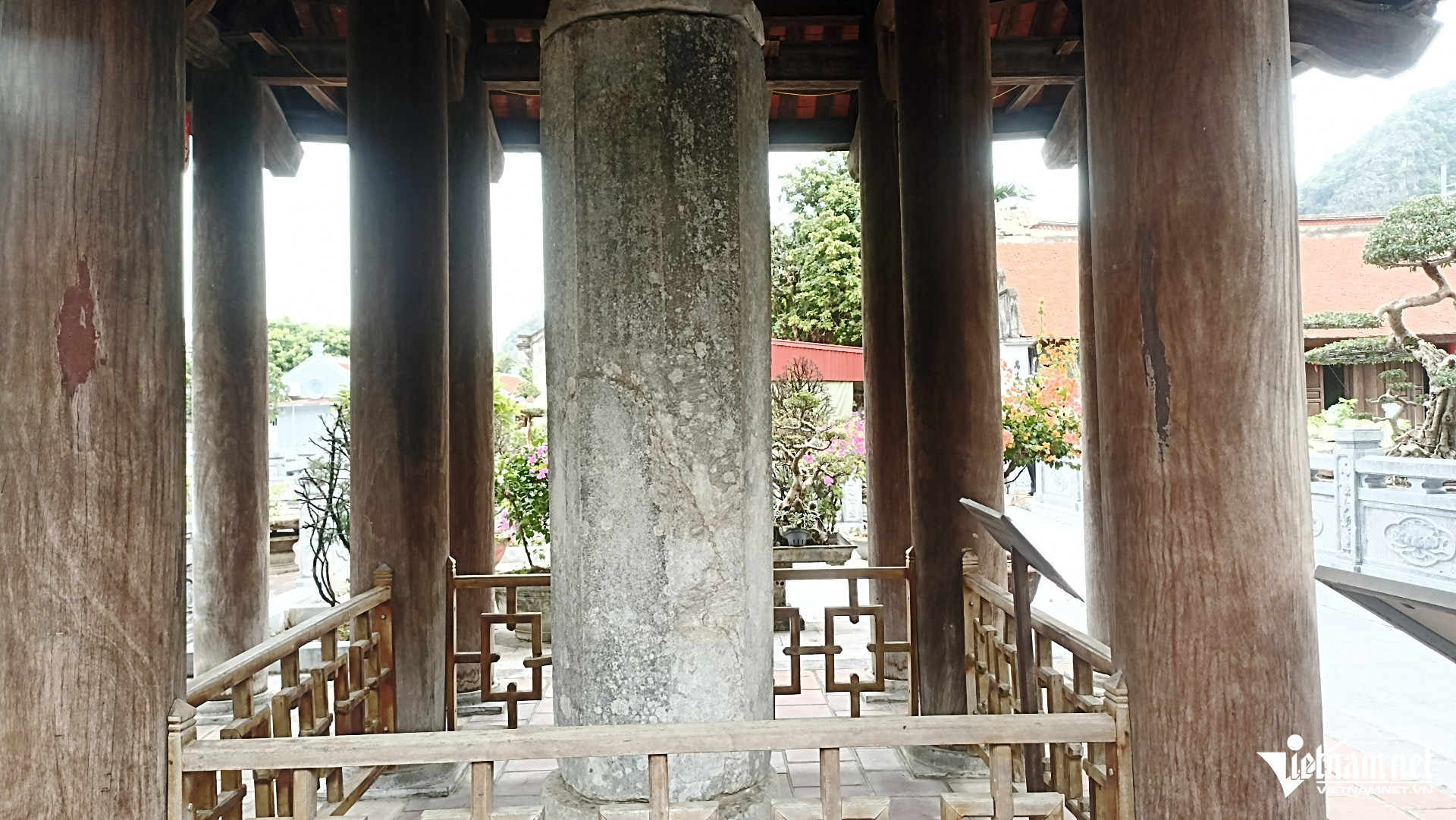
Nhat Tru Pagoda preserves a Buddhist scripture pillar commissioned by King Le Dai Hanh in 995.
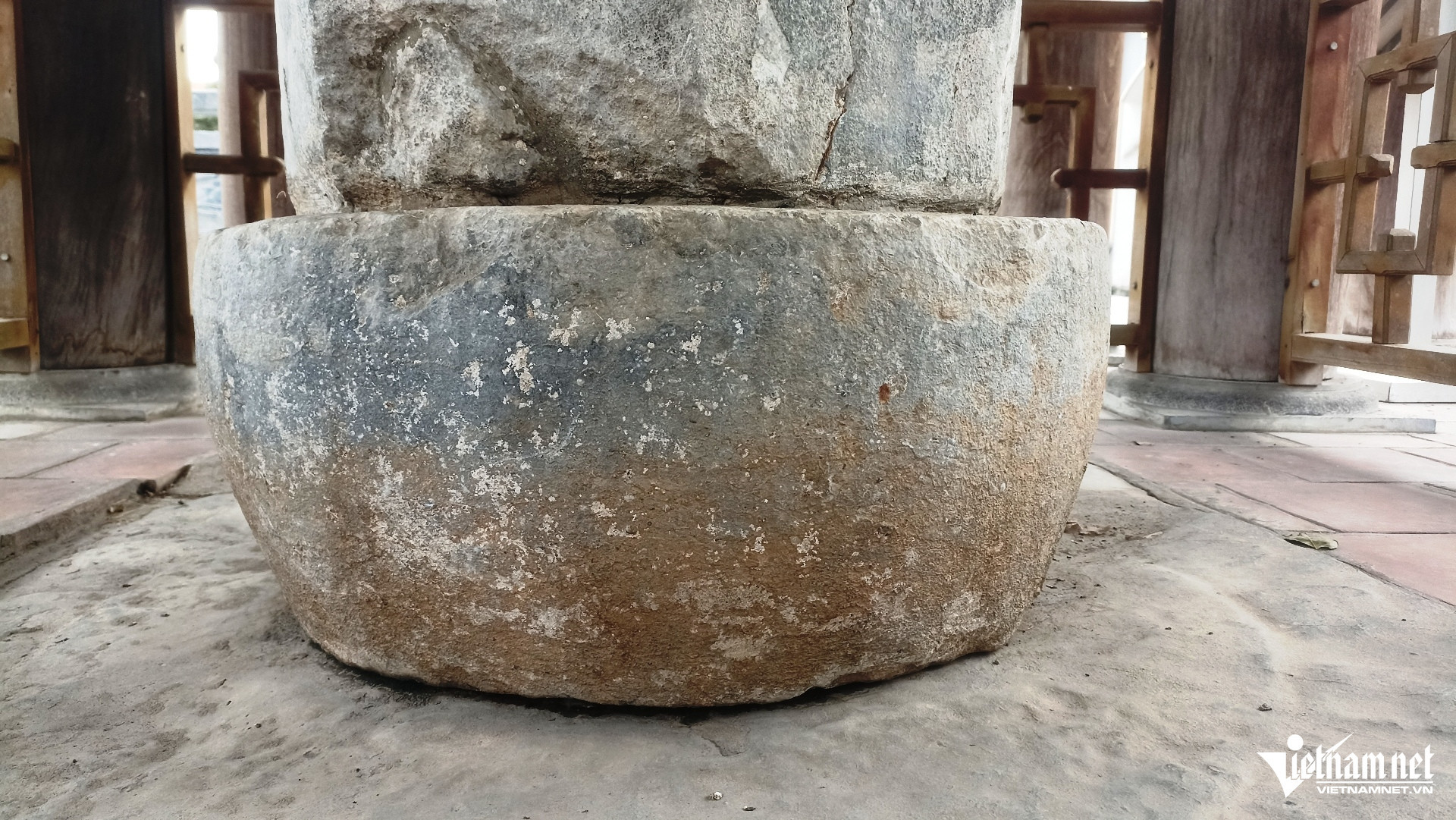
Researchers have identified a distinctive lotus-petal design surrounding the pillar's base.
The decoration consists of 22 individual lotus petals arranged in a circle measuring 107cm in diameter. Each petal is approximately 15-17cm long and 10.5-13cm wide.
These are considered among the earliest examples of lotus-petal motifs in Vietnamese sculpture and are believed to have influenced decorative styles in architecture during the subsequent Ly and Tran dynasties.
Recognised as a National Treasure in 2015, the Buddhist scripture pillar stands 4.16 metres tall and weighs approximately 4.5 tonnes.
Its structure comprises six stone components assembled using traditional handcrafted joints: a square foundation stone, a circular base, an octagonal shaft, an octagonal supporting slab, an octagonal capital and a lotus-shaped finial.
The Buddhist scripture pillar consists of six components carved from green stone.
The octagonal shaft is carved from a single block of green stone, wider at the top than at the bottom, and measures 2.37 metres in height.
The components were carefully fitted together and erected vertically without modern construction techniques.
The main shaft, carved from a single block of green stone, measures 2.37 metres in height. It has an octagonal shape, with a wider upper section and a narrower lower section.
Both ends feature projecting joints that connect the shaft to the base and upper supporting slab.
Its eight polished surfaces were originally engraved with approximately 2,500 Chinese characters.
However, more than a millennium of exposure to the elements has gradually worn away many of the inscriptions.
Today, researchers can identify and read only around 1,200 characters, leaving much of the original text incomplete.
Despite this deterioration, surviving historical documents have enabled scholars to establish that the inscriptions contain three main sections: dedicatory records, Buddhist verses and scripture passages.
The eight polished surfaces of the octagonal shaft bear dedicatory inscriptions, passages from the Surangama Sutra and Buddhist verses praising the Buddha's virtues and wisdom.
The upper section of the pillar features an octagonal supporting slab, an octagonal capital and a lotus-shaped finial.
One surviving passage refers to Emperor Thang Binh and the transmission of Buddhist teachings, while another commemorates Le Hoan's accession to the throne and his role in bringing stability to the country.
A translated excerpt describes a vessel carrying Buddhist wisdom across the sea to the homeland and recalls how the emperor, regarded as the founder of the Le dynasty, received Heaven's mandate and brought peace to the nation 16 years earlier.
These inscriptions provide valuable evidence of the relationship between Buddhism, royal authority and Vietnamese society during the 10th century.
Preserving a rare relic of Vietnam's early Buddhist history
Cracks and signs of deterioration have appeared on the stone pillar over time.
International tourists visit the ancient Buddhist scripture pillar at Nhat Tru Pagoda.
Originally exposed to the elements, the pillar is now protected by the Nghinh Phong pavilion, supported by 16 ironwood columns and designed in traditional Vietnamese architectural style.
According to local residents, the scripture pillar originally stood outdoors, exposed to rain, sunlight and other weather conditions.
To protect its ancient carvings and Chinese inscriptions from further deterioration, a substantial protective pavilion known as Nghinh Phong was later constructed around it.
The pavilion features 16 ironwood columns and a traditional curved roof, resembling the architectural style of many historic Vietnamese temples and communal houses.
The structure helps shelter the monument while allowing visitors to observe its distinctive stonework and inscriptions.
The pillar is considered a unique historical artefact, notable for its unusual construction, intricate decorative motifs and sophisticated stone-carving techniques.
It also represents an important surviving example of Buddhist culture during Vietnam's early period of independence.
Researchers regard the monument as evidence of the craftsmanship and artistic achievements of Vietnamese artisans more than a thousand years ago.
Remarkably, the pillar has remained in its original location since it was erected in 995.
It was also the first artefact in the former Ninh Binh Province to receive National Treasure recognition.
Although cracks and other signs of deterioration have appeared over time, the monument continues to attract visitors interested in Vietnam's history, Buddhist heritage and ancient architecture.
More than ten centuries after its construction, the stone pillar at Nhat Tru Pagoda remains a tangible connection to the reign of King Le Dai Hanh and the religious traditions of Vietnam's early dynasties.
 Vietnamnet.vn

 Podcast