 Vietnamnet.vn

 Podcast



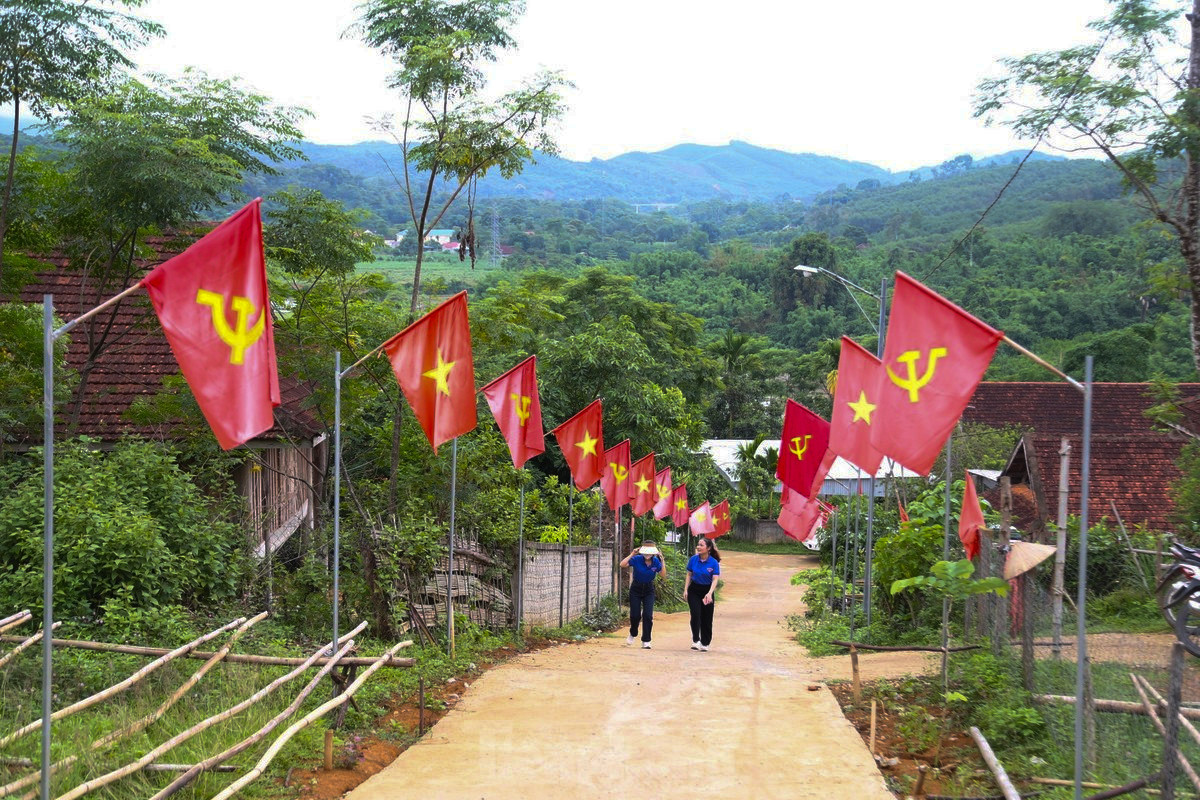
Multidimensional, sustainable, and inclusive poverty reduction is a new perspective affirmed in the Documents of the 13th National Party Congress. This serves as an important orientation for formulating and synchronously implementing investment policies and support for extremely difficult areas during the 2021–2025 period, thereby contributing to narrowing the development gap between regions and ethnic groups, ensuring social security, improving people's quality of life, and creating a solid foundation for the country's rapid and sustainable development.
Accurately identifying reality of poverty
A report from the National Office for Poverty Reduction under the Ministry of Agriculture and Environment (MAE) shows that the national poverty rate has dropped sharply, from 5.2 percent in 2021 to an estimated 0.9–1.1 percent by 2025. Specifically, the poverty rate among ethnic minority households decreased to 12.55 percent, with an average annual reduction of more than 4.45 percent.
According to Lawyer Nguyen Cao Thong, Head of Cao Thong and Associates Law Office (Hanoi Bar Association), achievements in poverty reduction in the past years are not only shown in statistics but, more importantly, in the change of approach.
According to Government Decree No07/2021, for the 2022–2025 period, a household is defined as a poor when it has an income below 1.5 million VND per person per month in rural areas, and 2 million VND in urban areas, and simultaneously lacks at least 3 out of 6 basic social service indicators: healthcare, education, housing, clean water, sanitation, and information.
"The multidimensional poverty standards for the 2022–2025 period help the State see a more comprehensive picture of poverty while approaching international standards proposed by the World Bank and the UNDP," Lawyer Thong noted.
With Decree No07/2021, Vietnam has issued national poverty lines eight times. The special feature of the poverty line in the recent period is its close adherence to the orientations in the 13th National Party Congress Resolution regarding multidimensional, sustainable, and inclusive poverty reduction.
According to Pham Hong Dao, Deputy Chief of the National Office for Poverty Reduction, Vietnam is one of the first 30 countries in the world and one of the first in Asia to apply multidimensional poverty lines, ensuring minimum living standards associated with sustainable development goals.
"The application of the multidimensional poverty line is a historical turning point in poverty reduction work in Vietnam. This is evidence of the determination to innovate thinking, take people as the center, aiming for inclusive and sustainable poverty reduction," Dao stated.
Momentum to enter a new era
The 13th National Party Congress Resolution set a goal that by 2025, Vietnam will become a developing country with modern industry, surpassing the low-middle income level; by 2030, a modern industrial country with upper-middle income; and by 2045, a developed, high-income country following socialist orientations.
To achieve these goals, rapid and sustainable socio-economic development has been identified as one of three pillars. With the principle of “leaving no one behind” on the development path, the Party and the State have adopted many policies with priorities given to disadvantaged areas and vulnerable groups, including poor and near-poor households.
For that reason, the issuance of a multidimensional poverty standard under Decree No 07/2021/ provides a foundation for implementing poverty reduction and social security policies, while also guiding socio-economic development programs for the country’s “poverty core” regions.
For ethnic minority and mountainous areas, the 2021–2025 period is a time for the simultaneous implementation of three National Target Programs: building new-style rural areas, sustainable poverty reduction, and socio-economic development in ethnic minority and mountainous areas. Effectively integrated resources have significantly contributed to reducing the number of extremely difficult areas in this region.
According to a report from the Ministry of Ethnic and Religious Affairs, by the end of 2025, 35.8 percent of communes (out of 1,551 Area III communes under Decision No 861/QD-TTg) had escaped particularly difficult conditions, while 26.9 percent of villages (out of 13,222 particularly disadvantaged villages under Decision No 612/QD-UBDT) had escaped poverty.
Regarding the National Target Program for socio-economic development in ethnic minority and mountainous areas for the 2021–2025 period under Decision No1719/QD-TTg (NTP 1719), ministries, branches, and localities evaluate this as an important "push," creating development momentum for the "core poverty" areas.
Sy Hao
.svg)
