 Vietnamnet.vn

 Podcast



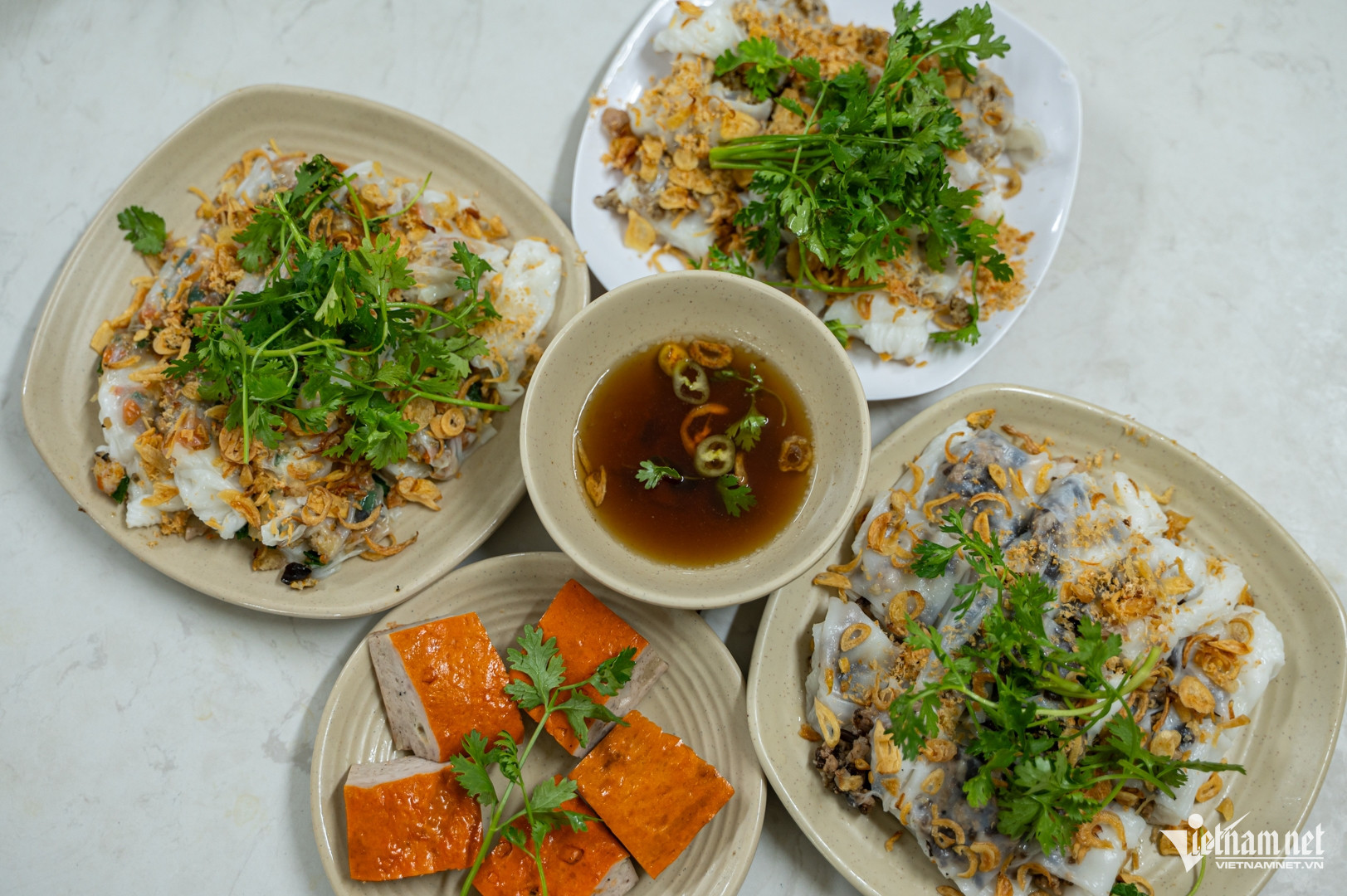
At noon recently, the banh cuon eatery located on Hang Ga Street in Hoan Kiem, Hanoi, was packed with diners. Tran Thi Van, 69, the shop owner, was swiftly rolling the batter over two steaming, smoke-filled pots. Four to five young employees were assisting with tasks like rolling the cakes, serving tables, and handling payments.
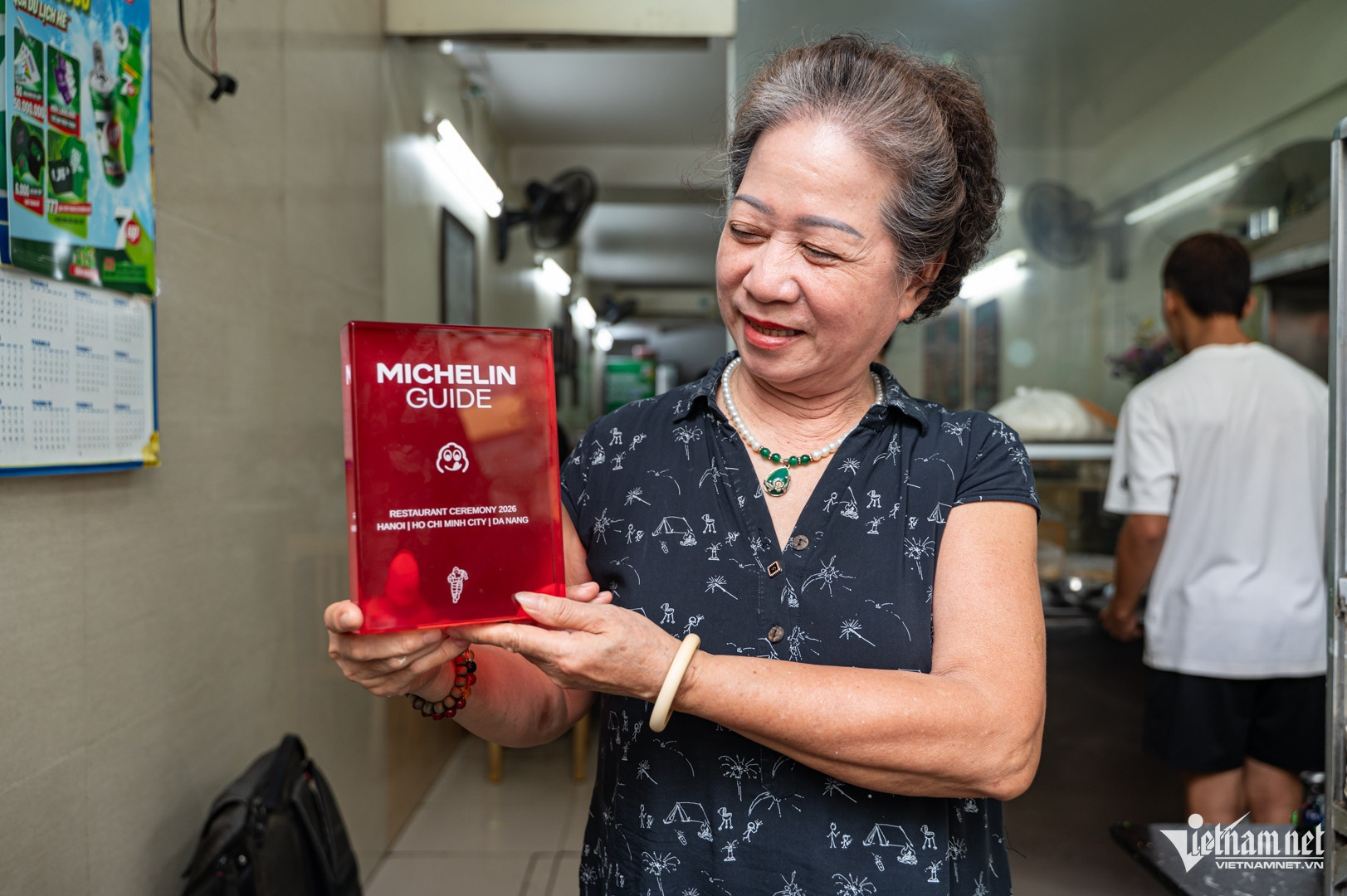
A few regular customers had just arrived to congratulate Van upon hearing the news that the eatery was one of 11 dining establishments in Vietnam honored by Michelin in the 2026 Bib Gourmand category.
Thanh Van Traditional Banh Cuon is a familiar address to Hanoi foodies and international tourists alike. The Michelin Guide describes it as a long-standing family eatery that preserves the craft of handmade traditional steamed rice rolls, featuring soft, smooth, and delicious sheets paired with a dipping sauce that perfectly balances savory, sweet, and sour flavors.
Van shared that her family’s banh cuon craft has been passed down through four generations, from her paternal grandparents to her parents, herself, and now to her children.
"Last year, I participated in a program organized by Hoan Kiem Ward and was introduced to the Michelin Guide along with the criteria to be certified by this guide. I tried to refine those criteria but had absolutely no idea when the Michelin inspectors visited.
“When I received the information from the organizers, my family burst into joy. This is also the motivation for my children to become more attached to the family's traditional profession," Van said.
The banh cuon eatery opened in 1973 on Hang Ga Street with a rather modest space. At that time, Van was 16 years old, handling every step of making the rolls and selling them by herself.
"For over half a century, my family has still kept the secret recipe and traditional method of making banh cuon. I use Khang Dan and 203 rice varieties, soak them for about 2 hours, and then grind them into batter myself. The rice is ground as we sell to keep it from turning sour. The rice must be fresh and delicious, and blended with the right water ratio to yield a thin, smooth, and soft roll that is neither mushy nor sticky," Van shared.
In the past, Van’s family steamed the rolls using cast iron pots and wood fire. Later, she shifted to charcoal stoves, gas stoves, and now electric stoves.
"Compared to the old days, machinery now supports us so the roll-making work is less strenuous. However, the technique of the steamer operator is the deciding factor for quality. I have to control the amount of batter, the steam temperature, and the lid-closing time so that the rolls cook evenly, thin but not torn," she said.
"Previously, I could sit and steam rolls for several hours, but now my health is weaker, so I only do it for 1-2 hours before swapping shifts with staff. This is a difficult step, so at the shop, there is only a single employee who has undertaken this task from 2013 until now," she added.
At first, the shop only had traditional banh cuon with a filling of pork, wood ear mushroom, and shiitake. Pork is bought daily, prepared, ground, and stir-fried with fried shallots, wood ear, and shiitake, seasoned to taste.
Later, Van added egg, shrimp, and chicken fillings. "The method for shrimp and chicken fillings is similar to pork. The most important thing is fresh ingredients. Fresh shrimp are lightly steamed, peeled, ground, and stir-fried until fragrant," Van said.
The dipping sauce is made from fish sauce mixed with bone broth, plus sugar and MSG. Sourness and spiciness are adjusted by customers to taste. This is a key component that creates the flavor of banh cuon.
The shop also serves dipping sauce with ca cuong (Lethocerus indicus). This is an insect that lives in ponds, swamps, and fields. According to Van, ca cuong used to be abundant and cheap, just a few thousand dong each. Now, ca cuong must be imported from Thailand. The shop sells each ca cuong for VND60,000.
As the shop is situated in the Old Quarter and maintains manual roll steaming right outside the door, it has long attracted crowds of international tourists.
"During Hanoi's peak tourism season, the volume of foreign guests coming to the shop to eat can account for up to 60-70 percent," she noted.
Linh Trang
.svg)
