 Vietnamnet.vn

 Podcast



Tran Nghi
On October 12, Hoang Van Cuong, Deputy Director of the Ninh Binh Provincial Museum, told VietNamNet that the museum had worked with relevant authorities to excavate the site and recover 20 stoneware vessels dating to the Tran Dynasty (13th-14th centuries).
The artifacts have since been transferred to the museum for preservation and storage.
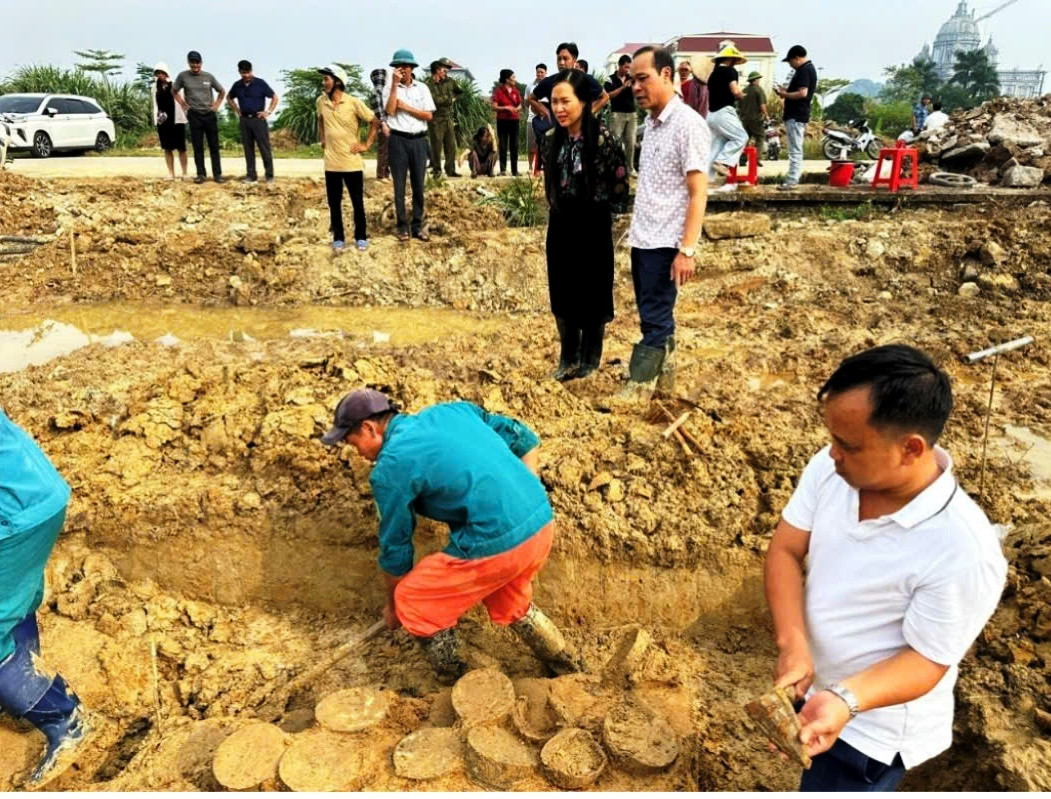
The discovery was made at approximately 2pm on October 11, when the family of Do Van San, a resident of Ninh Nhat 3 residential quarter in Hoa Lu ward, was surveying land ahead of excavating the foundations for a new house in the Cua Bac 2 residential area.
At a depth of about 30cm below the surface of a rice field, the family came across several stoneware vessels buried in the soil.
Family members carefully removed some of the objects, cleaned them and reported the discovery to local authorities and relevant agencies.
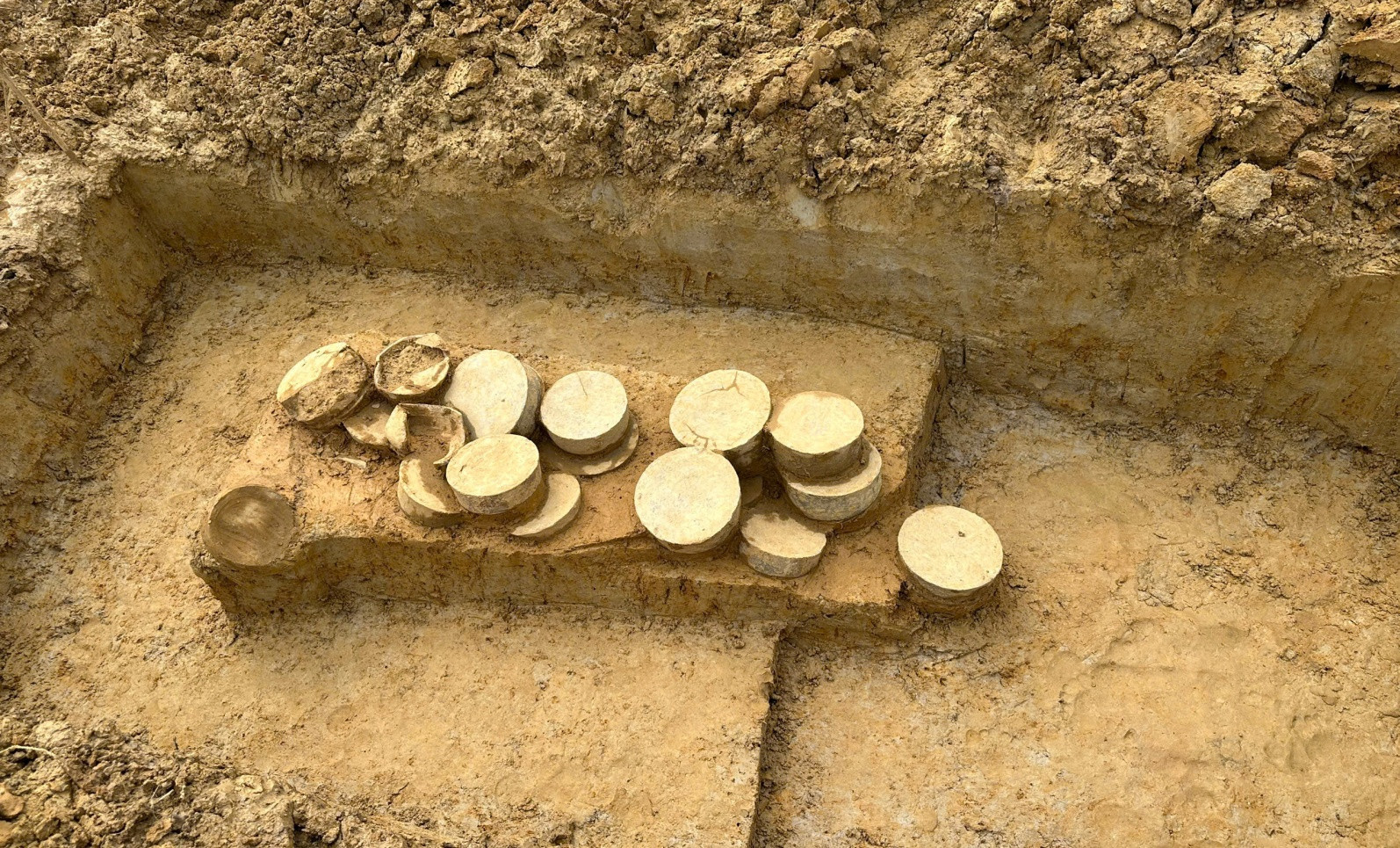
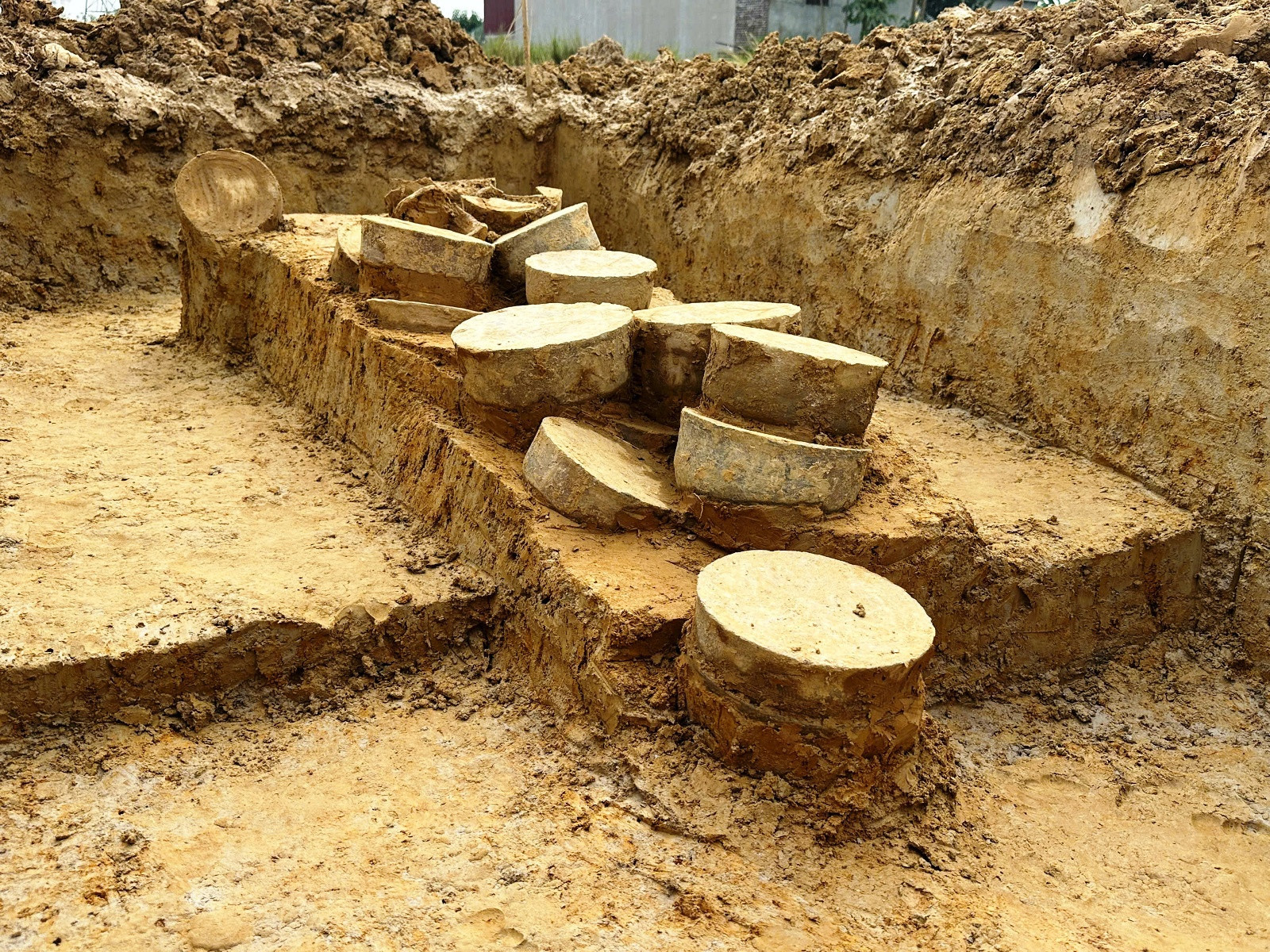
An examination of the site revealed that the vessels had been deliberately arranged along an east-west axis in two rows.
The arrangement occupied an area approximately 2.2 meters long and 0.45-0.5 meters wide, at a depth of around 0.3 meters beneath the field surface.
The vessels were stacked in three staggered layers, with most positioned upside down. Some were placed mouth-to-mouth, with their openings pressed against one another.
Authorities subsequently expanded their examination of the surrounding area but found no additional artifacts or traces of architectural structures.
The vessels contained only soil.
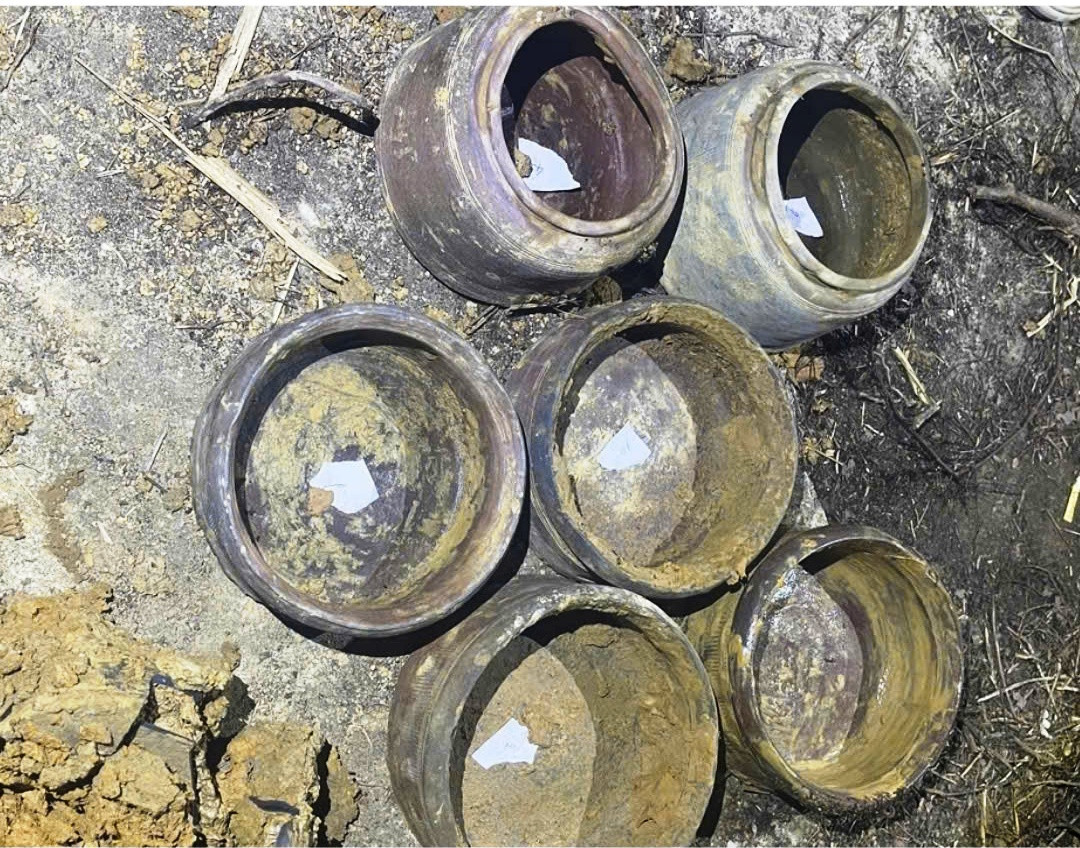
The recovered objects include straight-sided vessels and others with rounded shoulders. Some feature incised decorative patterns and combed designs on their surfaces.
Made from fine, high-fired stoneware, the vessels have mouth diameters ranging from 14 to 20cm, base diameters of 19 to 21cm and heights of 7 to 11cm.
Based on their examination, specialists identified the objects as household utensils used in everyday life during the Tran Dynasty, which ruled Vietnam during the 13th and 14th centuries.
Their orderly arrangement suggests they were intentionally buried rather than randomly discarded.
Researchers believe the collection may have been a cache of household possessions concealed by people living in the area centuries ago.
The discovery site is also located near several historical and religious landmarks associated with the Tran period, including A Nau Pagoda, also known as Seu Pagoda, and Duc Thanh Ca Temple, also known as Do Thien Temple.
.svg)
