 Vietnamnet.vn

 Podcast


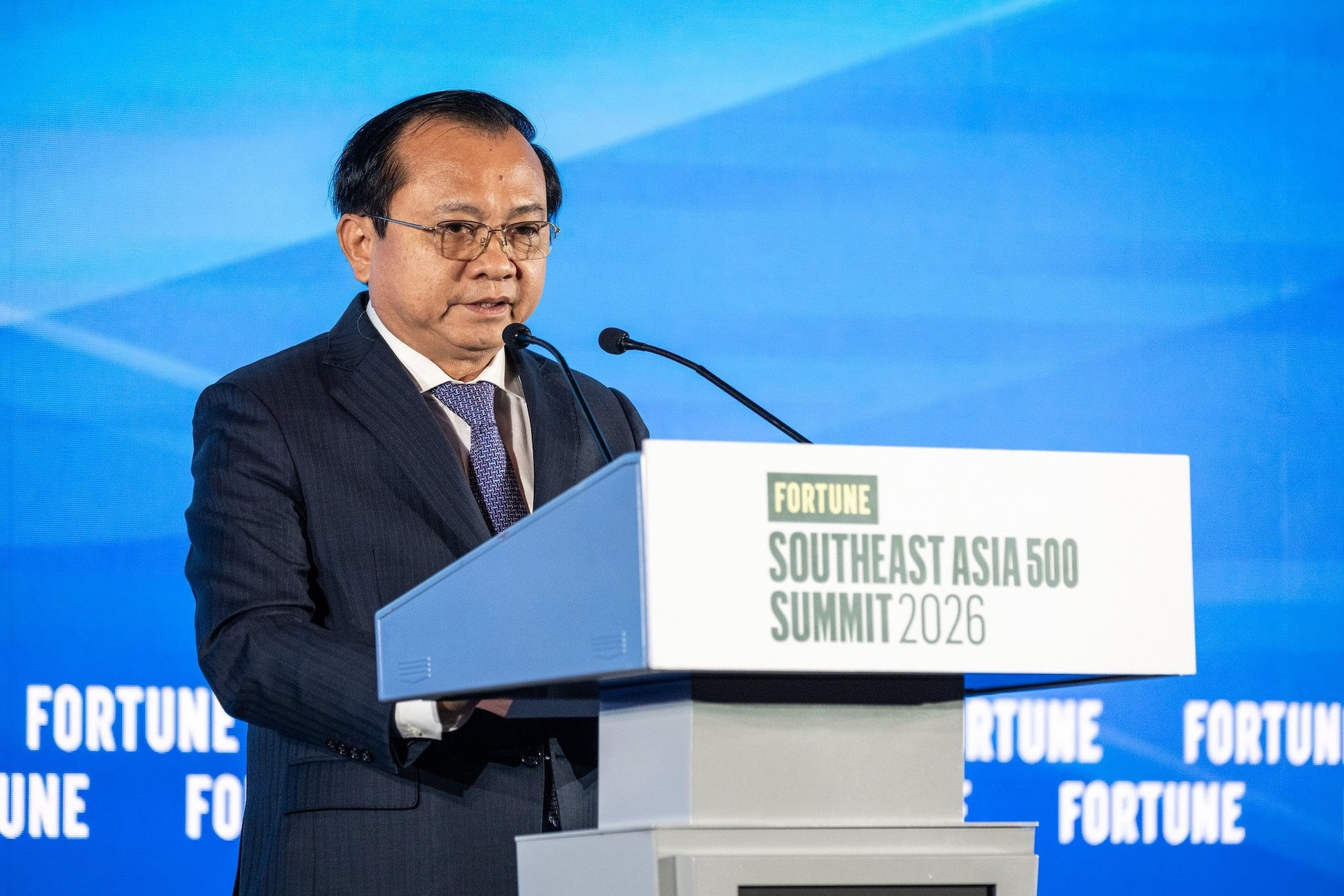
Speaking at the Fortune Southeast Asia 500 Summit on November 3, Deputy Minister of Finance Le Tan Can said Vietnam was entering a new phase of development, shifting from simply attracting investment capital to building strategic investment foundations.
The country is also moving away from attracting investment based on administrative boundaries toward developing industry clusters, value chains and innovation ecosystems.
According to the deputy minister, Vietnam remains committed to making science, technology, innovation and digital transformation the main drivers of economic growth.
The country is increasingly adopting a growth model based on productivity, quality and higher added value.
Politburo Resolution 50 identifies the foreign-invested economic sector as an important component of the national economy, encouraging its long-term development on the basis of equality and fair competition.
Under this approach, Vietnam aims not only to welcome manufacturing facilities but also to develop the infrastructure and institutional framework needed to become a hub for research and development (R&D), artificial intelligence (AI) data centers and regional headquarters of financial institutions and multinational corporations.
Vietnam seeks deeper cooperation in five strategic areas
To realize these ambitions, the Ministry of Finance called on international businesses to strengthen cooperation in five priority areas.
First, Vietnam seeks partnerships in researching, developing and mastering priority technologies, including AI, semiconductors, biotechnology, clean energy and smart technologies, through R&D centers and laboratories.
The objective is to move beyond technology adoption and application toward joint research and innovation, and from manufacturing products based on existing designs to participating directly in product research and development.
Second, the country encourages greater investment in strategic industries, including high technology, semiconductors, electronics, AI, data infrastructure, modern logistics, clean energy, biotechnology, advanced materials and high-value-added services.
Third, Vietnam aims to strengthen economic linkages and establish new value chains that are more autonomous, sustainable and resilient.
This includes improving connections between foreign-invested enterprises and domestic companies, enabling Vietnamese businesses to participate more deeply in global value chains and supply networks.
Fourth, the government seeks cooperation in developing highly skilled human resources and knowledge ecosystems in technology, finance, modern management, data automation, logistics and future industries.
Fifth, international investors are encouraged to participate in developing Vietnam's international financial center.
Regarding economic performance, Can said Vietnam's GDP expanded by 9.01% in the first nine months of 2026, supporting the country's ambition to achieve double-digit annual growth during 2026–2030.
Macroeconomic conditions remained stable, inflation was under control and public debt stayed within internationally accepted limits.
Vietnam is also consolidating its position among ASEAN's four largest economies.
Vietnamese companies outperform regional revenue growth
According to figures presented at the Fortune Southeast Asia 500 Summit, 72 Vietnamese enterprises secured places on the 2026 ranking, with combined revenue of nearly $178 billion, an increase of 10.5% from the previous year.
Andrew Staples, Editorial Director of Fortune Asia, said the revenue growth of Vietnamese companies was approximately three times the regional average and ranked second among the countries represented on the list.
Notably, although Vietnamese companies accounted for less than 10% of the total revenue generated by the Fortune Southeast Asia 500, they contributed approximately one-quarter of the ranking's overall revenue increase.
The 2026 ranking was compiled using financial data from 2025.
The 500 largest companies in Southeast Asia generated combined revenue of $1.88 trillion, up 3.4% year on year.
These figures highlight the strong performance of Vietnamese businesses relative to their regional peers.
HCMC attracts more than $19 billion in registered FDI
At the local level, Nguyen Loc Ha, Vice Chairman of the Ho Chi Minh City People's Committee, said the city had gained significant advantages following its administrative merger.
In the first nine months of 2026, the city's gross regional domestic product (GRDP) increased by 9.06%.
Registered foreign direct investment during the first 10 months exceeded $19 billion, four times the figure recorded in the same period last year and accounting for more than 30% of Vietnam's total.
Major investment projects include the Can Gio International Transshipment Port, with total investment exceeding $4.9 billion, and an AI Factory data center project valued at approximately $2.1 billion.
To expand international cooperation, HCMC has identified four priority solutions.
The first focuses on institutional reform. The city will implement Politburo Resolution 31 to strengthen its position as an internationally competitive economic, financial, scientific and technological center.
It will also apply the Urban Development Law, which took effect in October 2026, to establish a legal foundation and greater local autonomy in planning, resource mobilization and investment climate improvements.
The second priority is to capitalize on existing advantages and the presence of major corporations such as Intel and Samsung.
HCMC aims to connect new investors with domestic supplier networks in manufacturing, distribution and product research.
The third solution involves strengthening resource connectivity by optimizing direct shipping routes from Cai Mep–Thi Vai to the United States and Europe.
The city also plans to develop free trade zones, logistics infrastructure and an international financial center.
Finally, HCMC will improve administrative efficiency and the implementation of investment cooperation agreements.
The Investment and Trade Promotion Center of Ho Chi Minh City (ITPC) will serve as a coordinating agency, working with relevant departments to guide investors and resolve difficulties associated with individual cooperation plans under clearly defined implementation roadmaps.
Thu Ha

