 Vietnamnet.vn

 Podcast



Ha Nguyen
Preserving their more than 100-year-old ancestral home, Mr. Xuan’s family grows busy each Lunar New Year (Tet), cleaning and decorating the house to welcome relatives and clan members gathering to celebrate Tet.
A 119-year-old house
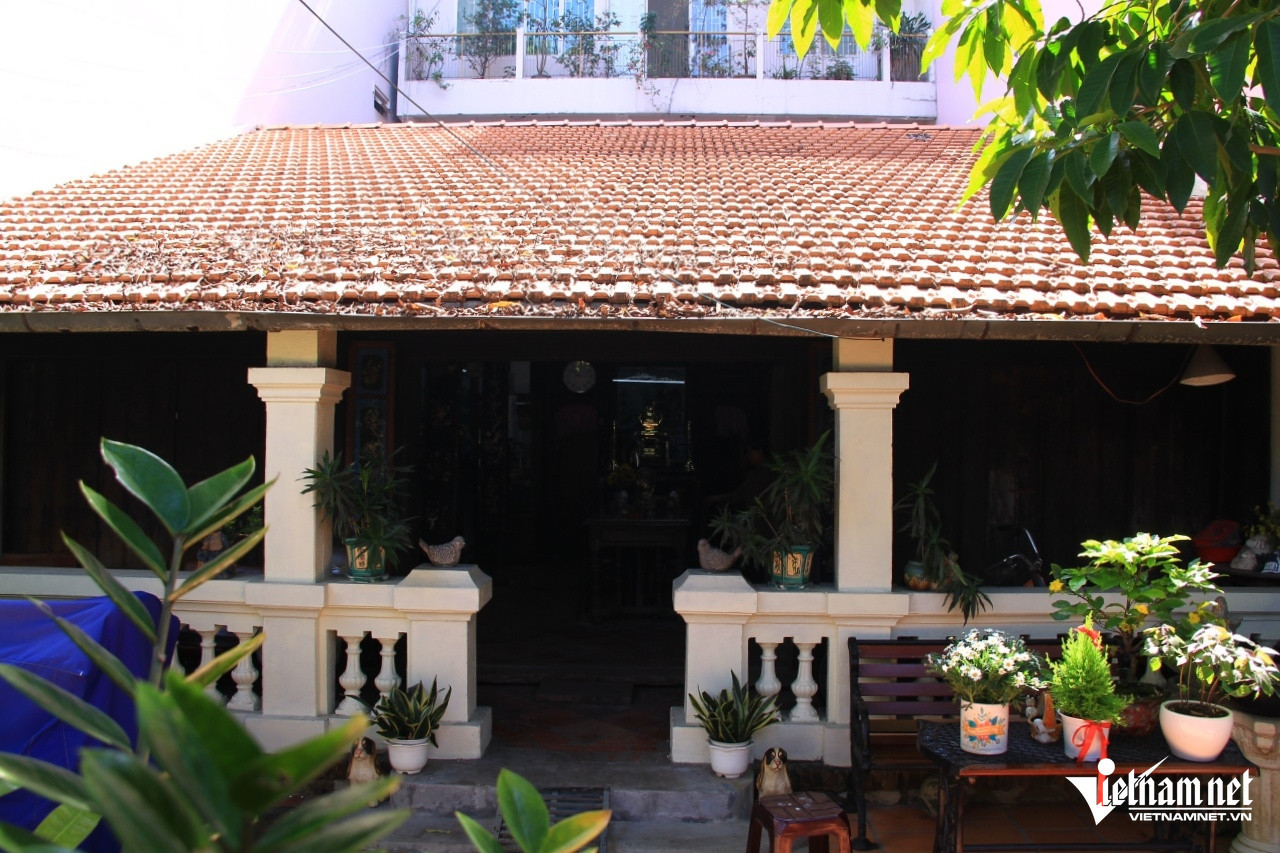
The old house of Mr. Xuan sits modestly among modern townhouses. Photo: Ha Nguyen
On Nguyen Thai Son Street in Hanh Thong Ward, HCMC, a charming old house sits modestly among rows of modern townhouses. The house is cared for and managed by the family of Tran Thanh Xuan, 73.
According to Mr. Xuan, the house dates back to the time of his great-grandfather, Tran Van Bang. In the past, Mr. Bang was known as a wealthy landowner who possessed vast tracts of land in what was once Go Vap.
Around 1907, after the birth of his seventh child, Mr. Bang sought out precious timber to build a traditional southern-style wooden house for the extended family to live in together.
The house features multiple rows of pillars. The first row, known as the main pillars, marks the principal worship space of the family. The second row stands just behind and holds a set of tables and chairs for receiving guests. The third and fourth rows, often referred to as veranda pillars, connect to form the front porch.
The house has three main doors assembled from panels of valuable wood. Originally, the roof was covered with yin-yang tiles, which were later replaced with modern tiles after deterioration.
In earlier times, the walls were made of earth. These sections eventually decayed and were replaced with brick walls.
Even so, the house still retains its original tiled floor, laid when the house was first built. The wooden roof beams, damaged over time, have been reinforced with iron bars by Mr. Xuan’s family.
Aside from certain elements that could not be restored, the family has largely preserved the original frame and interior arrangement as it was in their great-grandparents’ time.
These include two intricately carved wooden altars positioned at the center of the house, four mother-of-pearl inlaid parallel panels that are more than a century old along the central pillars, and two glass paintings set within the decorative woodwork.
Mr. Xuan shared: “After 2000, I took on the responsibility of caring for and preserving the old house, which serves as our clan’s ancestral hall.
“Every day, beyond sweeping and cleaning, I pay attention to even the smallest changes in the house. Other family members also care deeply about it. Whenever repairs are needed, everyone joins hands to contribute.”
Welcoming Tet in the old way
During Tet, the old house becomes lively and crowded from the 27th and 28th days of the twelfth lunar month. On these days, every family member, young and old alike, gathers to thoroughly clean the house in preparation for the New Year.
The walls, roof tiles, rows of pillars and wooden altars are carefully dusted and wiped until they gleam. The family also tends to and purchases additional Tet flowers such as apricot blossoms, peach blossoms and chrysanthemums, arranging them in the yard, along the corridors and throughout the house.
On the 28th day of the twelfth lunar month, the family begins preparing traditional dishes such as braised pork with eggs and shredded pork rolls, readying offerings for the ancestral altar.
On the morning of the 29th day, they arrange flowers in large vases, prepare trays of fruit and place them in large wooden stands for display on the household altars. The old house is adorned with additional Tet decorations, including red couplets and strings of gold paper charms.
Tran Thanh Loc, born in 1991 and the youngest son of Mr. Xuan, said the family has a tradition of placing three vases of red gladiolus on the main altars, symbolizing luck and prosperity. Smaller altars are typically decorated with chrysanthemums, marigolds and orchids.
Also on the 29th day, the family assembles old ceremonial cloth panels, which Mr. Xuan refers to as tien ban, to drape over the three main altars. He explained that these finely patterned cloths date back to his grandparents’ time.
For more than a century, the cloths have been carefully preserved by generations of the family and are only brought out during Tet to be hung and displayed on the principal altars.
In the past, the family also had a y mon curtain hanging before the altar and a large horizontal lacquered board, but these items deteriorated beyond repair. The remaining tien ban cloths are therefore treasured as family heirlooms.
Loc shared: “This house is our clan’s ancestral hall, so during Tet, everyone must return to offer incense to our ancestors. The space is always bustling, joyful and warm.
“On New Year’s Eve, the extended family gathers together. We sit, talk and share simple yet meaningful wishes for a good year ahead, for everything to go smoothly.
“On the first day of Tet, after completing the New Year’s Eve rituals, I usually represent the family in visiting the pagoda. Then we exchange New Year greetings and hold a celebratory feast together. The elders offer wishes, and the children receive lucky money.
“Throughout Tet, the house welcomes many relatives who come to burn incense in memory of our ancestors. The atmosphere remains cheerful and lively until the holiday ends.”
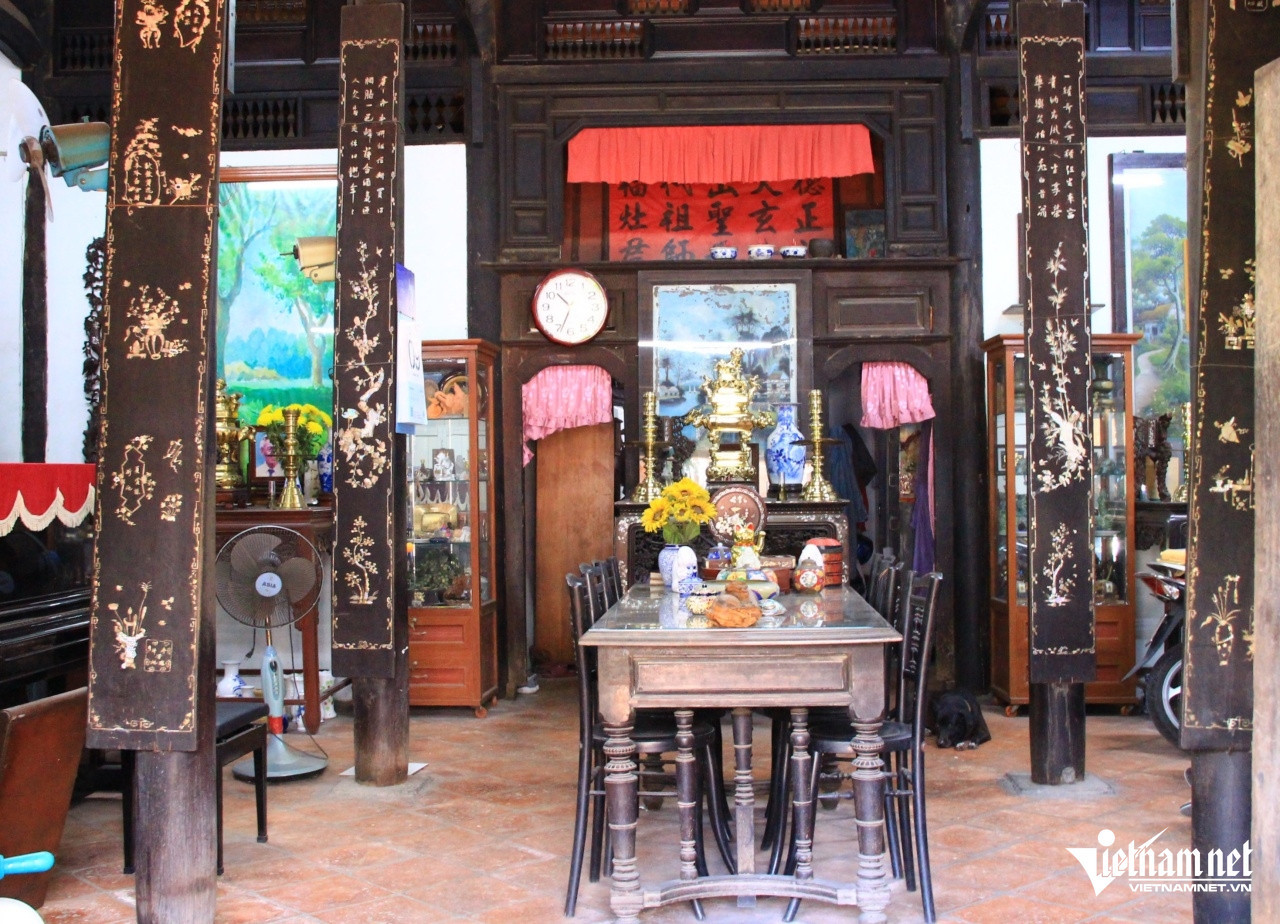
The house’s frame and tiled floor have been preserved intact since its early days. Photo: Ha Nguyen
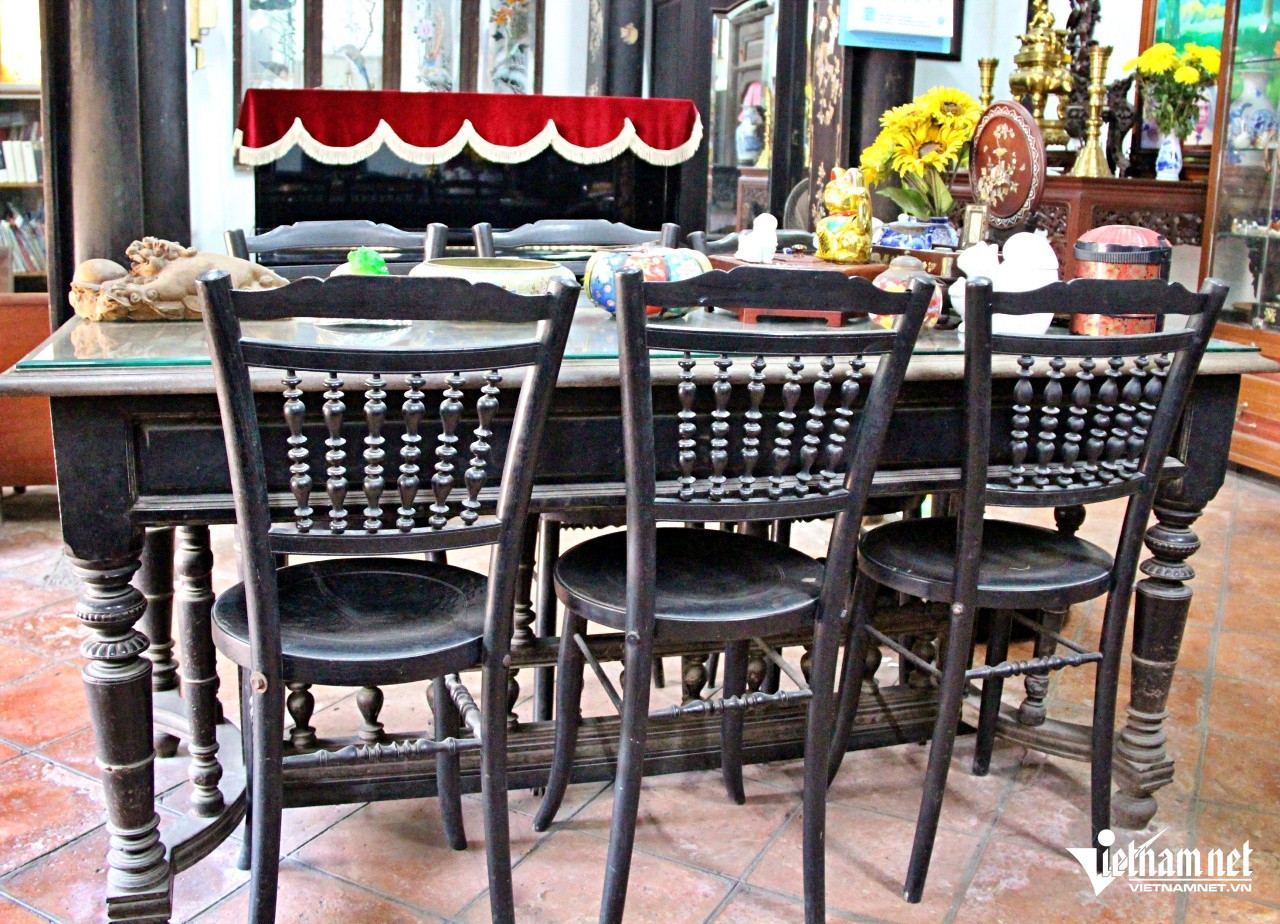
Some artifacts dating back to the house’s early years have been carefully maintained over time. Photo: Ha Nguyen
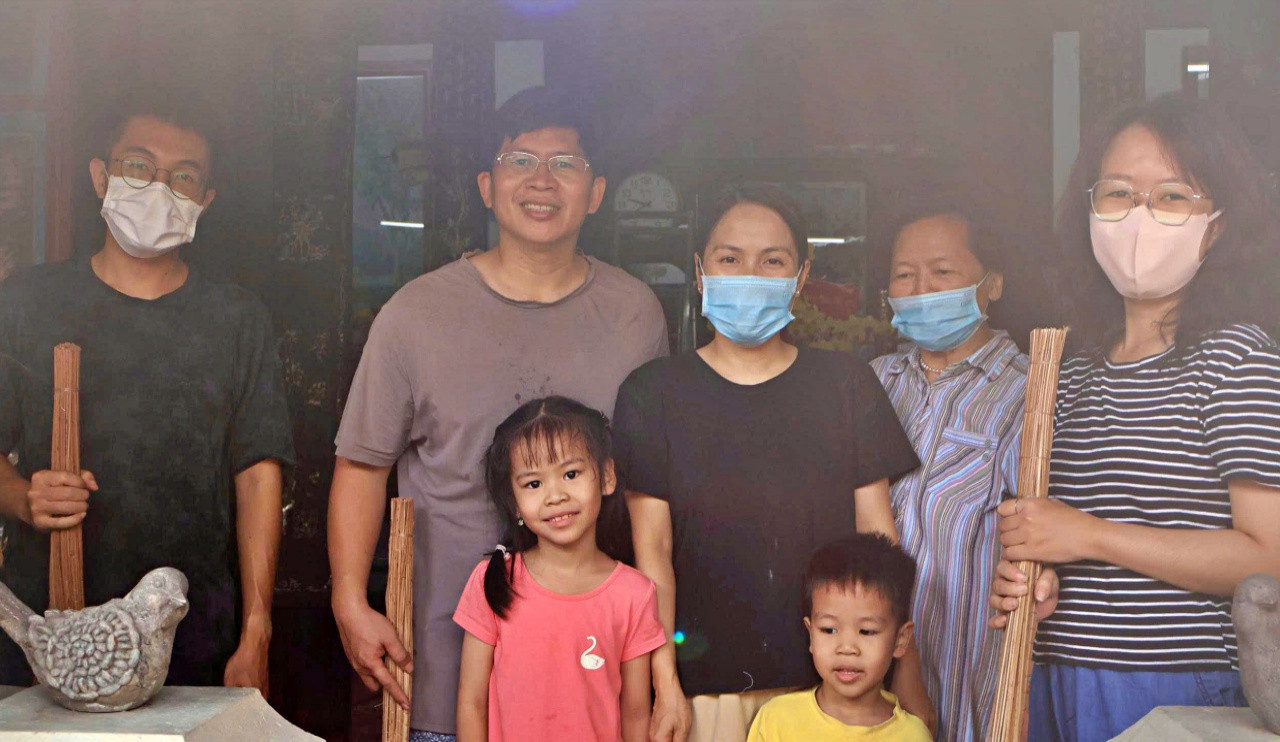
From the 27th day of the twelfth lunar month, members of Mr. Xuan’s extended family gather to thoroughly clean the old house. Photo: Provided by the family
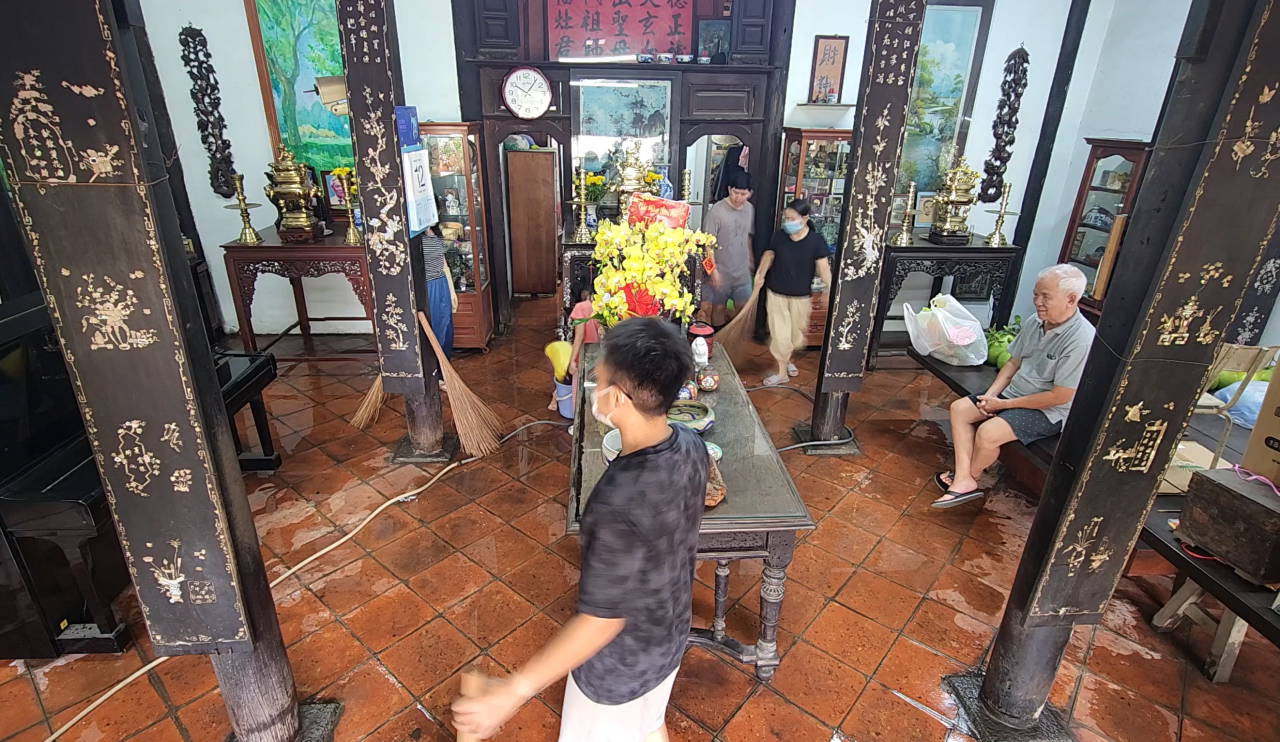
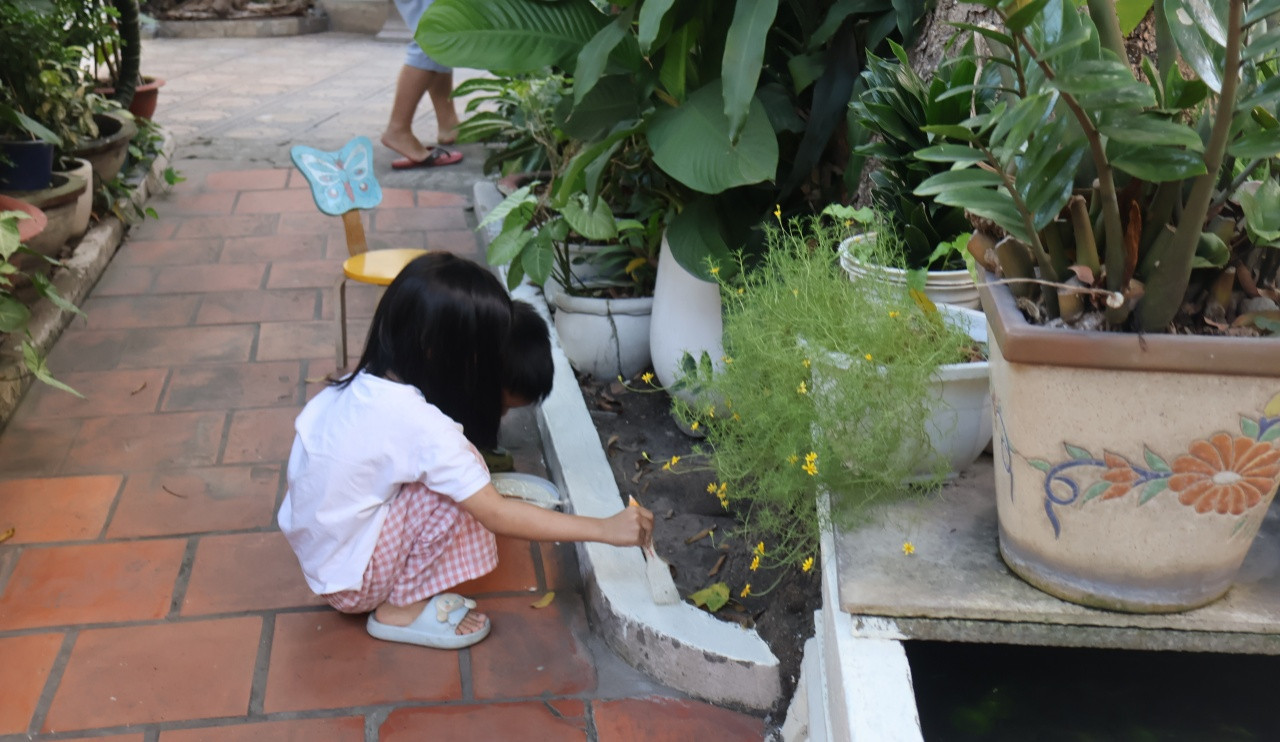
Regardless of age, each person takes on a task to clean and decorate the ancestral home. Photo: Provided by the family
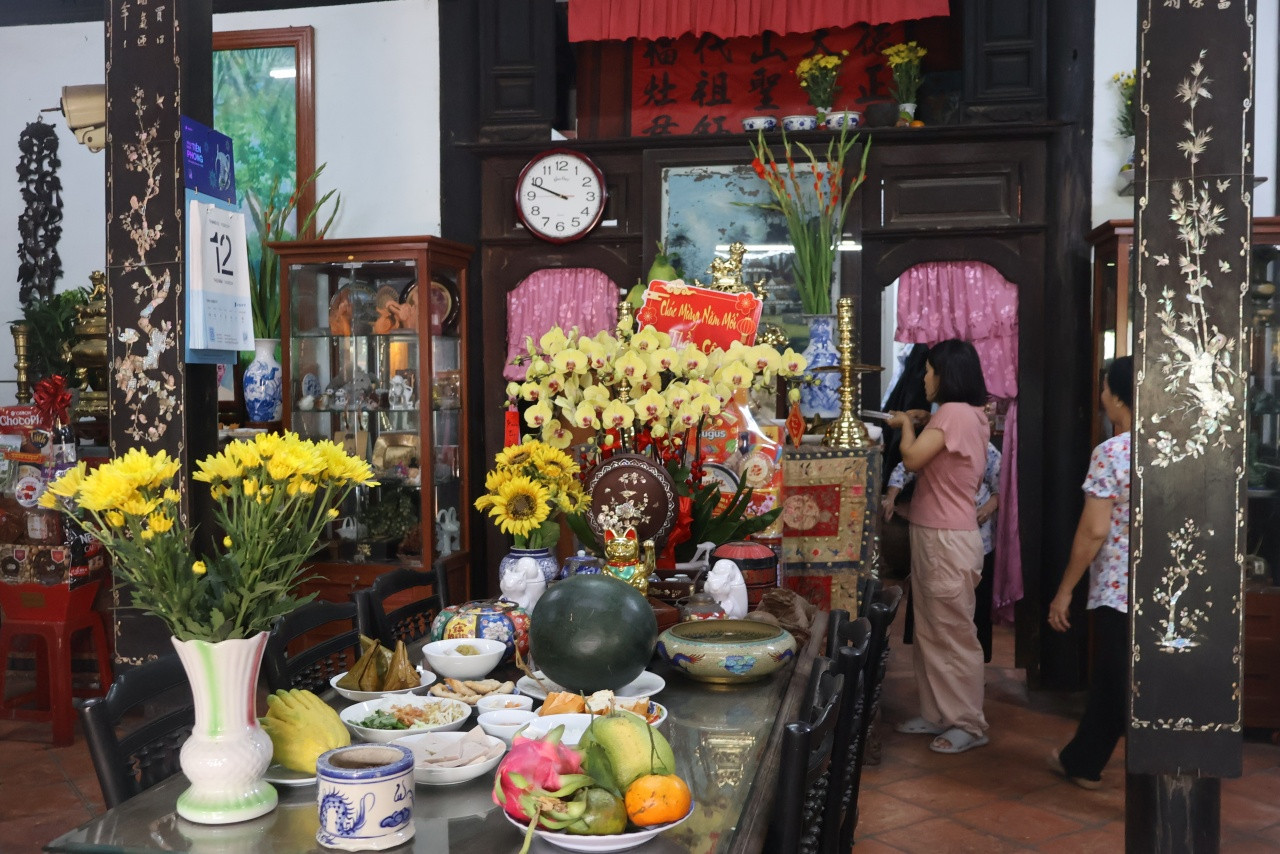
The family traditionally places three vases of red gladiolus on the main altars as symbols of luck and prosperity. Photo: Provided by the family
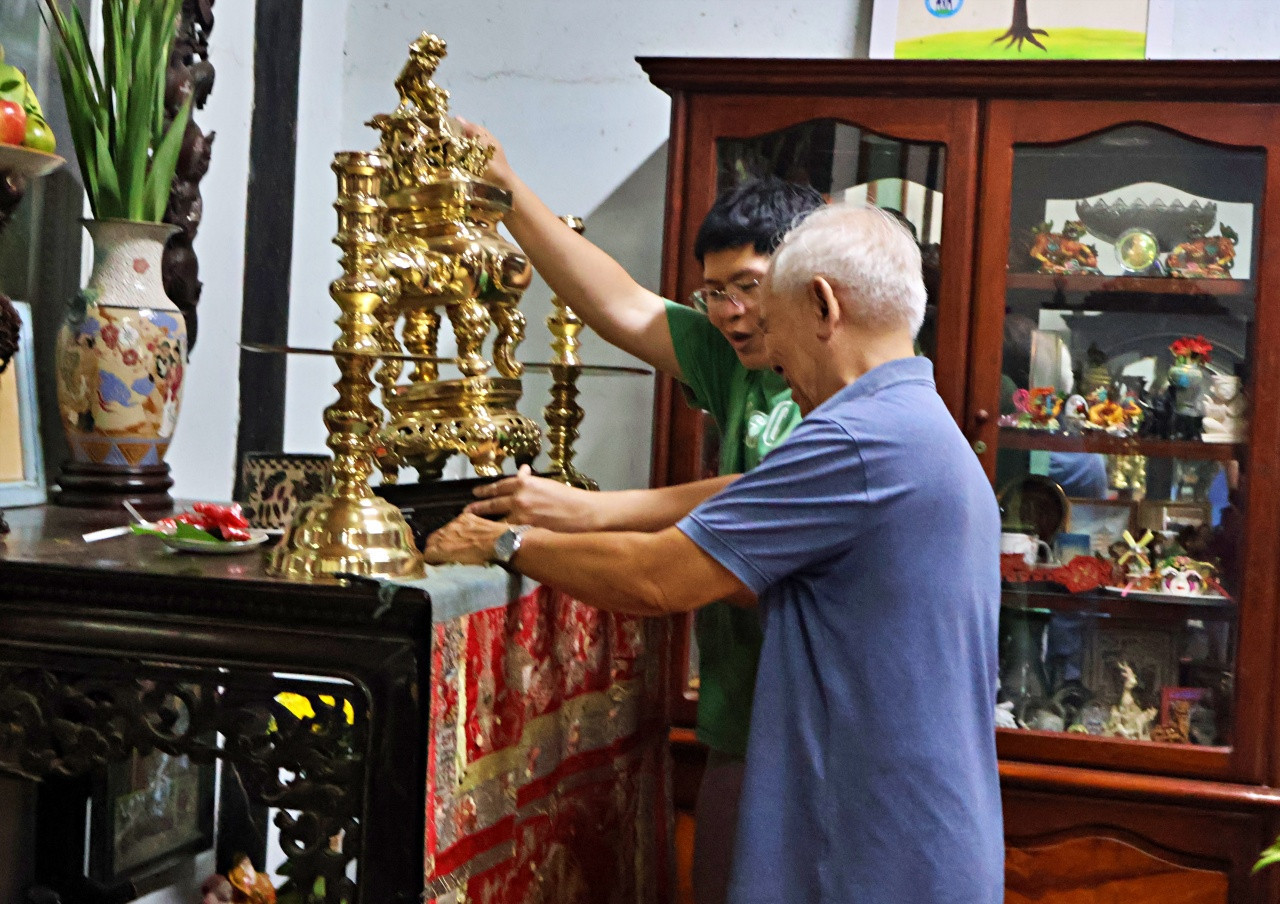
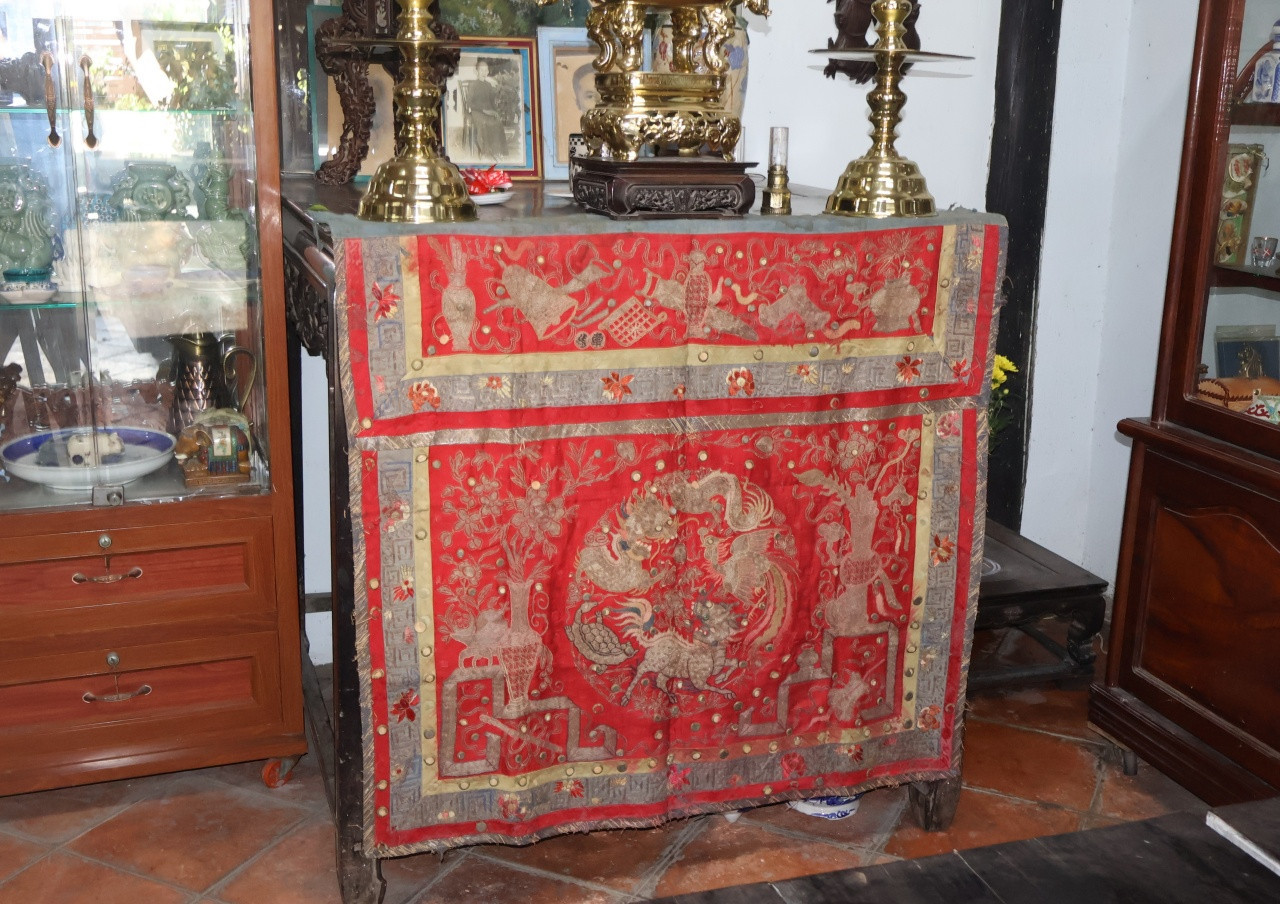
During Tet, Mr. Xuan’s family hangs the old ceremonial cloth panels, known as tien ban, before the three main altars. Photo: Provided by the family

.svg)
