 Vietnamnet.vn

 Podcast



Not only striking in both appearance and flavor, lau tha - a renowned specialty of the Mui Ne coastal region in Lam Dong - leaves visitors in awe with its deeper meaning rooted in the philosophy of yin and yang and the five elements.
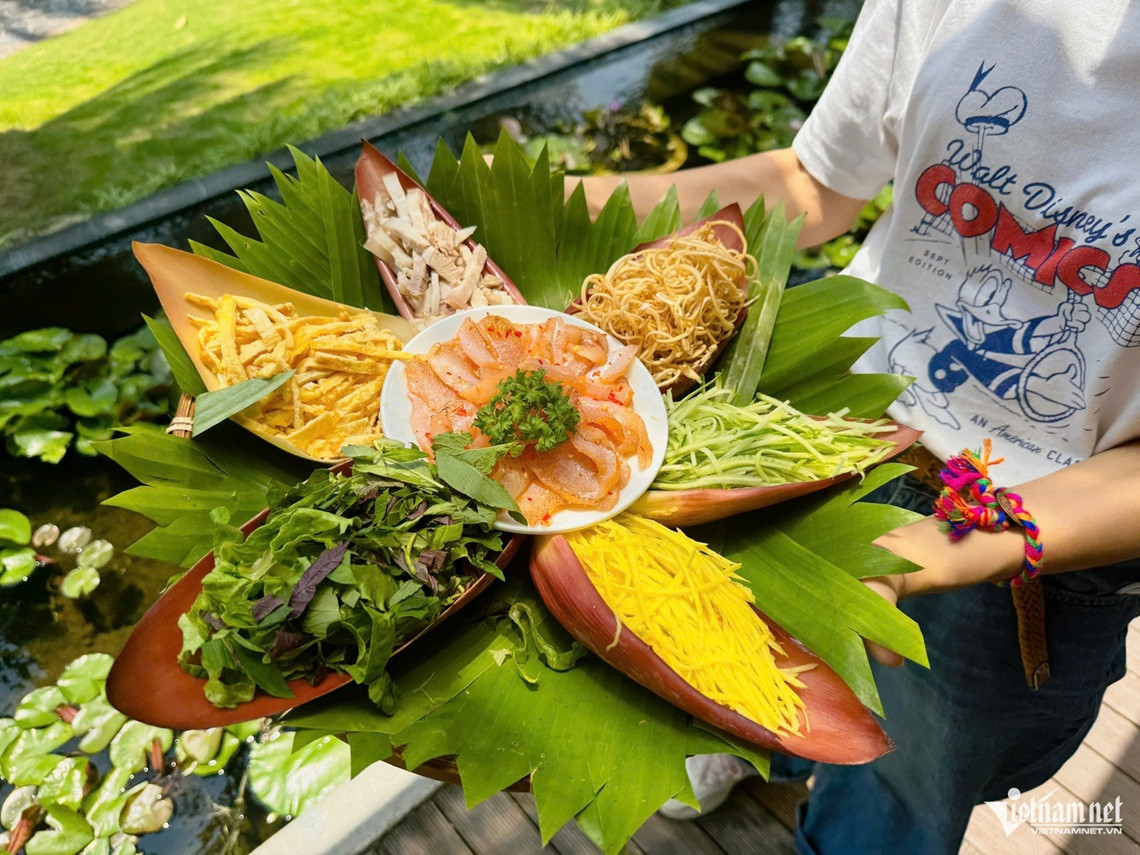
Lau tha originated as a humble dish of fishermen in Mui Ne - Phan Thiet, formerly part of Binh Thuan province, now designated as Mui Ne ward in Lam Dong province.
In the early days, when tourism in the area had yet to develop, local fishermen would simply gather whatever seafood they caught, place it into a pot, pour in water and cook it into a hot meal. The name “lau tha” - literally “drop-in hotpot” - comes from this very way of cooking.
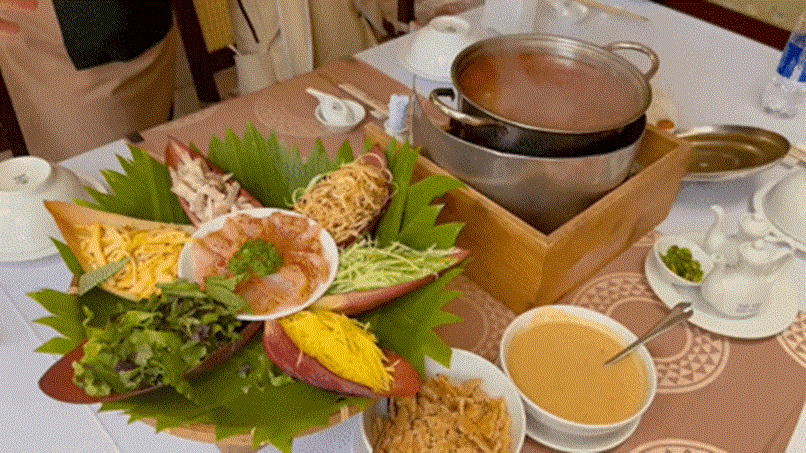
Over time, the dish has been refined and creatively adapted, gradually becoming a fresh and flavorful specialty featured on the menus of many local restaurants and hotels, catering to increasingly diverse culinary expectations of visitors.
“The dish is called lau tha because instead of carefully dipping ingredients, diners simply add whatever they like into their bowl, then pour hot broth over it.
The broth gently cooks the ingredients, preserving their freshness and natural sweetness,” said Vo Hung, a chef at a resort in Mui Ne.
Lau tha was recognized by the Asian Record Organization as an Asian record in December 2023.
The ingredients used in lau tha are diverse, with fish as the centerpiece - commonly varieties such as ca duc, ca suot or ca mai, known for their firm texture and natural sweetness.
According to Hung, the fish must be fresh, uniform in size and prepared immediately after purchase, carefully cleaned to retain optimal quality.
The fish is filleted, then marinated with ginger, garlic and chili to remove any fishy odor, enhance firmness and create an appealing pale pink color.
“The dish is typically arranged on a bamboo tray lined with banana leaves, shaped like a flower. The ‘pistil’ at the center is a plate of fish, while the ‘petals’ are neatly arranged accompaniments such as sliced pork, shredded omelet, cucumber, banana blossom, semi-ripe mango and herbs, all placed in pinkish banana sheaths,” Hung described.
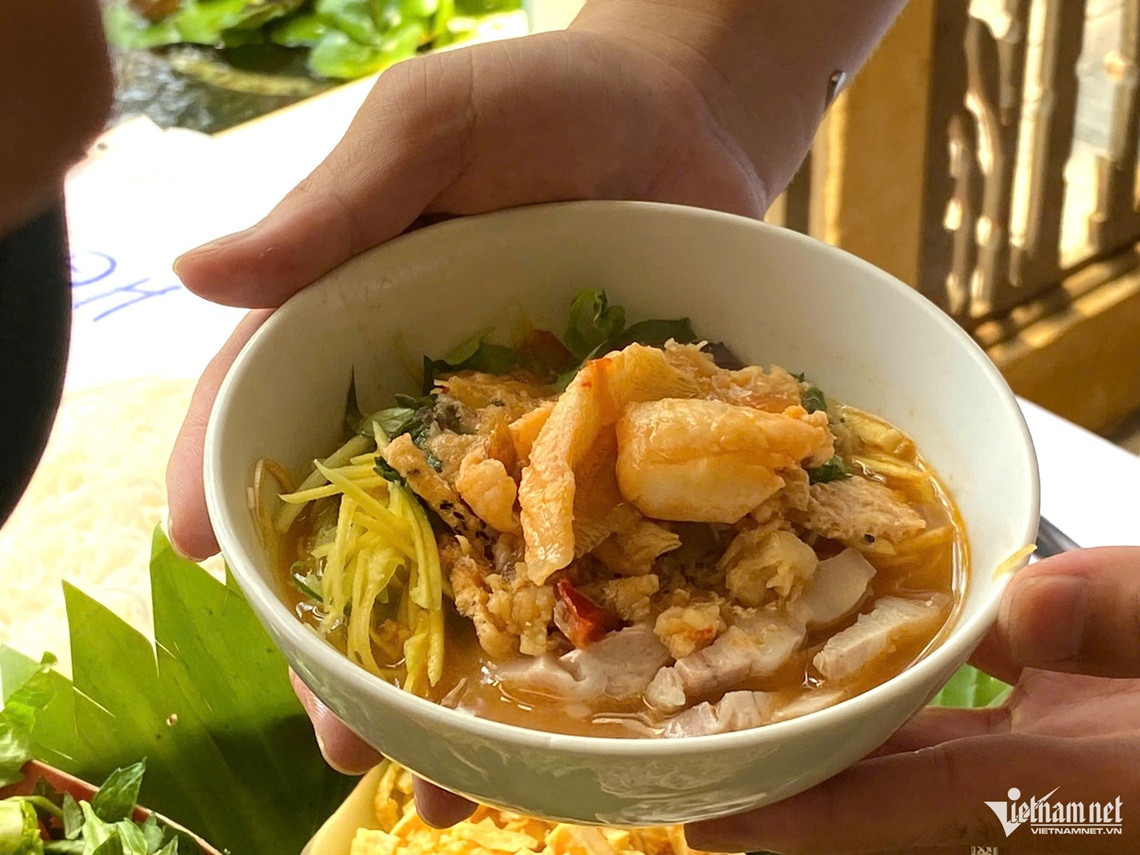
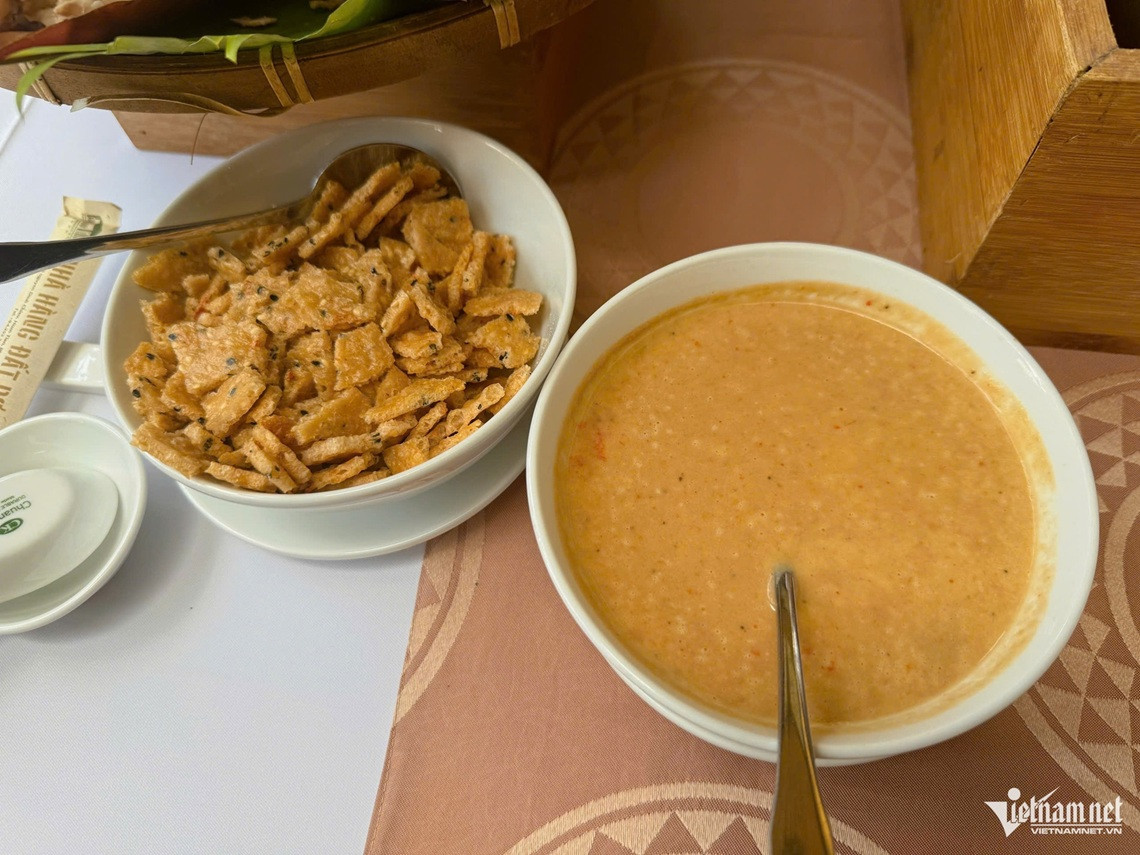
Lau tha is served with a pot of hot broth, crispy rice paper and a distinctive dipping sauce.
The chef revealed that this unique presentation not only enhances visual appeal but also symbolizes the small round basket boats that have long been part of local fishermen’s lives.
At the same time, the ingredients and seasonings are selected in line with the philosophy of the five elements - metal, wood, water, fire and earth - represented through five colors: white, green, black, red and yellow, and five flavors: spicy, sour, salty, bitter and sweet.
In culinary tradition, these elements are believed to bring balance, health and energy to the human body.
The enjoyment of lau tha is equally distinctive. Diners can experience it either as a hot dish or in a dry mixed form.
For the dry version, fish is briefly cooked in the broth, then combined with vermicelli and other ingredients before being mixed with a rich sauce.
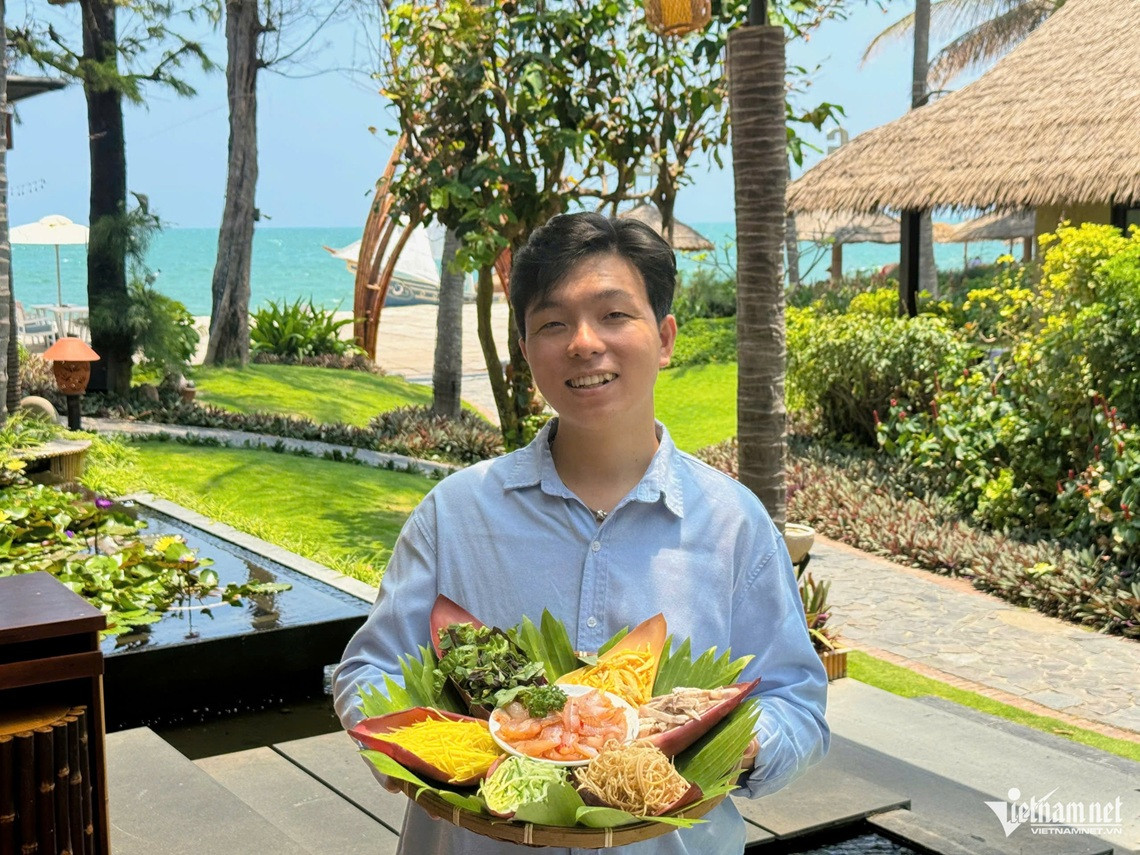
“The sauce may vary slightly from place to place, as each restaurant in Mui Ne has its own secret recipe, adding to the dish’s appeal,” Hung noted.
The sauce - considered the “soul” of the dish - is made from roasted peanuts, garlic, tamarind, chili and other ingredients, blended in balanced proportions.
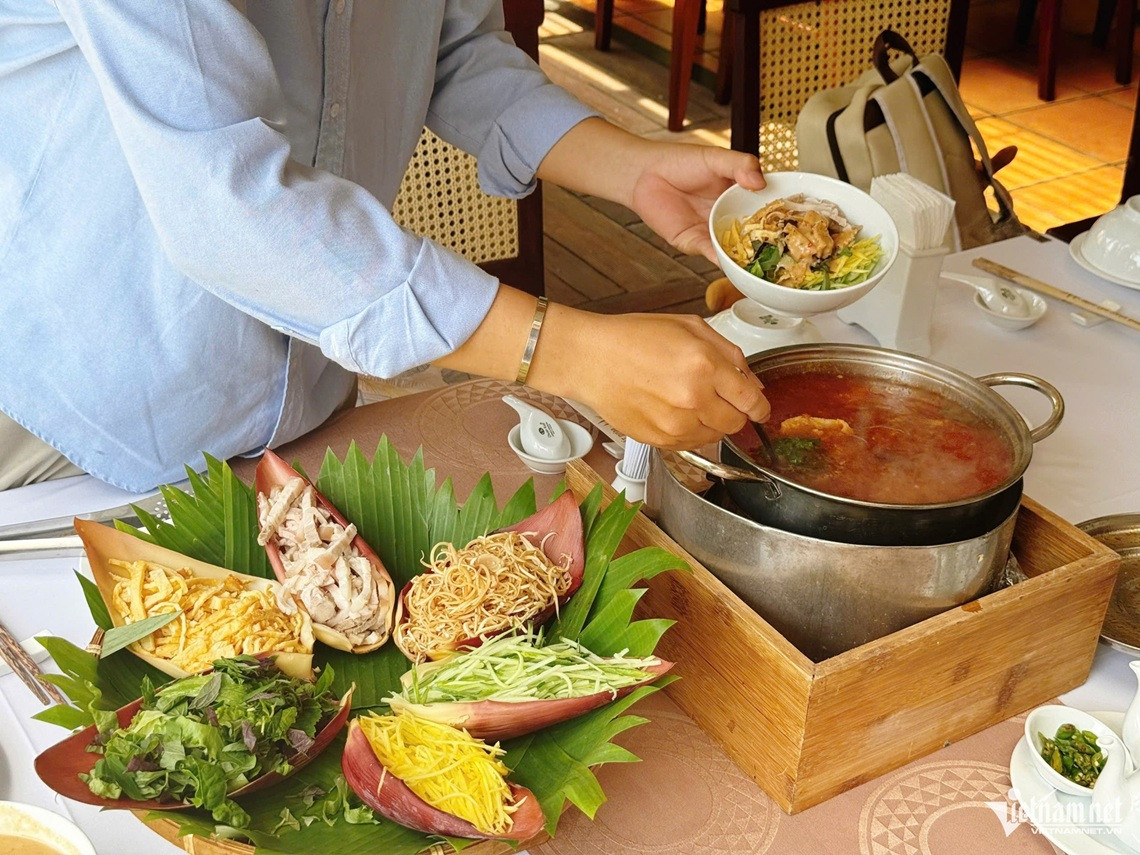
For the hot version, diners cook the fish in the broth, transfer it to a bowl, add desired ingredients and then ladle hot broth over the mixture.
The broth itself is prepared from simmered bones combined with fish or shrimp, tomatoes, pineapple and onions, creating a naturally sweet and sour taste.
Nhut Duy, a visitor from Ho Chi Minh City who recently tried lau tha made with ca duc during a trip to Mui Ne, said the dish made a strong impression with its presentation - “so beautiful it felt almost a pity to eat”.
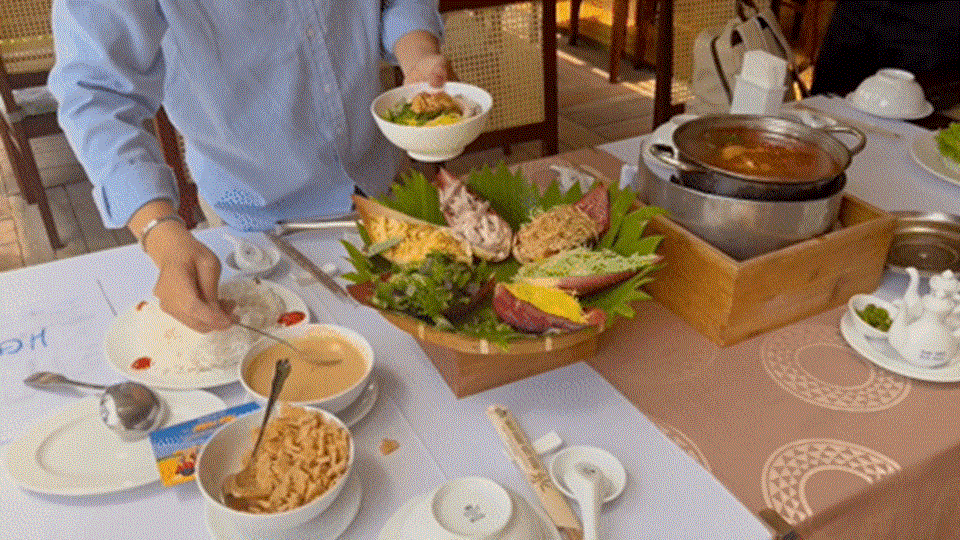
Once tasted, he found every variation equally delightful, from the firm sweetness of the fish to the richness of the sauce and the refreshing balance of herbs and vegetables.
“Besides enjoying it as a noodle soup or a mixed dish, you can also wrap the fish and ingredients in rice paper and dip it into the peanut sauce,” Duy shared.
According to his experience, at local eateries, a portion of lau tha for 2-3 people is priced from VND500,000 (US$20). In hotels and restaurants, prices range from VND800,000 to VND1,000,000 (US$32-40), depending on portion size and timing.
He also suggested that visitors to Mui Ne ward in Lam Dong province can try lau tha at several local establishments such as Mui Ne Deli Restaurant - 360 Nguyen Thong Street, Hoang Ngoc lau tha eatery - Nguyen Dinh Chieu Street, Seahorse Bistro - 16 Nguyen Dinh Chieu Street, and Soc Nau Restaurant - 5 Nguyen Dinh Chieu Street.
Thao Trinh
.svg)
