 Vietnamnet.vn

 Podcast



For decades, Phung Quang Du of Ha Son hamlet, Ngoc Lac commune, Thanh Hoa Province, has quietly collected, researched and taught Dao Nom script. Many describe him as a “living museum” of Dao culture. To him, preserving the script is preserving the very soul of his people in the current of modern life.
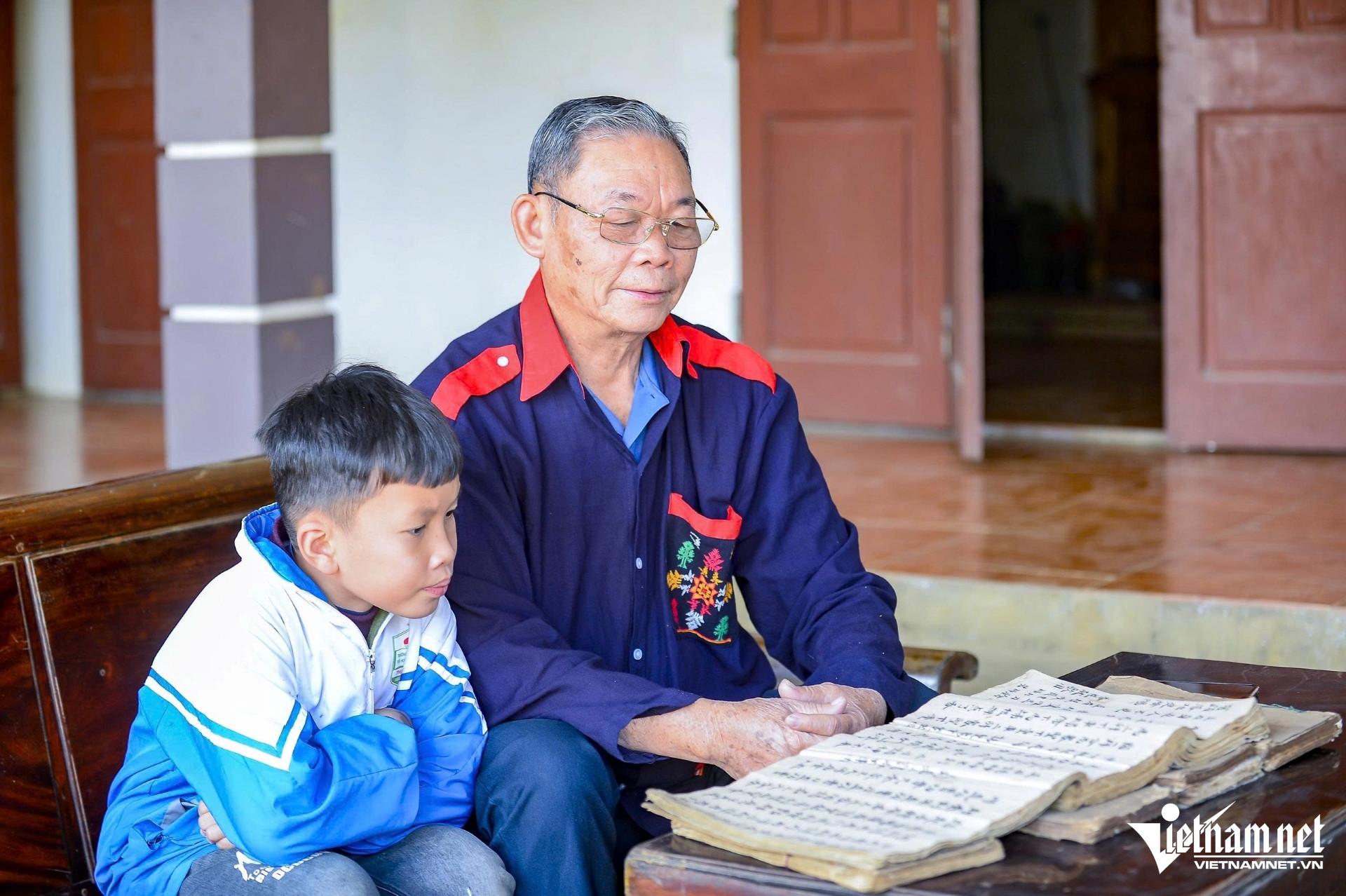
In Ha Son, where the stilt houses of the Dao Quan Chet community lean against the mountain slopes, the sight of the 62-year-old man bent over ancient pages has become familiar. His hair has turned silver with time, yet whenever Dao Nom script is mentioned, his eyes still light up with rare passion.
For Du, Dao Nom script is not merely a recording tool but the spirit of the nation. “The script records folk songs, customs, rituals and moral teachings of the Dao people. If the script disappears, our identity and collective memory will gradually fade,” he reflected.
Born and raised in Ha Son, a long-standing Dao settlement, Du grew up listening to elders recount traditional ceremonies such as the cap sac initiation ritual, Tet nhay dance festival and grave thanksgiving rites. These stories were inseparable from handwritten books in Dao Nom script preserved within families and clans. From there, his fascination with the ancient script began to take root.
As a young man, lacking sufficient materials, Du painstakingly taught himself from old books and yellowed manuscripts. He traveled across villages inside and outside the commune, seeking elderly scholars who could read the script, asking them to explain each character and sentence. Some journeys lasted weeks, even months, just to copy a few precious pages.
That perseverance gradually made him one of the most knowledgeable people in Ha Son, and later across Ngoc Lac commune, in Dao Nom script. Beyond reading and writing fluently, he translates and explains ancient texts so younger generations can understand the philosophy and spirit embedded in each character. Many Dao youths come to him not only to learn the script, but to reconnect with their roots.
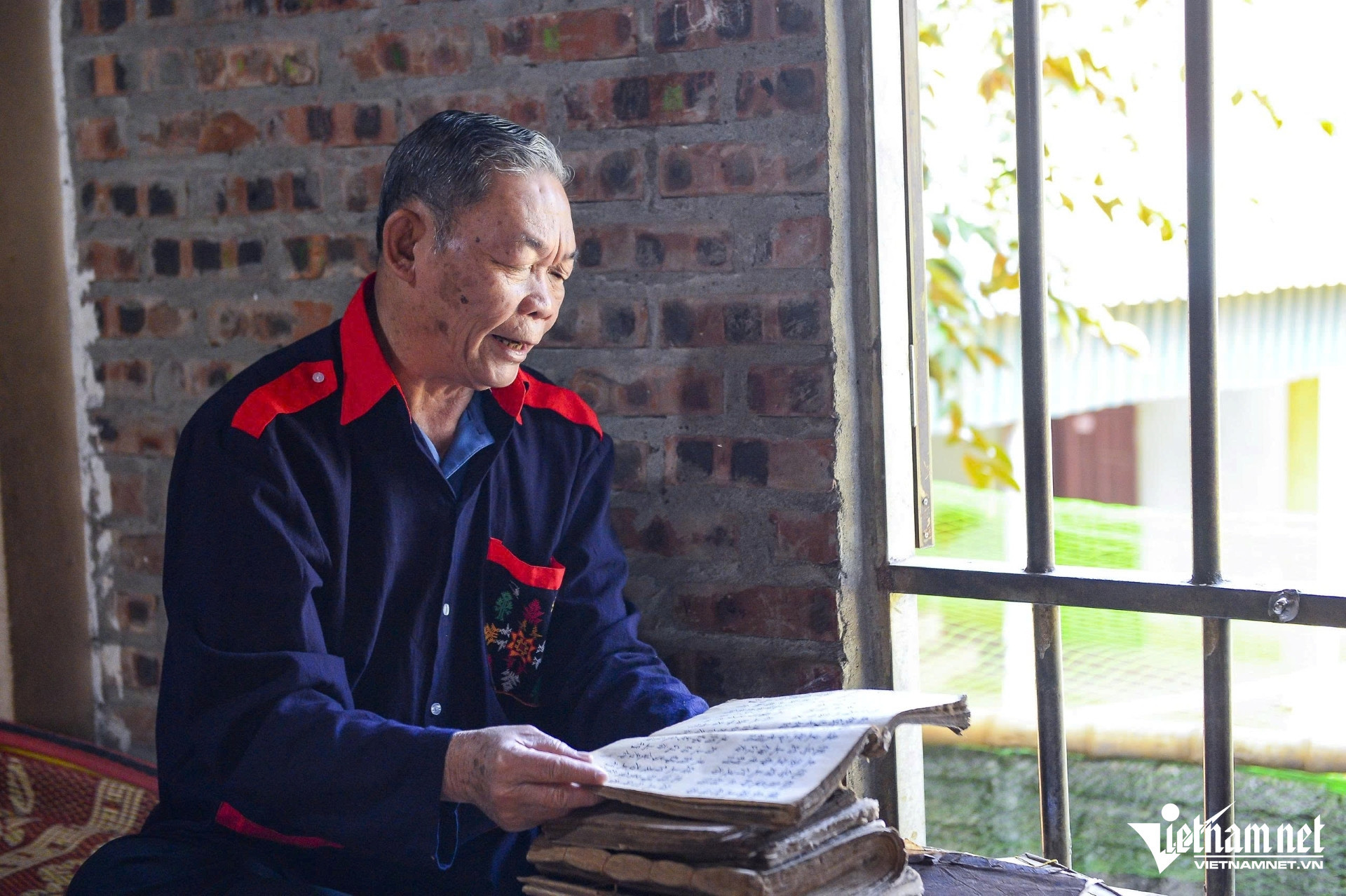
His efforts extend beyond village teaching. Du has participated in compiling and translating Dao ritual documents into Vietnamese. Together with collaborators, he has edited ancestor worship texts and Ban Vuong worship prayers, publishing them in bilingual Dao - Vietnamese form to make Dao culture more accessible.
According to Du, facing the risk of language and script erosion, in 2013, when Thanh Hoa implemented policies to preserve ethnic minority cultures, he joined other knowledgeable scholars to develop a structured preservation plan. With support from the provincial Ethnic Affairs Board and the Thanh Hoa Ethnology and Anthropology Association, a long-term direction for Dao Nom script was established.
He is among the authors who helped compile the Thanh Hoa Dao Nom script series, consisting of nine volumes and approximately 1,400 characters. This is the first officially approved Dao Nom script textbook series in Vietnam, now introduced into teaching in Dao villages across the province. Beyond reading and writing guidance, the books integrate moral values, benevolence and codes of conduct within families and communities.
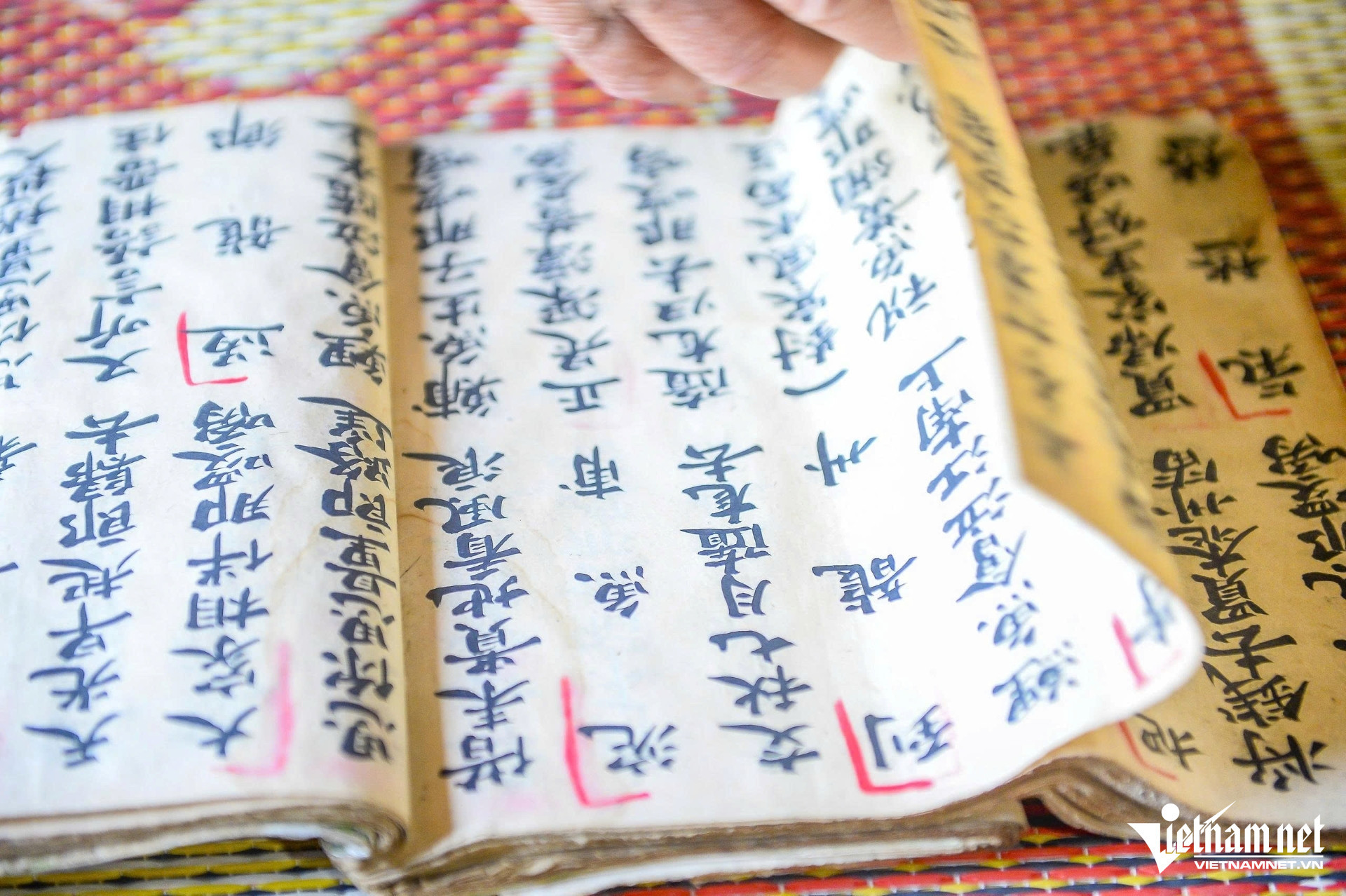
Local leaders in Ngoc Lac commune consider Du a model of cultural preservation. Thanks to his dedication, many values once on the brink of being forgotten have been revived and passed on to younger generations. At an age described as “rare in old times,” he still spends hours each day teaching, editing documents and visiting families with ancient manuscripts to copy and archive them. The pages he carefully transcribes are not merely study materials but vivid testimony to the enduring effort to safeguard the Dao cultural soul in the mountains of Thanh.
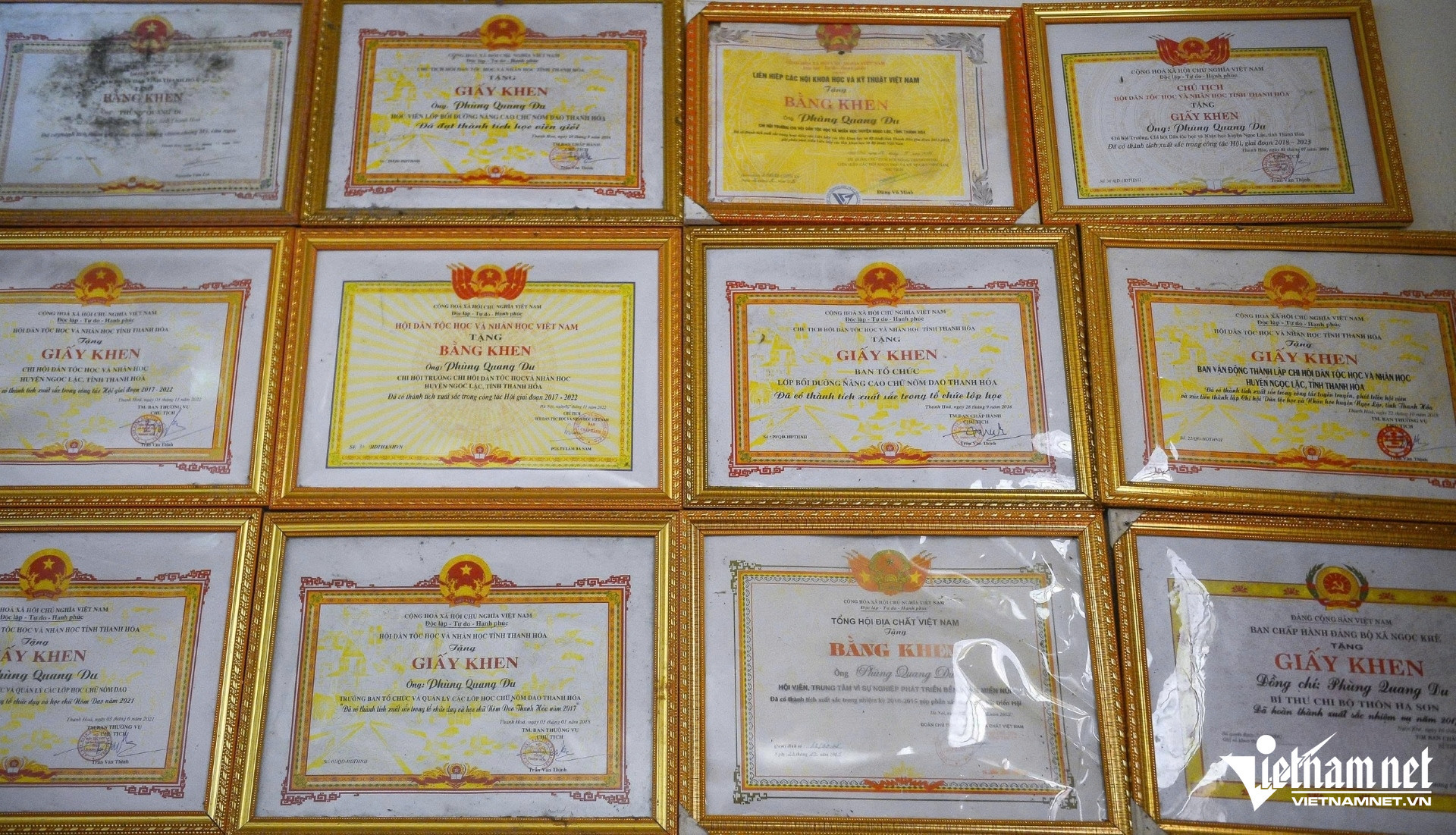
For his contributions to preserving the traditional cultural values of the Dao people, Phung Quang Du has received commendations for many consecutive years from central authorities, Thanh Hoa Province and the former Ngoc Lac district.
Le Duong
.svg)
