 Vietnamnet.vn

 Podcast



From the middle of the twelfth lunar month, when pale peach blossoms begin to signal the coming spring, Dao communities in Quang Ninh’s highland communes quietly enter their Tet season.
Unlike the nationwide Lunar New Year, the Dao’s early Tet unfolds without fanfare, yet it carries profound meaning rooted in clan bonds and ancestral faith.
Returning to the ancestral house to keep lineage alive
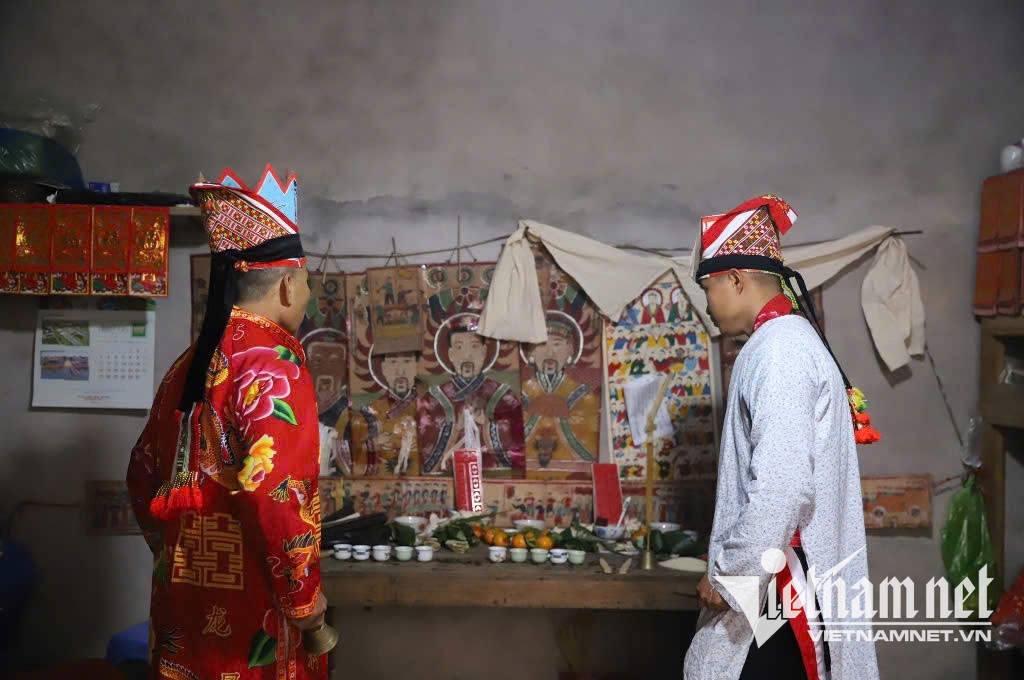
For generations, from the 15th day of the twelfth lunar month through the end of the first lunar month, the Dao Thanh Phan and Dao Thanh Y communities step into their early Tet period. Their celebration does not begin in individual homes, but at the ancestral house - the sacred space where the entire clan worships its forebears.
Ly Xuan Hung, a respected elder of Phu Lien hamlet in Luong Minh commune, explains that according to Dao belief, if descendants invite their ancestors to bless the household and harvest at the beginning of the year, they must offer thanks before the year closes.
Thus, the early Tet ritual is first and foremost an occasion to report achievements and express gratitude to the ancestors. Only afterward do families organize their own New Year celebrations at home.
The date for each clan’s early Tet is carefully chosen by a ritual master according to the Dao calendar. Once an auspicious day is set, every household prepares offerings - chicken, pork, rice wine, sticky rice, incense and handmade votive paper - to contribute to a shared feast.
The early Tet tray is simple: backyard chicken, home-raised pork, banh chung, banh day, forest vegetables and bowls of white rice. There is little concern for elaborate presentation. Instead, the offerings embody a year of diligent labor and carry hopes for favorable weather and prosperity in the coming season.
The ancestral altar of the Dao Thanh Phan is placed solemnly at the center of the clan house, enclosed on three sides like a small sacred chamber. On major occasions, descendants worship nine generations; on ordinary days, three.
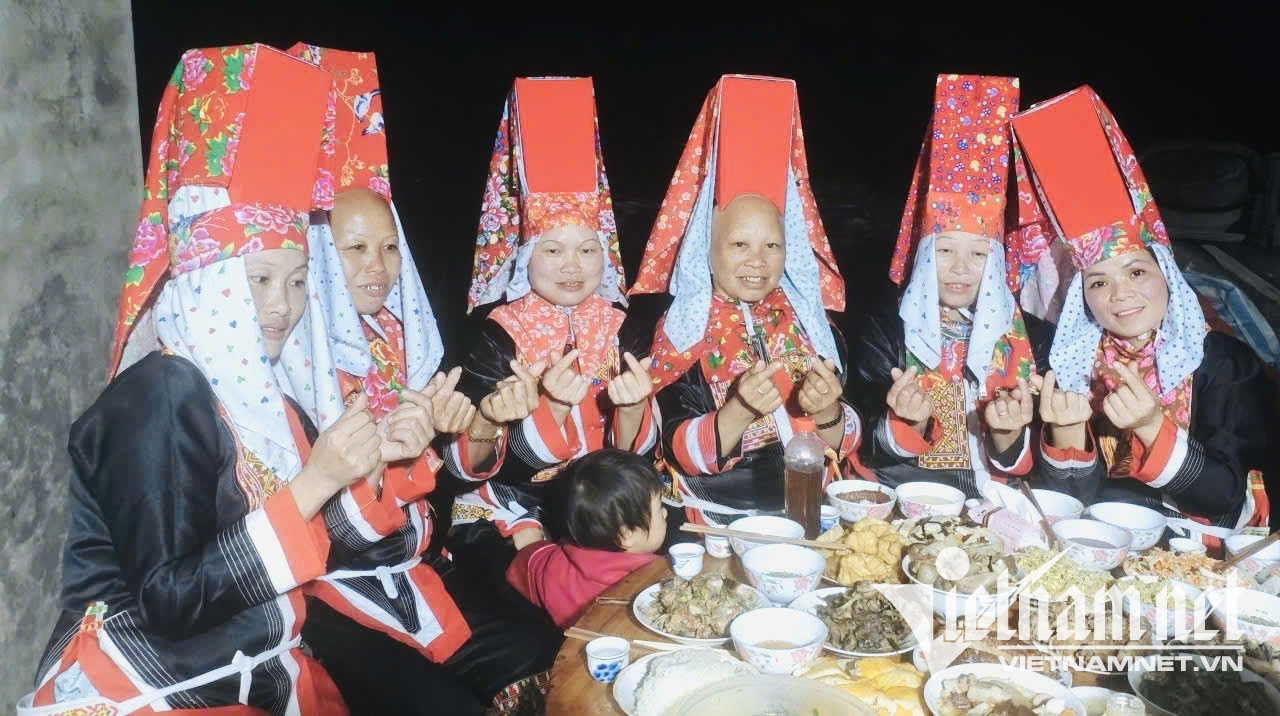
A distinctive feature is the votive paper money, dyed yellow by hand from tree bark and stamped with black ink. It serves as symbolic travel fare for the ancestors returning to their descendants. When the ritual concludes, the paper offerings are burned and the food lowered from the altar. The clan gathers to share the blessed meal, marking the warmest moment of reunion.
For the Dao, celebrating Tet early is both a gesture of thanksgiving before the new year and an affirmation of their own spiritual calendar. It honors the clan lineage before each family welcomes spring under its own roof.
The warmth of the hearth and a season of connection
From the full moon of the twelfth lunar month, the spirit of Tet spreads through Dao villages in Binh Lieu, Hoanh Mo, Ky Thuong and Luong Minh. Beneath blooming peach trees, families clean their homes and call relatives to help at the ancestral house - slaughtering pigs and chickens, wrapping cakes and preparing the feast.
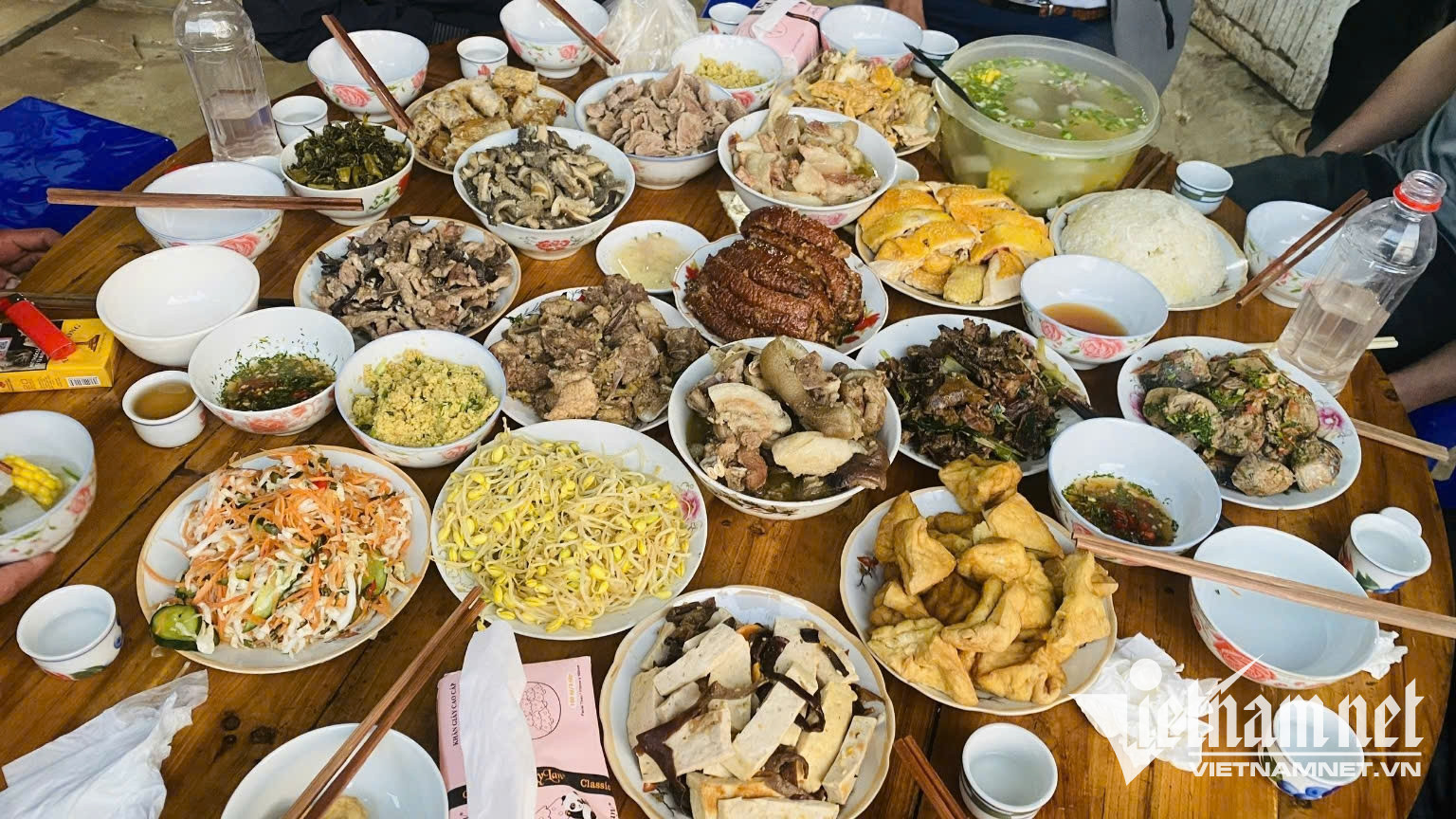
Everyone takes part under the guidance of the clan head. Women prepare traditional dishes; strong young men handle the heavier tasks; elders assist the ritual master in cutting votive paper and arranging offerings. The bustle of shared labor, filled with laughter and conversation, dispels the biting chill of the mountain winter.
At Keo Chan hamlet in Luc Hon commune, visitors are welcomed as kin. There is no distinction between guest and family. Around the modest feast, conversations flow about harvests, livestock and plans for the year ahead.
Early Tet, as many elders note, is not only a spiritual rite but also a time for community cohesion. Neighbors are often invited to join. Through the shared meal, people exchange farming experiences, encourage one another through hardships and look toward a more prosperous year.
Alongside indoor offerings, the Dao also set up an outdoor altar to give thanks to heaven and earth, expressing harmony with nature.
Amid modern life, the early Tet remains an indispensable cultural milestone. Its continuity rests on collective awareness, the guidance of respected community figures and the growing participation of younger generations.
Thanks to this shared commitment, the Dao’s early Tet is not only preserved but quietly renewed, adapting to contemporary rhythms while keeping its ancestral heart intact.
My Dung
.svg)
