 Vietnamnet.vn

 Podcast



That was the affirmation from Vietnam Football Federation President Tran Quoc Tuan in an interview with VietNamNet on the first day of 2026.
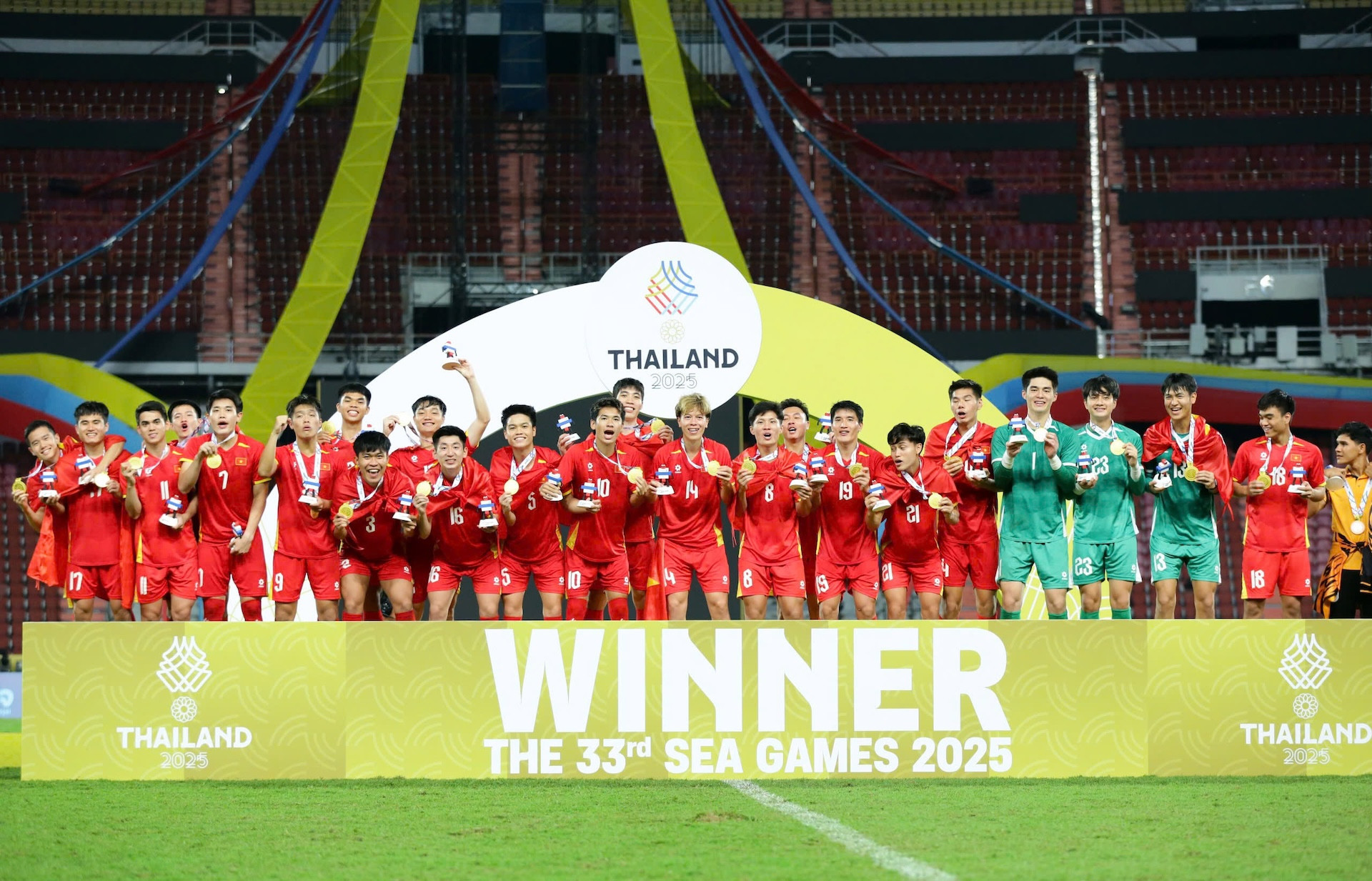
After consecutive successes at the AFC U23 finals, SEA Games 33, the U23 Southeast Asian Championship and the ASEAN Cup, how do you assess Vietnam’s current position in the region? Among these achievements, what makes you most proud when speaking with international peers?
Tran Quoc Tuan: It is clear that the achievements of Vietnamese football have shown stability in recent years. In particular, 2025 demonstrated comprehensive maturity at both senior and youth national team levels.
Winning major titles such as the ASEAN Cup, the U23 Southeast Asian Championship and the SEA Games 33 gold medal, along with a recent bronze medal at the AFC U23 Asian Cup 2026 finals, has affirmed Vietnam’s place among Southeast Asia’s leading football nations and highlighted tangible progress at the continental stage.
However, what makes us most proud in conversations with international friends is not merely the trophies or statistics, but the image of a football system developing with clear direction, identity, depth and, above all, continuity between generations.
The fact that multiple national teams, from youth squads to the senior side, achieved positive results and qualified for major continental tournaments in the same period shows this is not a momentary success. It reflects a system operating in a relatively synchronized and effective manner.
In addition, the competitive courage, resilience and refusal to give up displayed by Vietnamese teams have earned respect internationally. For instance, the U22 side came back from 0-2 down in the SEA Games final to win gold, while the dramatic third-place play-off at the AFC U23 Asian Cup 2026 saw Vietnam endure 120 minutes despite squad disadvantages before prevailing in a tense penalty shootout against U23 South Korea.
Such performances are rare, even on the global stage, and they demonstrate the mental strength and competitive maturity of Vietnamese players.
Behind these notable achievements lies a long-term preparation process. Could you elaborate on the development strategy the Vietnam Football Federation has implemented over the years and in the coming period?
The development strategy pursued by VFF closely follows the major orientations approved by the Government and the Ministry of Culture, Sports and Tourism, including the “Vietnam Football Development Strategy to 2020, with a vision to 2030” and the “Project for Vietnam Football Development to 2030, with orientation to 2045.” On that basis, VFF has gradually built a continuous development system from grassroots foundations to national teams, aiming to create solid groundwork rather than chasing short-term success.
From upgrading youth training systems and standardizing domestic competitions to mapping out development pathways for each national team, we prioritize structured preparation, long-term planning and a systematic approach.
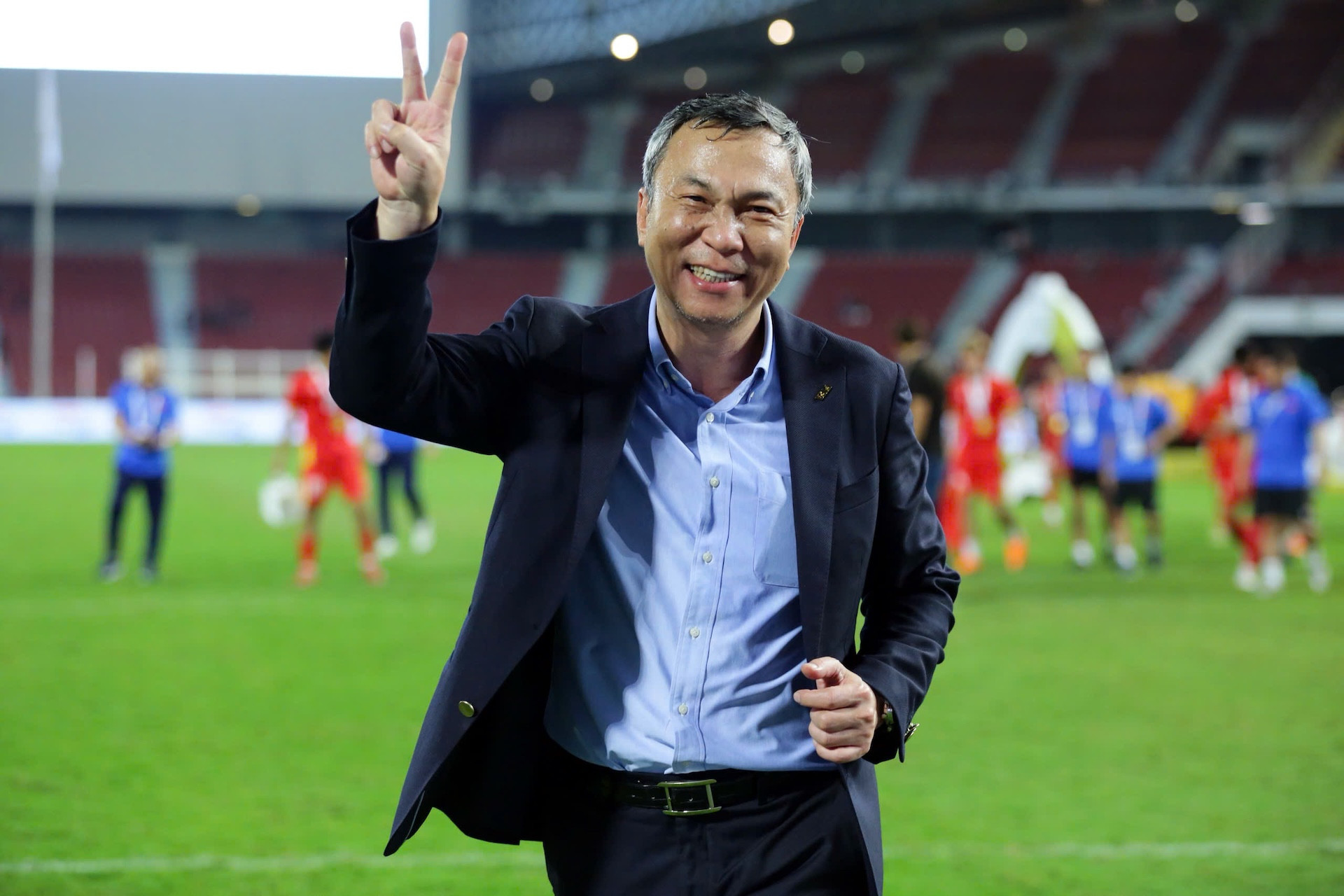
Specifically, Vietnamese football has organized numerous overseas training camps and high-quality friendlies across age groups, including targeted programs for U22 and U23 squads to strengthen international competitiveness. This foundation has enabled young players to accumulate experience and cope with high-pressure situations, as seen at the SEA Games and continental tournaments.
In the coming period, VFF will continue investing in depth, expanding international cooperation, enhancing coaching capacity and building successive generations capable of competing effectively in the 2030 and 2034 World Cup qualifiers.
How has youth development and international integration been implemented to create a sustainable foundation for national teams?
Improving the quality of domestic leagues, persisting with youth development and accelerating international integration and cooperation are key pillars of sustainable growth for Vietnamese football. We consider international partnerships essential to approaching continental standards.
Through cooperation agreements with developed football nations such as Japan, China, the UAE, Saudi Arabia and Qatar, VFF has invested in the national youth competition system and enabled U17, U20, U22 and U23 teams to regularly train and compete internationally against strong opponents.
This process not only helps players gain match experience but also fosters psychological growth, tactical understanding and modern football thinking. As a result, Vietnam’s youth teams have maintained stability, continuity and confidence when facing stronger football nations in the region and across Asia.
The year 2025 was seen as a special milestone when multiple Vietnamese teams advanced through Asian qualifiers. How do you view this achievement?
The year 2025 was indeed a memorable milestone. Not just one team, but seven national squads across different age groups progressed through Asian qualification rounds. This reflects balanced development and a clear improvement in professional depth.
This achievement is the result of persistent preparation over many years, from enhancing coaching quality and improving training and competition conditions to creating opportunities for players to build experience and resilience in international tournaments. More importantly, it demonstrates that we have gradually established a development system with continuity between youth levels and the senior team, ensuring each generation is ready to meet the increasingly demanding standards of continental football.
However, we approach this success with humility. Upcoming final tournaments will feature higher technical quality and require even more thorough preparation.
Finally, with the long-term goal of reaching the World Cup, what path will VFF choose to realize this dream?
The World Cup is a great aspiration for any football nation. For Vietnam, we regard it as a strategic objective that must be pursued with perseverance, clear roadmaps and a systematic approach.
The path toward that dream is to sustain and replicate the values that have brought success: developing internal strength in a sustainable manner, beginning with youth training, raising the quality of domestic competitions and building a national team with depth, resilience and stability.
Equally important is preserving Vietnam’s football identity, avoiding short-term solutions that may cause imbalance, and remaining steadfast in a long-term development strategy. When the foundation is strong enough, opportunities will come. The World Cup serves as a guiding compass for VFF in its commitment to the sustainable development of Vietnamese football.
Duy Nguyen
.svg)
