 Vietnamnet.vn

 Podcast



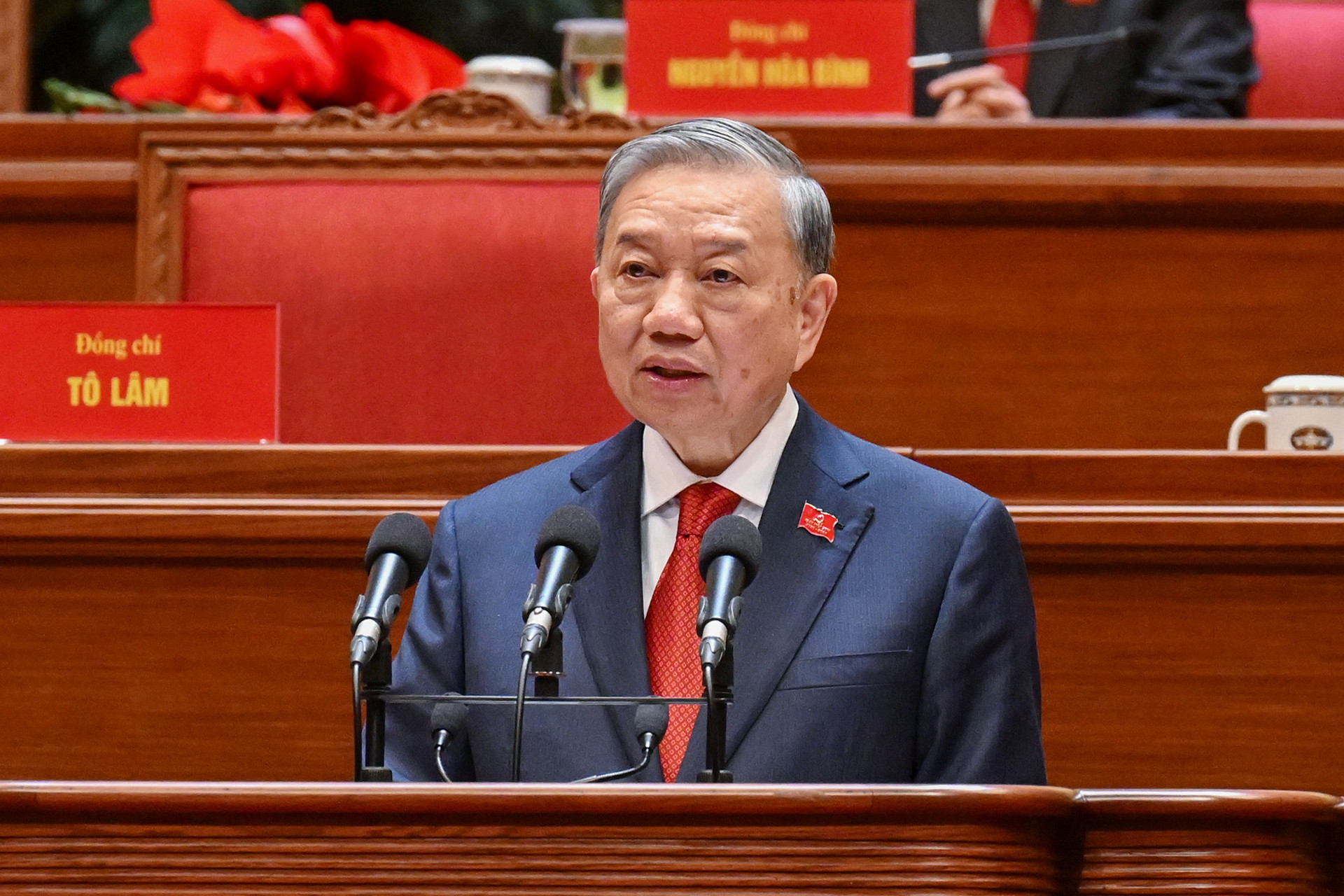
When this culture deeply permeates the apparatus, every Party policy will enter life smoothly and effectively.
In the report on documents submitted to the 14th National Party Congress, presented by General Secretary To Lam at the Congress, the overarching message emphasized was the spirit of action: “say less – do more – follow through to the end,” identifying implementation as the decisive stage that determines the success or failure of all lines and policies.
Practice over many terms shows that the biggest weakness is not the lack of correct guidelines but implementation that cannot meet requirements. Therefore, the documents of the 14th Congress and the directions of the General Secretary have placed action and responsibility at the center, as a powerful political call to the entire Party and the entire political system.
General Secretary To Lam has repeatedly emphasized: the Party's prestige does not lie in slogans or promises but is measured by concrete results in the lives of the people.
The message "say less - do more - follow through to the end" is not only a requirement for leadership, but also a new political and public-service ethical standard. It is a strong shift from a mindset of issuing resolutions to a mindset of creating action; from evaluating by reports to evaluating by results; from management by administrative orders to governance by responsibility, discipline, and efficiency.
The spirit reflects the Party’s determination to overcome chronic shortcomings of the system: procedural formalism, achievement disease, and fear of responsibility.
No forbidden zones, no compromise with inertia and irresponsibility
One of the core requirements highlighted by the General Secretary is the need to translate Congress documents into feasible action programs and plans, with clear objectives, measurable indicators, specific timelines, and responsibility assigned to each individual.
This represents an important shift from “function-based work” to “results-based work,” from general collective management to clearly defined individual accountability. When every task is linked to a specific responsible address, discipline and order have a basis to be enforced; people's trust is consolidated by visible, measurable changes.
The General Secretary particularly emphasized the role of inspection, supervision, and both regular and unexpected evaluations, considering these as the "effective hand" to ensure that political resolve does not weaken during implementation.
The consistent spirit is to be strict with manifestations of stagnation and irresponsibility, while simultaneously rewarding and protecting those who dare to think, dare to do, and dare to take responsibility for the common good. This is a particularly important message in the context where many officials still have a "fear of being wrong and fear of responsibility," not daring to decide or act. When the mechanism for protecting innovators is substantially implemented, the apparatus will have more motivation to move faster and stronger.
General Secretary To Lam also pointed out that wastefulness is no less dangerous than corruption, as it erodes social resources, slows national development, and undermines public trust. Therefore, implementation in the coming period must be closely linked to thrift, focused and prioritized investment, avoiding dispersion and trend-driven spending.
Another key emphasis in the General Secretary’s directives is the requirement to build a public-service culture that is ethical, professional, and scientific, using citizen and business satisfaction as the benchmark, and data and outcomes as the basis for evaluation. This marks a fundamental shift from a “ask and grant” administrative model to a service-oriented administration, and from intuition-based management to evidence-based governance.
Integrity is not only about not being corrupt but also about working with dedication, correct responsibility, and in accordance with the law, without avoiding or pushing responsibilities away. When the culture of integrity deeply permeates the apparatus, every Party policy will truly enter life smoothly and effectively. The culture of public-service integrity can be considered the sustainable foundation of an action-oriented civil service that serves the people.
The spirit is to resolutely fight against all manifestations of distortion and exploitation, while simultaneously respecting constructive feedback, considering it a resource for perfecting policy. This is a manifestation of a ruling Party that is confident, receptive, and puts the interests of the people above all else. Media engagement and social consensus are conditions for reform to go faster and to the end.
Throughout General Secretary To Lam’s speech runs the requirement to link implementation with discipline and order. Party discipline must come first; the rule of law must be strictly enforced; all power must be subject to control; all responsibilities must be clearly defined; all violations must be handled; and all genuine efforts for the people and the nation must be recognized and protected.
Dinh Van Minh (PhD former Director General of the Legal Affairs Department, Government Inspectorate)
.svg)
