 Vietnamnet.vn

 Podcast



Pham Cong
Originally trained in electrical engineering and holding a stable job, Hung left everything behind in 2020 to pursue his passion for farming. Together with two friends, he invested heavily in greenhouse cultivation of grapes and clean vegetables.
But after seven months, the entire investment was gone. Monthly earnings barely reached VND3–4 million (US$120–160), far from enough to sustain the project. His partners withdrew. Hung stayed.
There were nights he worked until 3am, alone at the farm, as pressure mounted from both financial strain and family concerns. Still, he refused to give up.
A turning point with pennywort
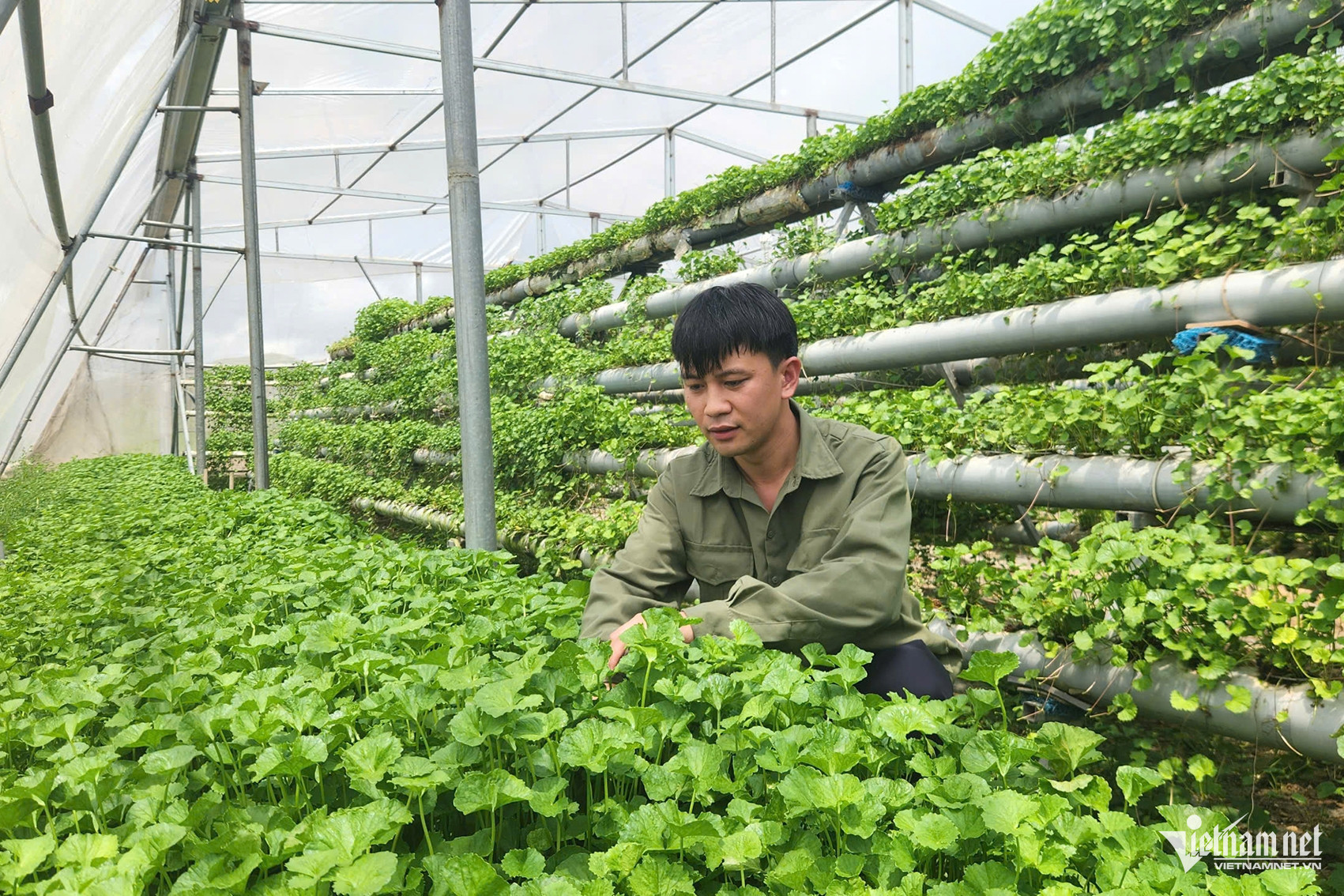
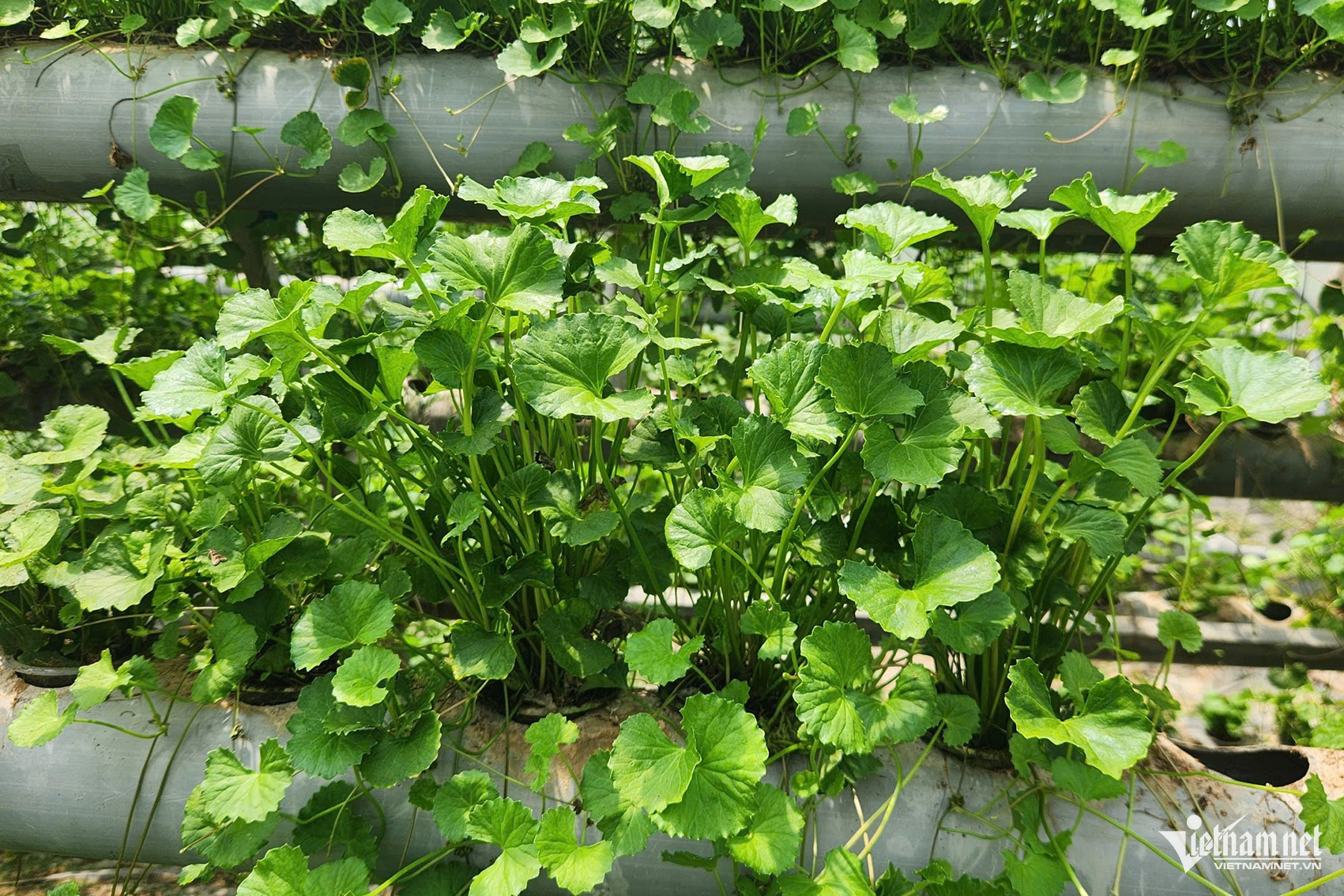
The shift came during a harsh winter. While pennywort growing naturally in the fields withered under the cold, the same plant cultivated hydroponically inside Hung’s greenhouse thrived - crisp, mild in taste and clean.
That contrast changed everything.
He decided to scale up pennywort cultivation, gradually reshaping his entire operation around the crop. Yet just as the model stabilized, disaster struck again in 2024 when Typhoon Yagi destroyed the greenhouse, wiping out the farm completely.
Faced with another collapse, Hung chose to rebuild.
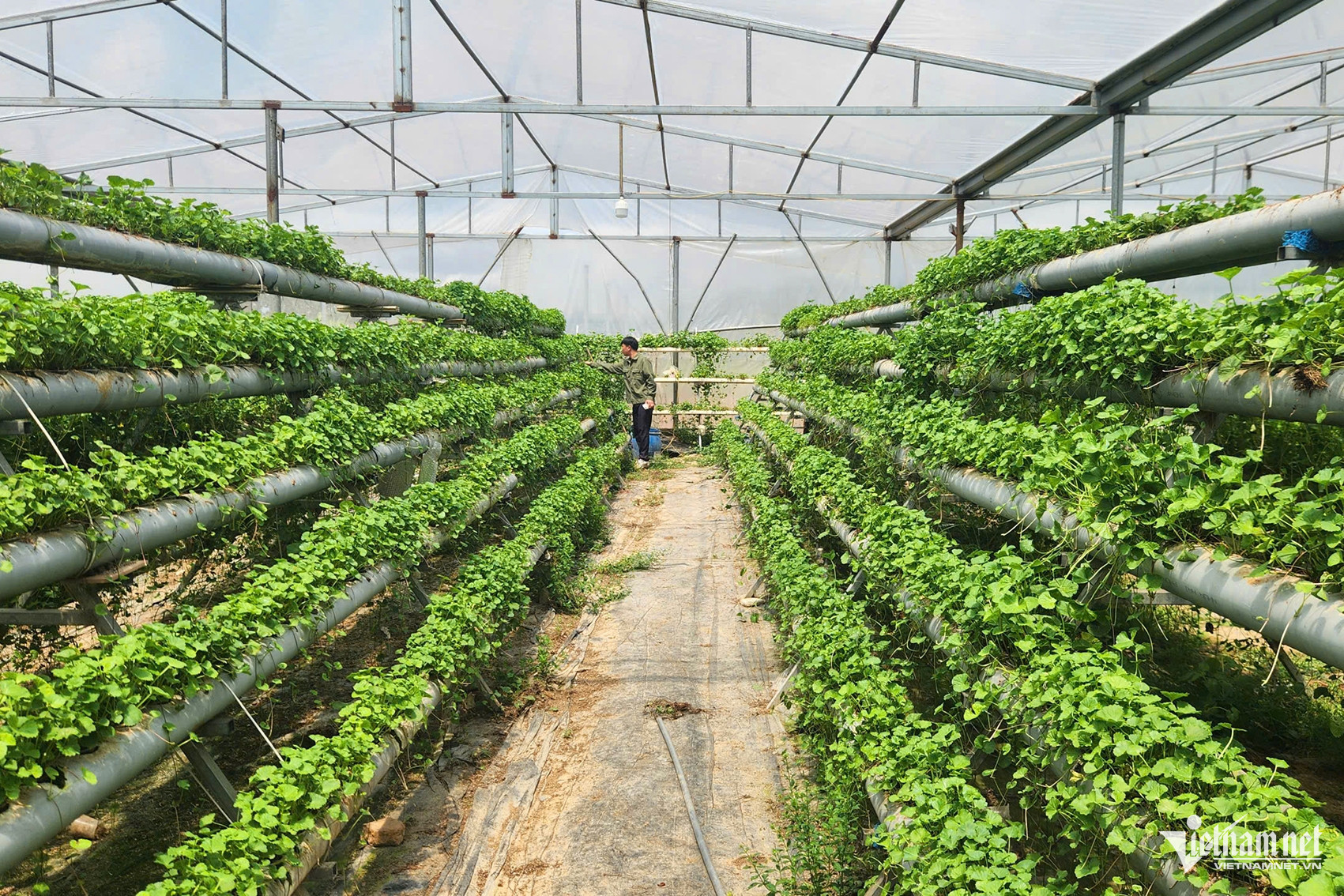
He invested about VND150 million (US$6,100) to reconstruct a 750-square-meter greenhouse system, installing 15 vertical hydroponic towers, three lined reservoirs and 10 horizontal growing racks.
A stable income from a simple plant
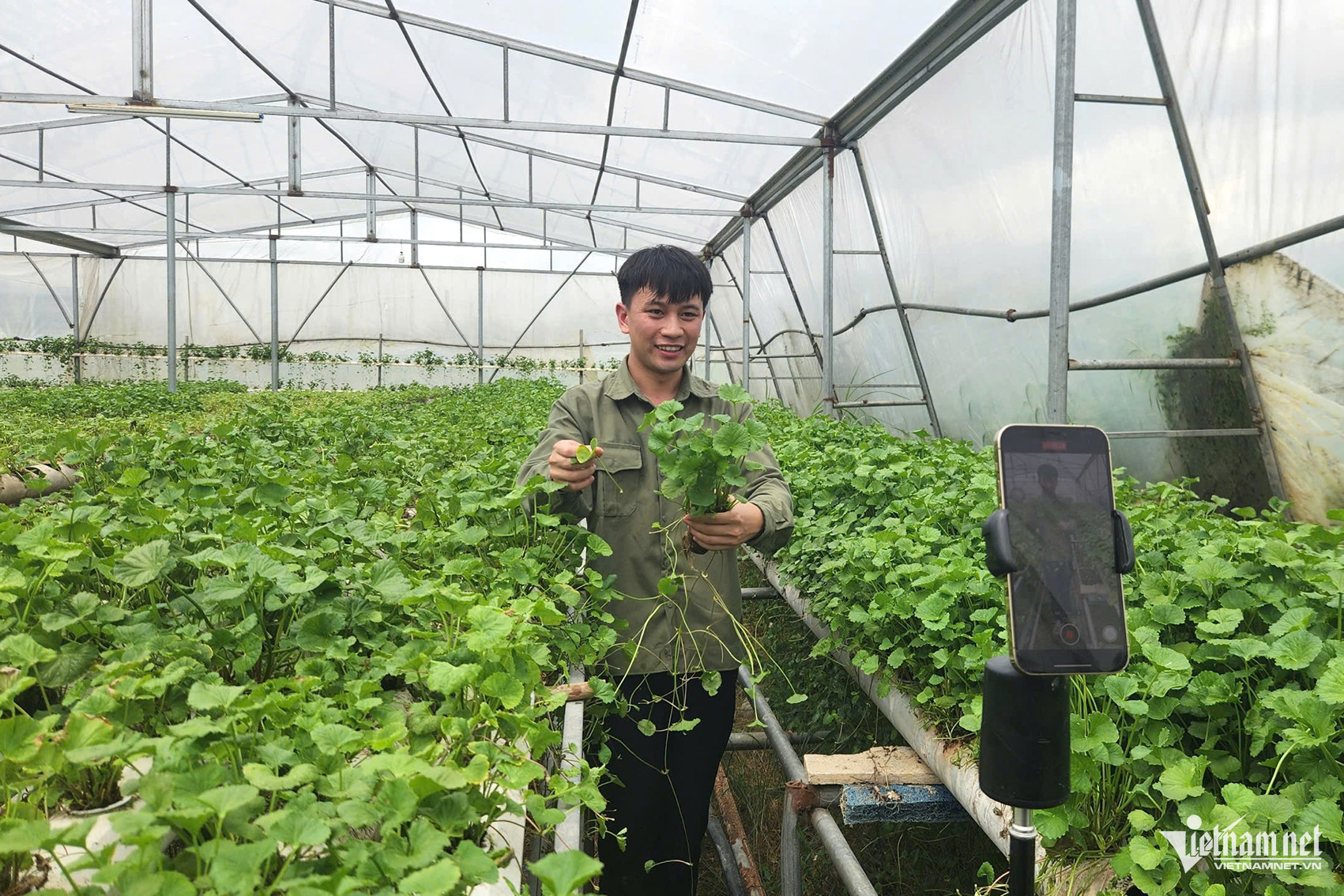
Today, Hung’s farm produces around 40kg of fresh pennywort daily, sold at VND30,000–40,000 per kilogram (US$1.2–1.6). He also supplies about 100 liters of pennywort juice each day, priced at VND30,000 per liter (US$1.2).
Unlike traditional soil-grown crops, hydroponic pennywort is isolated from contaminants such as parasites, heavy metals and chemical residues. The entire process - from seedlings to nutrient solutions - is strictly controlled, reducing pests and minimizing labor while accelerating growth cycles.
The crop is harvested within 25 to 30 days after planting and can be cut repeatedly every 15 days thereafter.
Beyond fresh produce, Hung has expanded into value-added products. He dries and finely grinds pennywort into powder, selling it at VND400,000–500,000 per kilogram (approximately US$16–20). He also supplies seedlings priced between VND10,000 and VND15,000 each (approximately US$0.4–0.6).
After expenses, his monthly profit now exceeds VND50 million (US$2,000).
A model gaining local attention
According to local authorities, Hung’s hydroponic pennywort farm has emerged as a promising direction for clean agriculture in the area.
Bui Trieu Duong, Chairman of the People’s Committee of Binh Khe ward, noted that the model not only delivers strong economic returns but also attracts growing interest from local residents. The locality has supported access to policy loans and helped promote the products through official channels.
In a region traditionally known for ornamental plants and fruit trees, the introduction of controlled-environment farming is opening new pathways for income diversification.
Hung’s journey, marked by failure, persistence and reinvention, reflects a broader shift in Vietnam’s rural economy - where small-scale innovation, rather than scale alone, is beginning to shape sustainable growth.
.svg)
