 Vietnamnet.vn

 Podcast



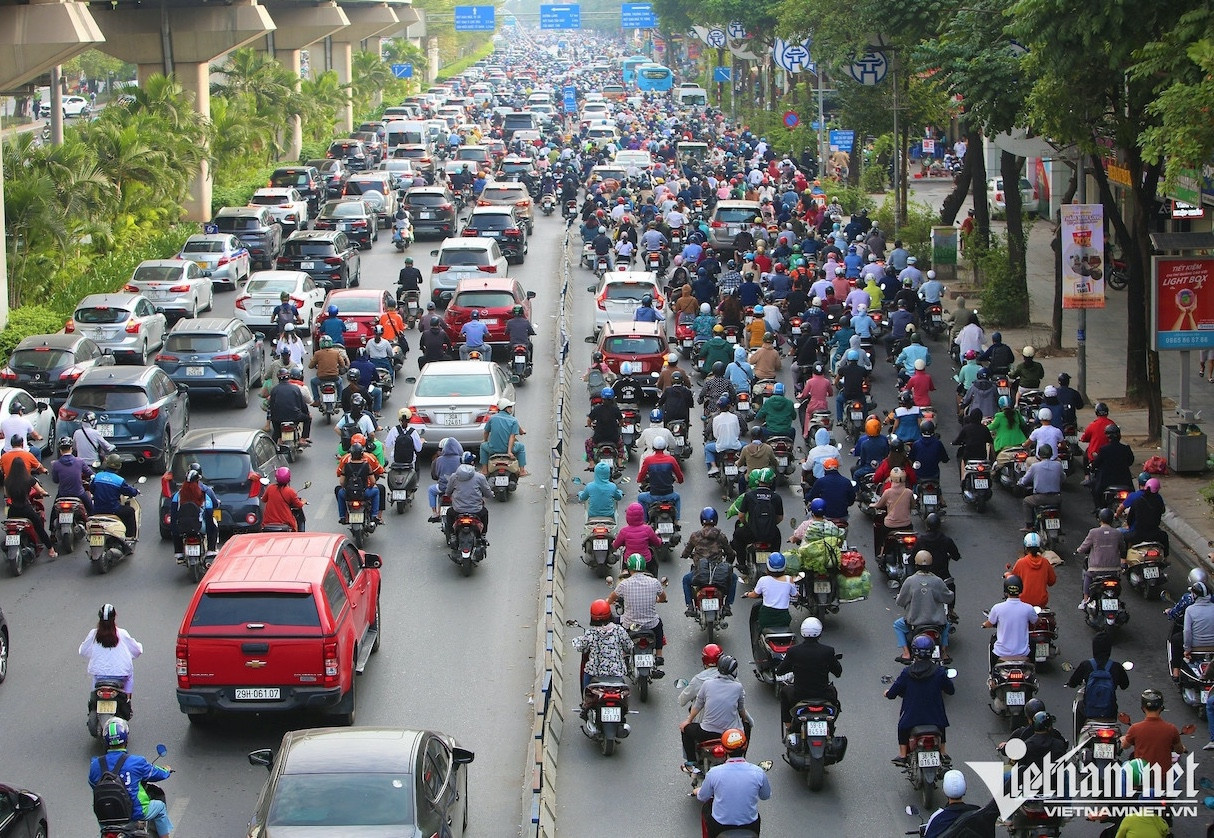
According to the Hanoi Department of Construction, the system - developed by South Korean company TOPES - was deployed along two major corridors, Vo Chi Cong and Pham Van Dong, from August 27, 2025 to March 15, 2026.
A widespread issue comes into focus
During the trial period, the system logged more than 3.07 million instances of motorbikes entering lanes designated for cars.
Pham Van Dong accounted for the majority, with over 2.2 million violations recorded, while Vo Chi Cong saw more than 830,000 cases.
These figures point to a persistent challenge in traffic discipline, particularly on major urban arteries where mixed traffic flows often lead to lane encroachment.
How the system works
Unlike conventional surveillance, the AI-powered cameras do more than record footage.
They automatically detect violations, recognize license plates, and store both images and video data for enforcement purposes. The system is also capable of operating with high accuracy in complex conditions, achieving detection rates of around 95% during the day and 90% at night.
This level of automation significantly reduces reliance on manual monitoring, allowing authorities to process large volumes of data more efficiently.
Beyond enforcement
The system’s role extends beyond identifying violations.
It also collects detailed traffic flow data across different lanes, offering valuable insights for urban planners and transport authorities. By analyzing this data, officials can better understand congestion patterns and adjust traffic organization accordingly.
Such capabilities mark a shift toward data-driven traffic management, where decisions are informed not just by observation, but by continuous, real-time monitoring.
Next steps for Hanoi
Encouraged by the initial results, the Hanoi Department of Construction has proposed transferring the entire system to the city’s police force for long-term operation.
This would allow for more integrated enforcement and consistent application of traffic regulations across the capital.
The pilot follows earlier efforts to reorganize traffic on Pham Van Dong, including lane separation measures introduced in July 2025 to reduce conflicts between vehicles.
A signal of broader change
The success of the pilot suggests that Hanoi is moving toward a more technologically driven approach to managing its rapidly growing traffic.
While the sheer number of violations highlights ongoing behavioral challenges, the deployment of AI systems offers a clear pathway toward improved enforcement, better planning, and ultimately, safer roads.
Vu Diep
.svg)
