 Vietnamnet.vn

 Podcast



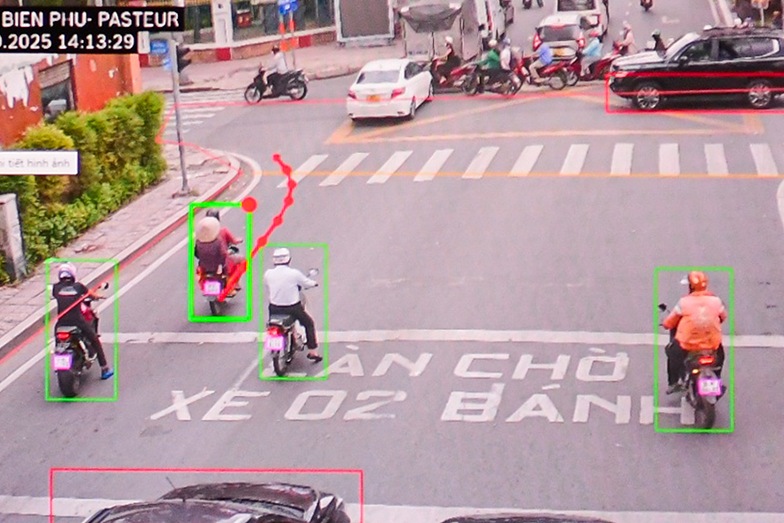
On December 5, the Hanoi Police Department held a workshop on administrative violation handling in digital environments, particularly in traffic safety and urban order. The event aimed to refine enforcement procedures, improve state management efficiency, and align with the national digital transformation goals of the capital’s police force.
Speaking at the workshop, Lieutenant General Nguyen Thanh Tung, Director of Hanoi Police, emphasized that the city’s law enforcement is undergoing a robust transformation. To serve the public better, he said, Hanoi must significantly enhance its management capability, especially in ensuring traffic safety.
The workshop focused on a comprehensive assessment of current practices in administrative fine processing. It also explored technological and operational solutions to establish a fully digitalized enforcement system.
This end-to-end process includes detecting violations via surveillance cameras, generating electronic reports, verifying violator identities, sending violation notices, integrating online fine payment, and tracking compliance. Each stage must ensure data interoperability, legal compliance, ease of operation, and data security.
According to Colonel Tran Dinh Nghia, the city’s traffic control center has completed the second phase of its upgrade. By December 10, Hanoi will launch 1,837 surveillance cameras and AI-powered traffic lights that operate autonomously based on real-time traffic volume data.
Colonel Nghia emphasized that the system goes beyond merely issuing automated fines. It is designed to reduce congestion, modernize infrastructure, enhance administrative capacity, and promote urban civility.
The AI system is capable of automatically identifying common traffic violations such as running red lights, lane violations, and illegal stopping or parking.
In addition, the system offers early congestion alerts, recognizes vehicles under surveillance, and can adjust signal cycles in real time - shortening or extending light phases depending on traffic flow. This reduces the need for on-site traffic police, increases accuracy in monitoring, and boosts transparency in urban management.
Dinh Hieu
.svg)
