 Vietnamnet.vn

 Podcast



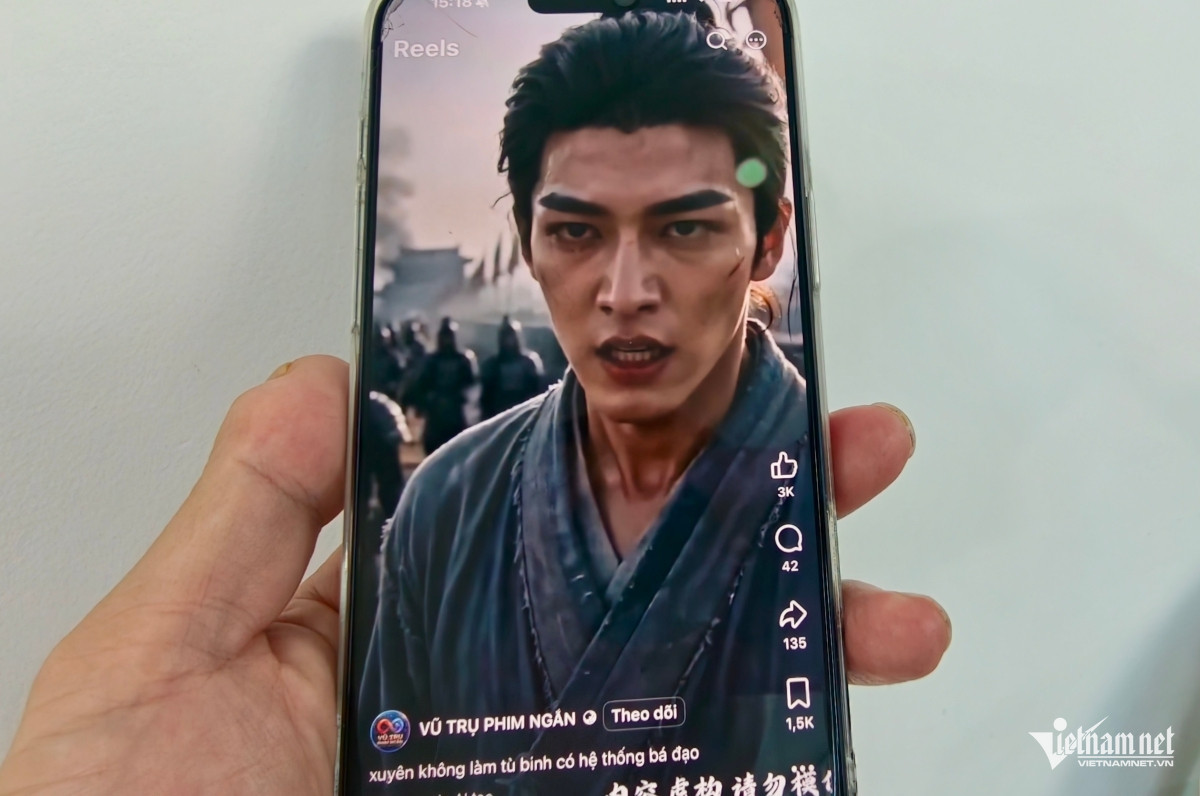
It is no coincidence that China has recently banned a number of so-called "domineering boss" dramas, as well as productions featuring unrealistic and illogical storylines.
The country has also imposed strict controls on AI-generated films, requiring them to carry clear labels indicating that they are created using AI.
However, after facing restrictions in China, producers of AI-generated short dramas have turned to overseas markets.
As a result, Chinese AI short dramas featuring an array of themes, including domineering CEOs, time travel, reincarnation and immortal masters descending from the mountains, are flooding social media and digital platforms in Vietnam.
A quick look at the Reels or Watch sections of Facebook, TikTok or YouTube is enough to encounter a constant stream of AI-generated short dramas from China.
The plots are often exaggerated and detached from reality. Some "CEO" dramas feature the owner of a major conglomerate falling for a poor girl; others depict a disgraced prince traveling back in time and taking missiles to the feudal era, or characters who are reborn after death with knowledge of future events and use it to become wealthy.
These short dramas are also entering Vietnam through OTT platforms such as WeTV and iQIYI, in addition to social media.
There is currently no dedicated control mechanism specifically targeting these productions, and experts warn that they could have troubling consequences, particularly for young people.
Tuan Nguyen, CEO of NetSpace, said the proliferation of Chinese AI-generated short videos on Vietnamese social media is creating a number of serious concerns.
The issue is not that the content comes from China, nor that it is created using AI. Rather, it is the enormous scale of distribution, the speed at which the content spreads and the lack of commensurate oversight mechanisms.
The first consequence is information pollution. AI can generate thousands of videos in a very short time, featuring eye-catching visuals, shocking plot twists and voices that sound like real people. Some content is designed primarily to generate views and may even deliberately skirt restrictions on sexually suggestive or 18-plus material.
When algorithms continuously distribute such videos, viewers can find it difficult to distinguish genuine information from staged or fabricated content. This is particularly true for people with limited exposure to technology, who may readily believe what they see online.
In the long term, the most serious danger may not be that people believe a single fake video, but that they gradually lose trust in information online altogether.
The second consequence is the potential impact on perceptions and culture, particularly among children and users with limited ability to verify information.
Short videos are designed to stimulate curiosity and emotion and keep viewers engaged. They often favor sensationalism, superstition, violence, distorted versions of history or unhealthy ideas about life.
The third consequence is the potential damage to Vietnam's domestic content-creation ecosystem. A Vietnamese creator may have to invest considerable time, manpower and money to produce quality content, while an AI system can industrialize video production at almost no cost.
When platforms prioritize views and watch time without adequately assessing the source, quality or social value of content, low-quality material can overwhelm worthwhile productions. Genuine content creators are then forced to compete on an increasingly uneven playing field.
There are also risks involving copyright infringement, unauthorized use of images and voices, impersonation of public figures, false advertising and deepfake-enabled fraud.
Some channels may be operated entirely from overseas while still reaching Vietnamese users and generating revenue in the country, making it difficult to determine who should be held responsible.
Vo Quoc Hung from Tonkin Agency is particularly concerned that the proliferation of Chinese AI-generated videos and short dramas could make viewers more vulnerable to manipulation of information and perceptions.
More seriously, he said, such content could stifle genuine creativity, as producing these videos and short dramas requires little investment and can be done on an essentially unlimited scale.
Nhan Nguyen, who works in digital marketing in HCMC, also noted that when videos fail to meet the requirements for distribution on Chinese platforms because of strict government controls, their producers may turn to other markets such as Vietnam.
This could create serious consequences because there is currently no dedicated body overseeing such video and short-drama content in Vietnam.
The far-reaching consequences of these "unfit-for-distribution" videos could have a particularly damaging impact on young people, especially minors. They could distort children's perceptions of life and negatively affect their personal development as well as broader social development.
Le My
.svg)
