 Vietnamnet.vn

 Podcast



On July 19 (the sixth day of the sixth lunar month), the Phong Coc Ward People's Committee organized this year's festival, featuring the customary rice planting competition.
Originating from the traditional Ha Dien (beginning of cultivation) and Thuong Dien (harvest thanksgiving) ceremonies, the festival has been preserved by local communities for decades.
This year's celebration took place over two days, from July 18 to 19.
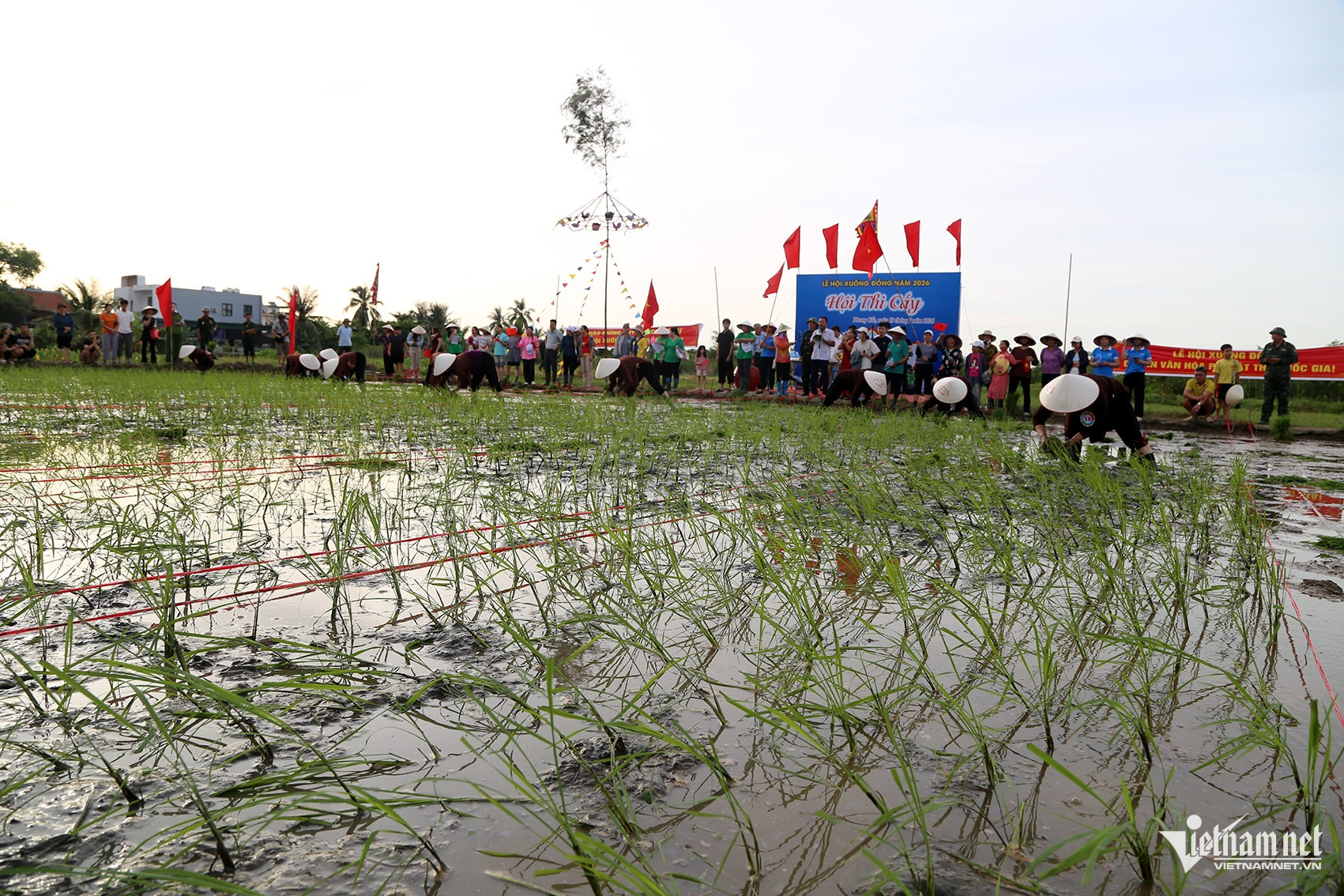
On the festival's main day, villagers gathered before dawn in the rice fields in front of Coc Communal House to take part in the ceremonial planting ritual and the annual rice planting contest.
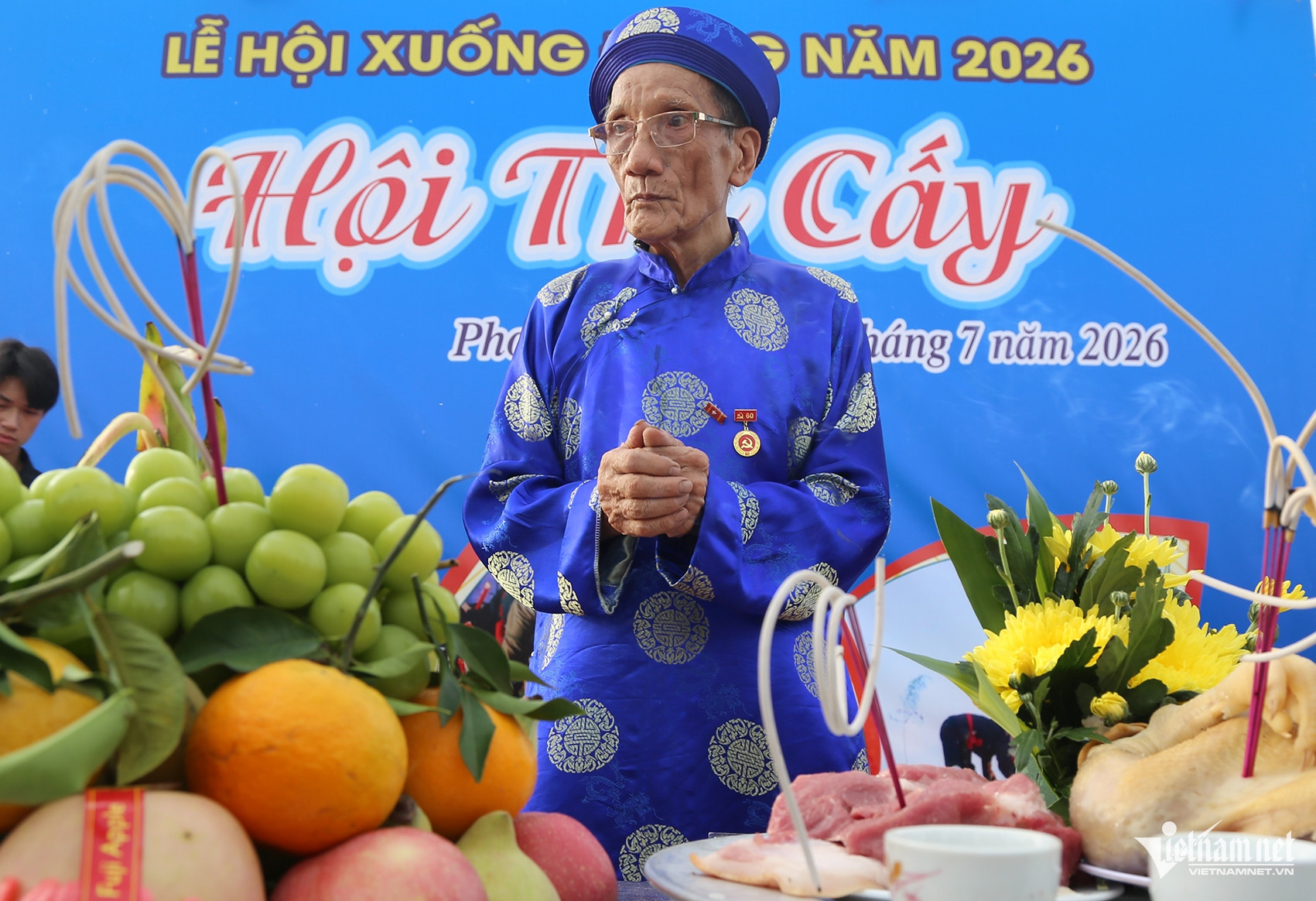
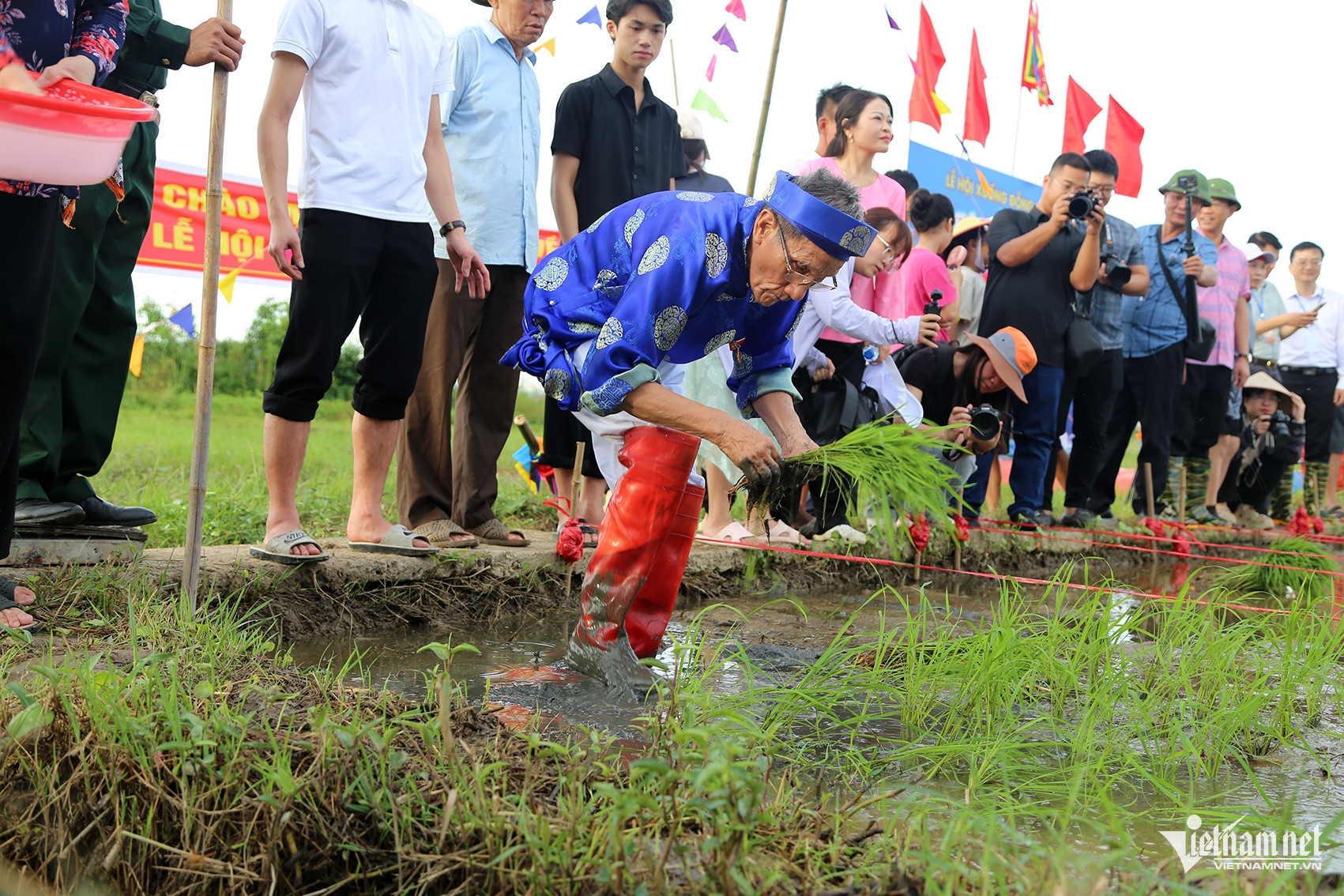
Following an incense offering to Than Nong, the God of Agriculture, to pray for favorable weather and abundant harvests, the chief ritual officiant stepped into the paddy field to plant the first rice seedlings before the villagers.
According to long-standing local custom, the new farming season officially begins only after the officiant completes this sacred ritual.
The officiant must meet strict traditional requirements, including not being in a period of mourning, having both parents alive, and being regarded as a person with a harmonious family.
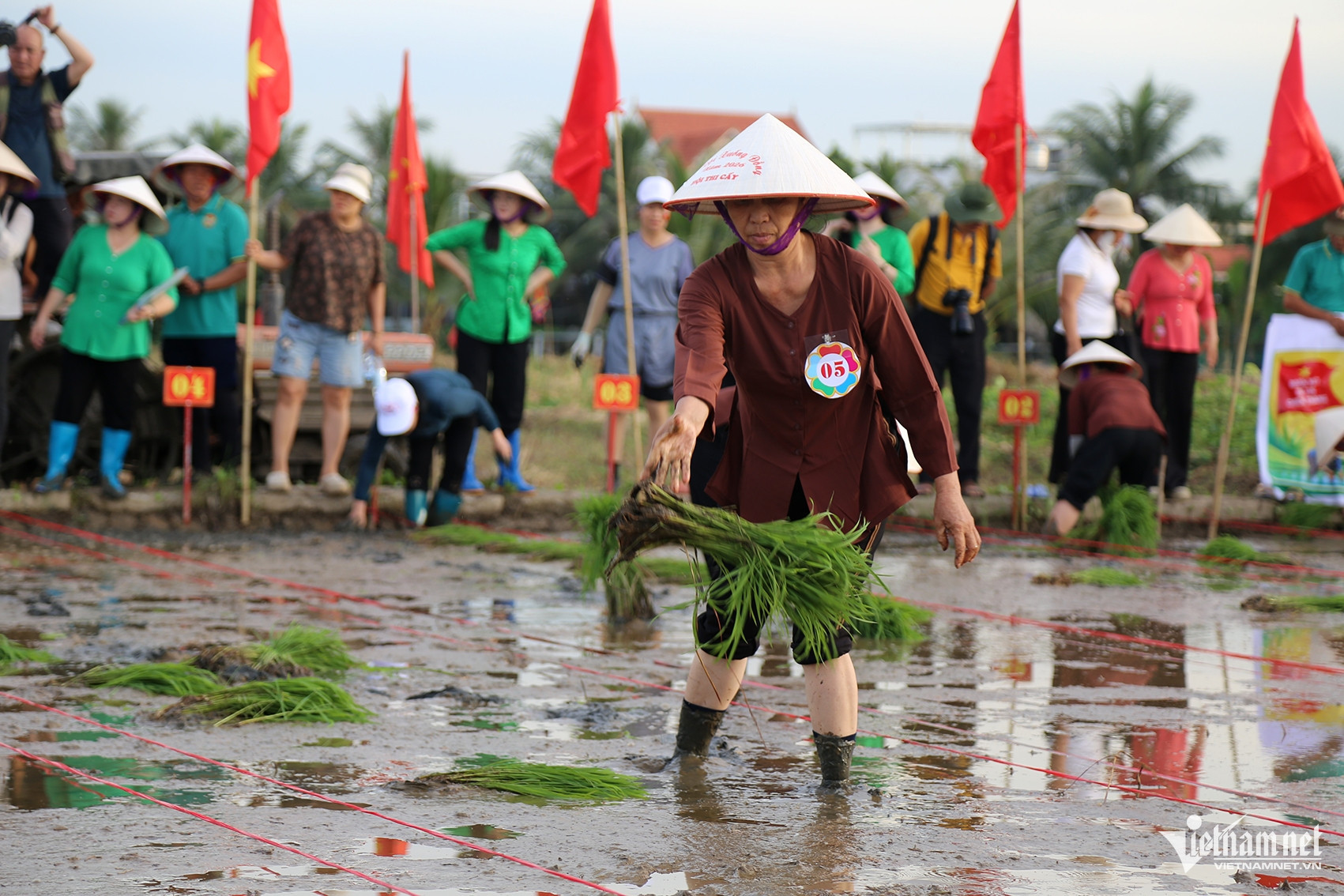
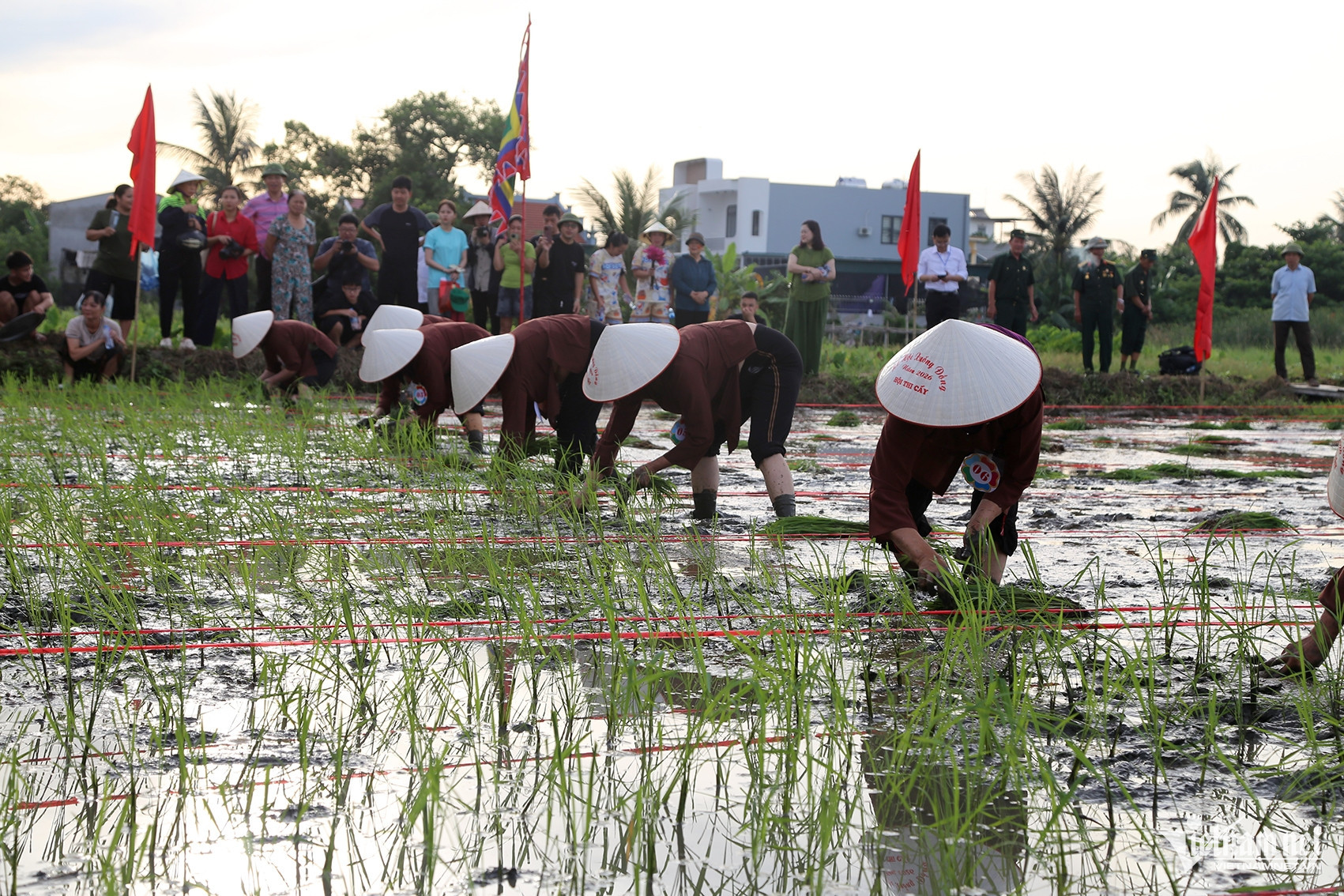
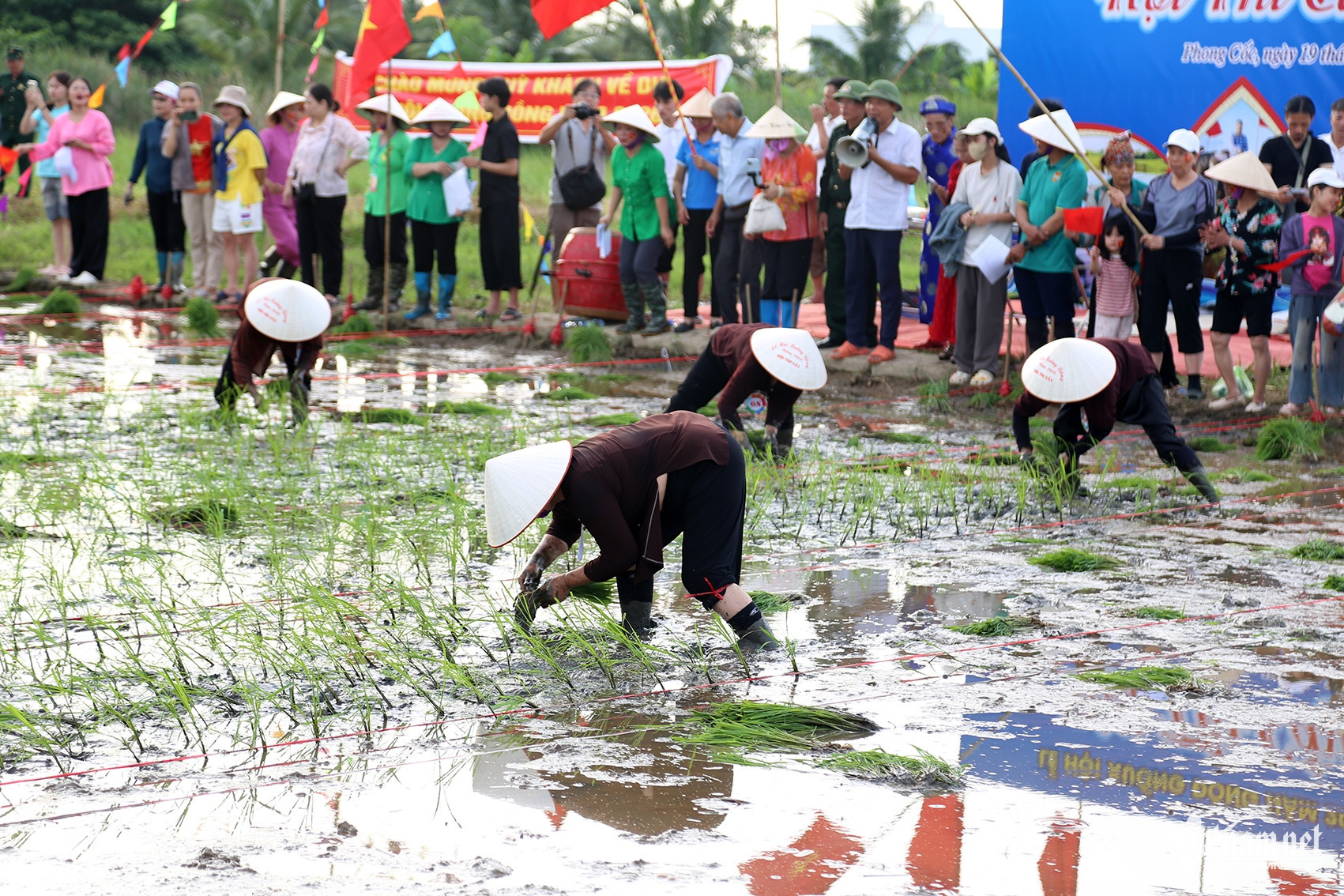
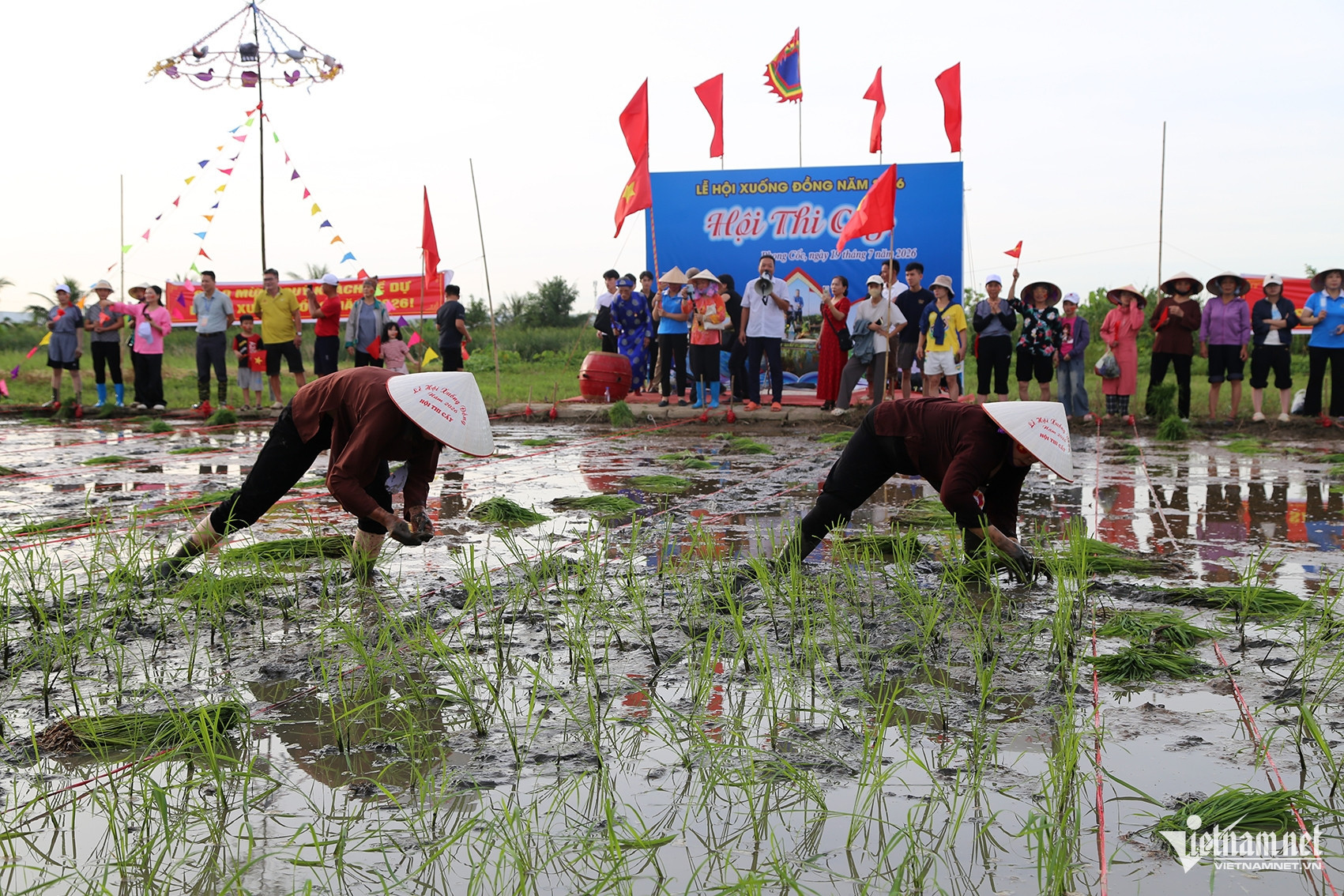
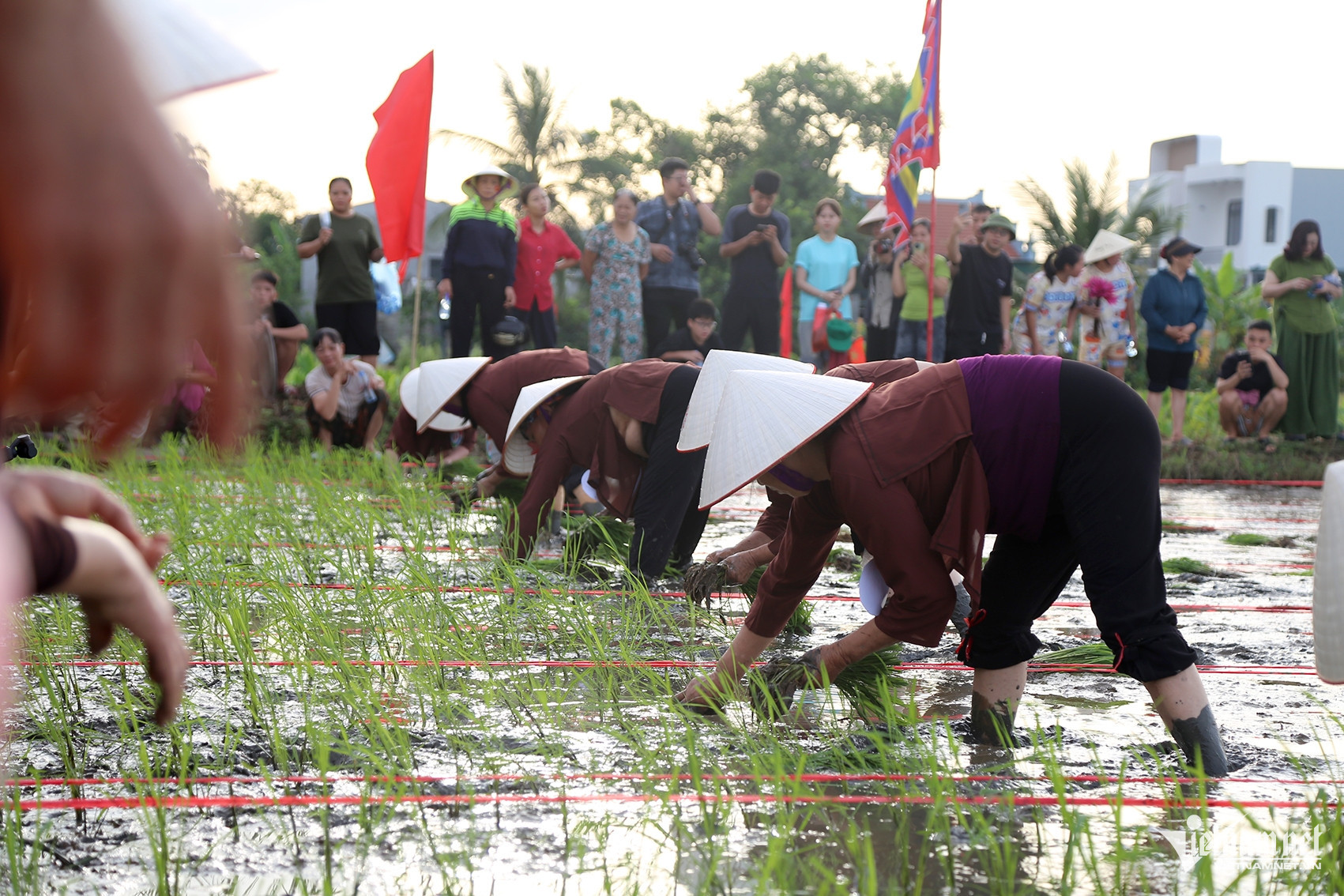
This year, 10 women farmers, representing the island's 10 residential communities, competed in the planting contest.
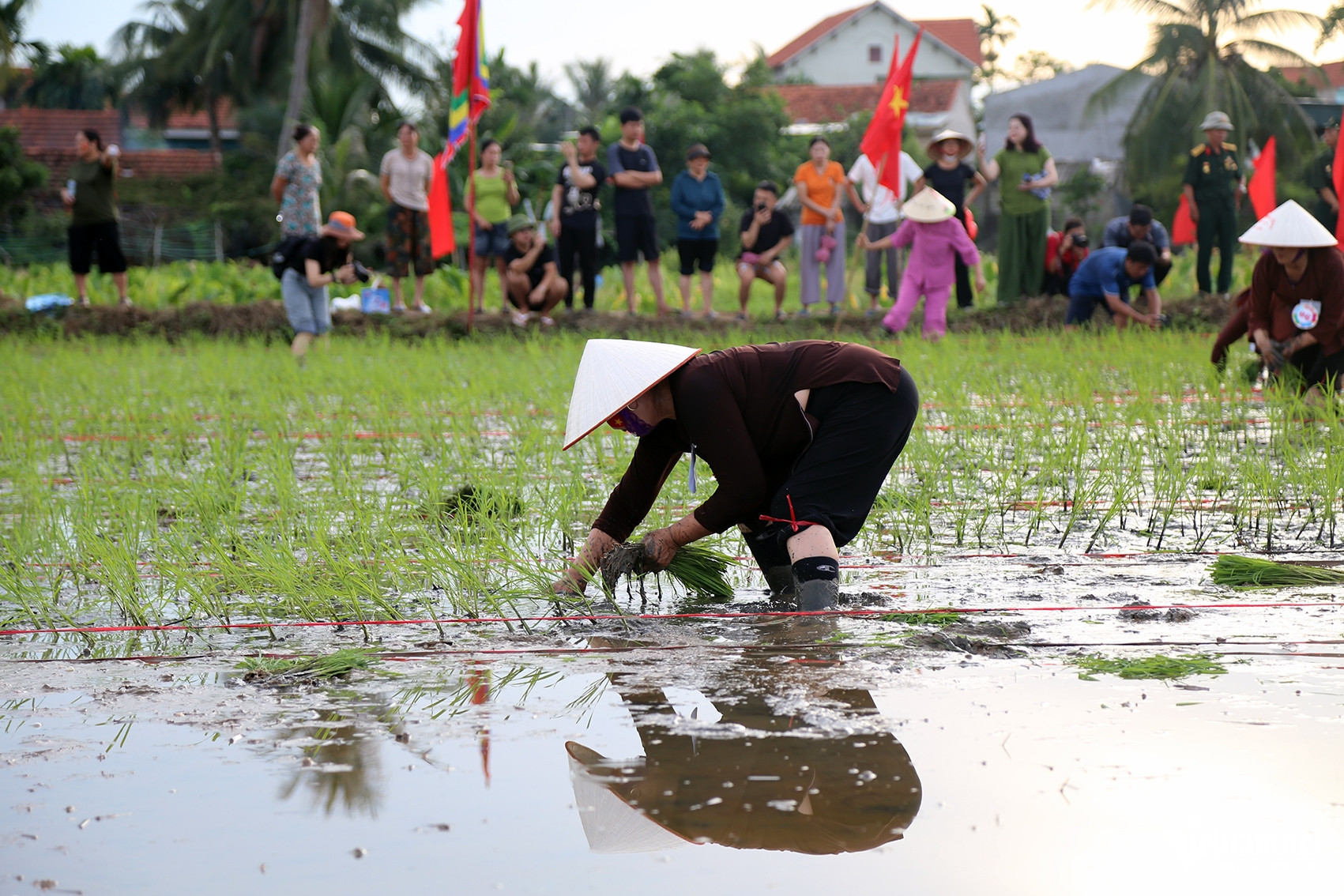
Dressed in traditional brown farming attire, they skillfully planted rice seedlings in neat, straight rows amid enthusiastic cheers and the rhythmic beat of festival drums, symbolizing hopes for a successful harvest.
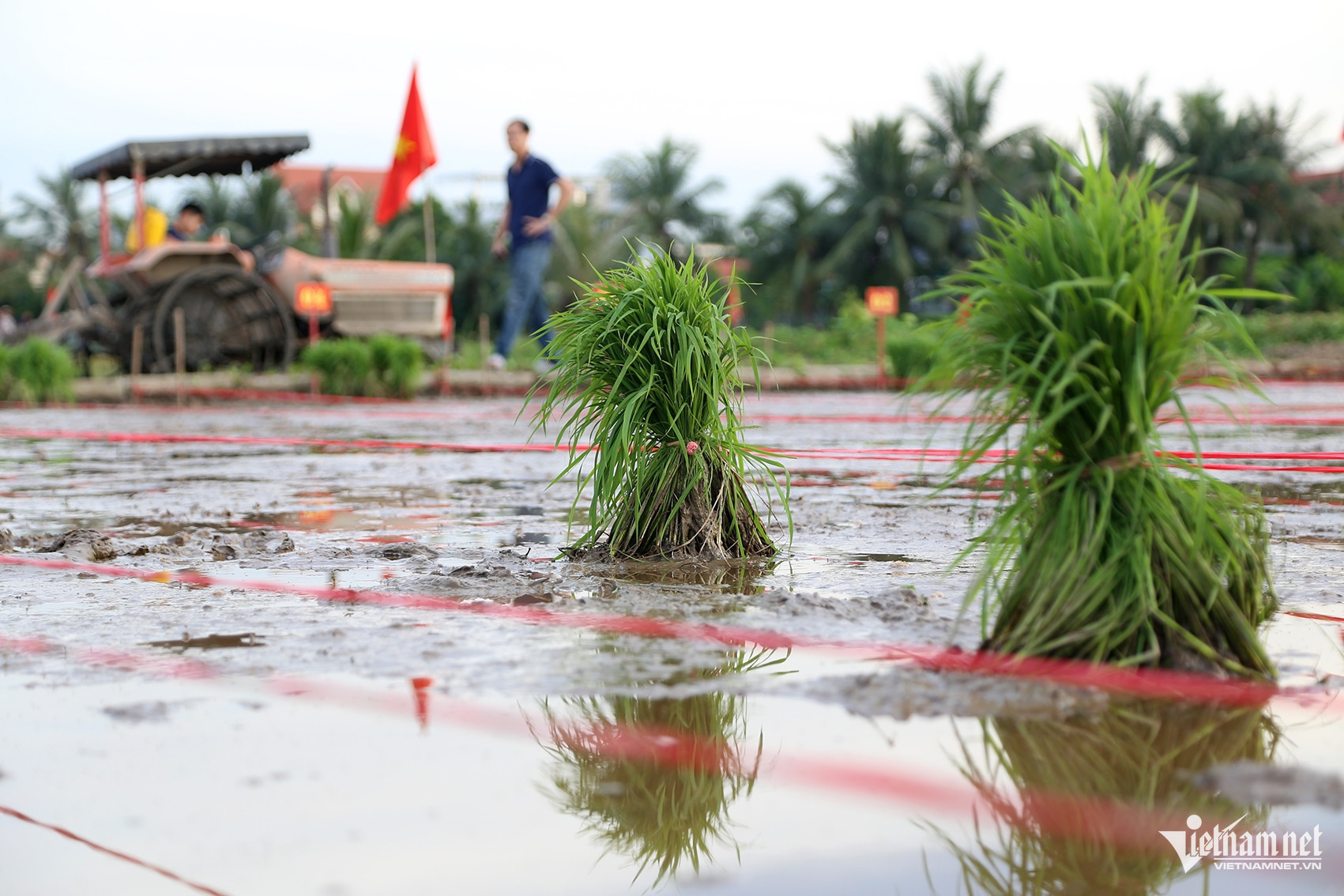
Before the competition, farmers prepared seedling bundles assigned to their respective teams.
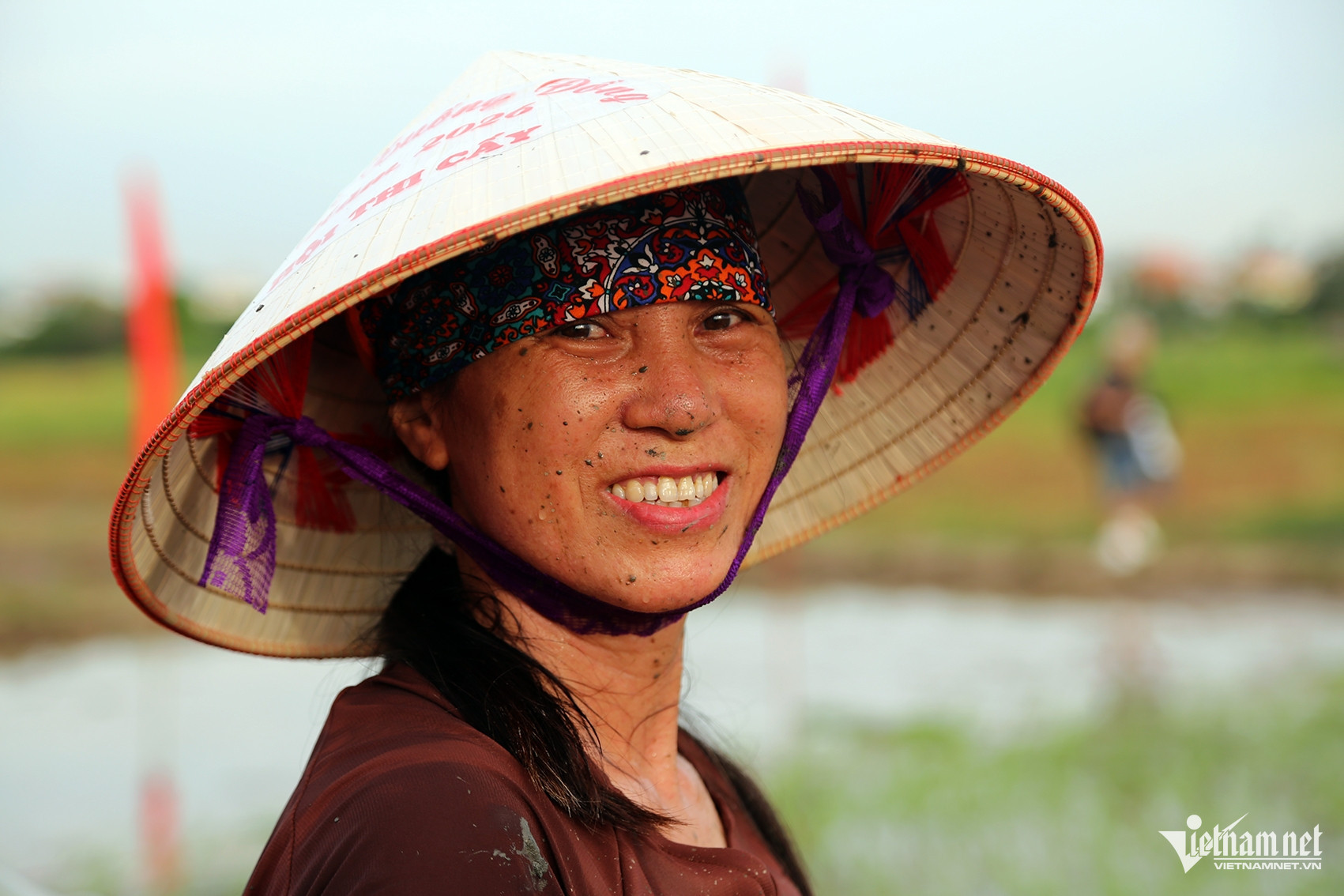
One of the contestants, Le Thi Sau, 54, representing Phong Coc Ward, said she had been selected in advance and practiced extensively to ensure her planting technique reflected both traditional farming skills and the competitive spirit of local agricultural communities.
The rice variety used during the competition was chosen for its high yield, strong quality, disease resistance and resilience to adverse weather conditions.
Ha Nam Island is an ancient alluvial island protected by nearly 40 kilometers of sea dikes and is home to more than 60,000 residents, divided between Phong Coc and Lien Hoa wards.
The contestants were selected from among the island's most skilled rice planters to represent their communities in the festival.
Known for its rich calendar of traditional festivals, the island is famous not only for the Tien Cong Festival, held at the beginning of the lunar new year, but also for the rice planting festival that marks the start of each farming season.
The event reflects Vietnam's agricultural heritage through rituals and traditional activities that strengthen community solidarity and encourage residents to work together in overcoming the natural challenges of a river estuary frequently affected by storms and flooding.
In 2024, the rice planting festival was officially recognized as Vietnam's National Intangible Cultural Heritage.
Although modern direct-seeding techniques have become widely available, farmers on Ha Nam Island continue to hold the rice planting competition as a tribute to earlier generations whose hard work sustained local communities through rice cultivation.
The festival remains one of the island's best-preserved cultural traditions.
Pham Cong
.svg)
