 Vietnamnet.vn

 Podcast



Keeping the forest so the forest can shelter the village
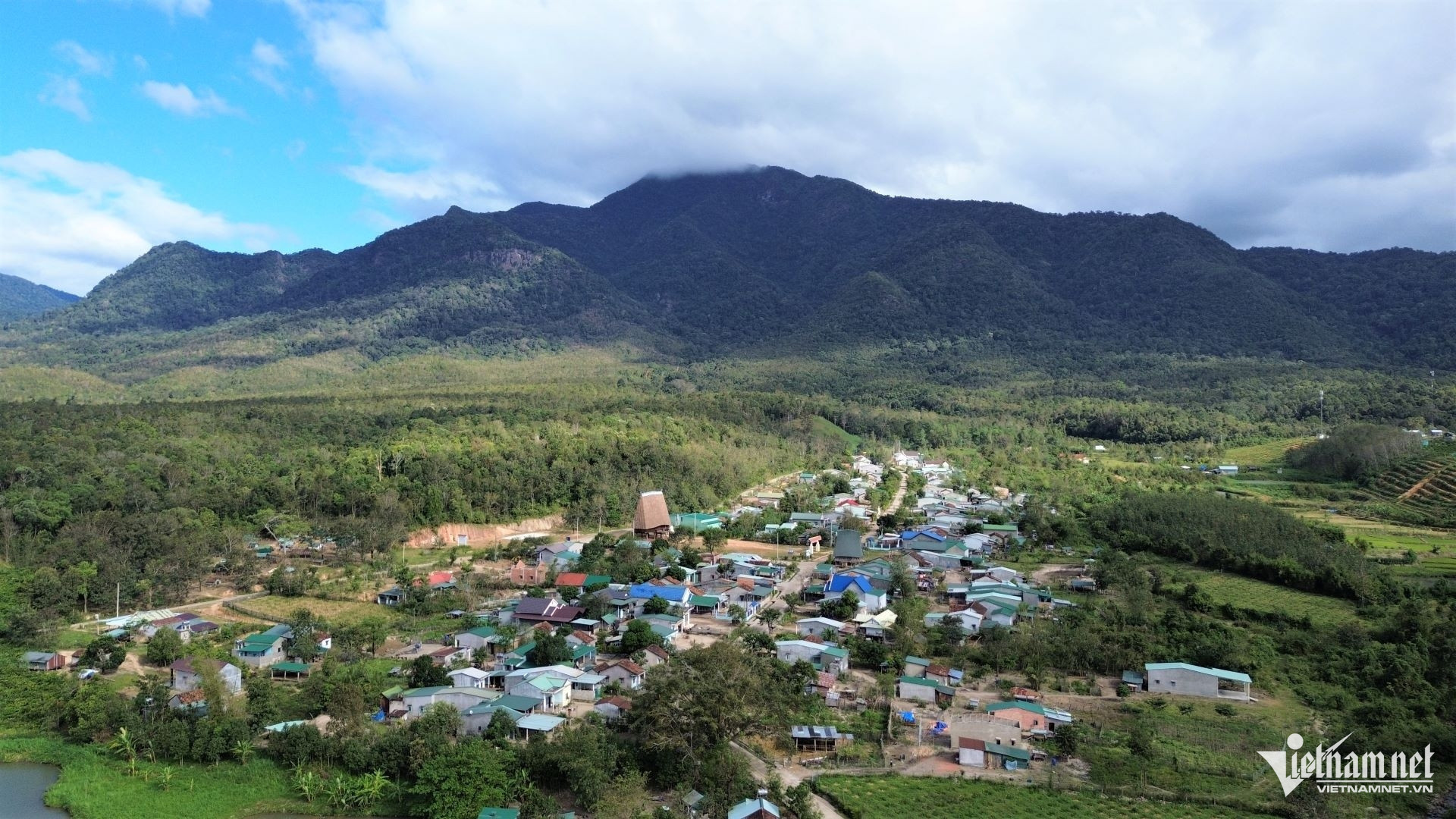
Ba Ro Goc village lies at the foot of the majestic Chu Mom Ray mountain range and preserves the traditional cultural values of the Gia Rai people. Photo: Ngoc Chi
According to village elders and long-time residents, Ba Ro Goc was established long before the French colonial period. At that time, the old village had grown too crowded and lacked sufficient land for cultivation. More than 20 households decided to separate and establish a new settlement near the Ja Ray stream, at the foot of Chu Mom Ray mountain.
A Sup, the village elder of Ba Ro Goc in Sa Thay commune, said that after the village was founded and life had stabilized, war forced residents to move deeper into the forest for safety. After liberation, they returned to their original site, where they continue to live today. Having once been protected by the forest, villagers now feel a deep responsibility to protect it in return.
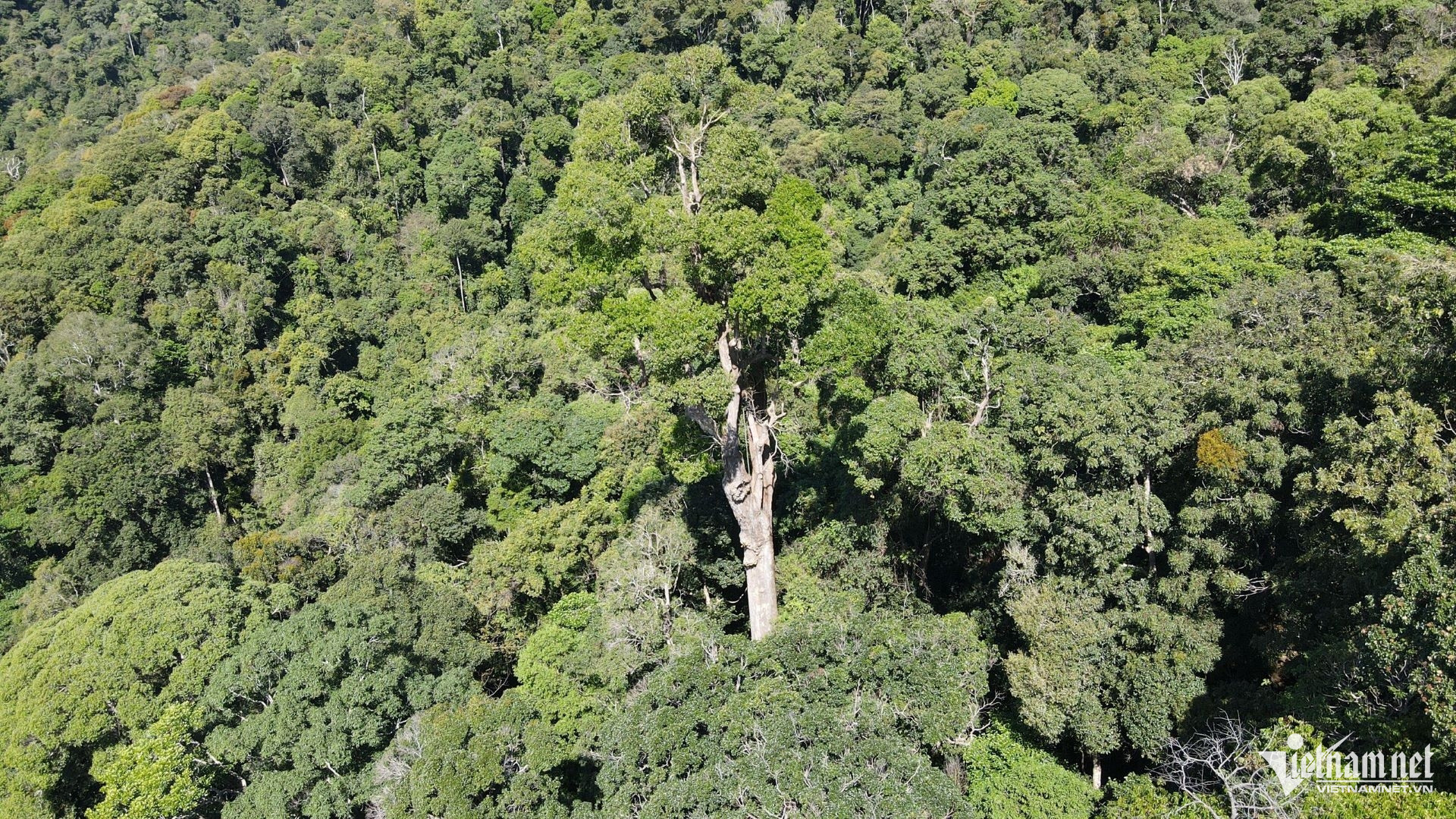
Residents of Ba Ro Goc village have contracted to manage and protect more than 840 hectares of forest within Chu Mom Ray National Park. Photo: Ngoc Chi
Fully aware of the forest’s importance to community life, villagers have contracted to manage and protect more than 840 hectares of forest within Chu Mom Ray National Park. Through forest protection, many households earn additional stable income each year, improving living standards and strengthening their long-term bond with the forest.
A Gru, head of Ba Ro Goc village in Sa Thay commune, said the village currently has 176 households with more than 700 residents. People no longer clear forests for shifting cultivation as they once did, but farm only on existing land. Increasingly, villagers recognize that the forest is their living environment and must be safeguarded.
Under the forest protection scheme, the village is divided into four teams that conduct regular patrols. When violations or unusual signs are detected, they promptly report to Chu Mom Ray National Park authorities for coordinated handling.
In addition to cultivating key crops such as rubber, coffee, cassava and wet rice, villagers participate in growing purple cardamom under the forest canopy within the service and administrative sub-zone of Chu Mom Ray National Park, covering 20 hectares. This model provides an additional source of income.
Thanks to State support policies, material and spiritual life in the village has improved significantly. The entire village now has only six poor households and seven near-poor households. Average per capita income has reached VND44 million per person per year, approximately US$1,760.
Preserving the enduring soul of culture
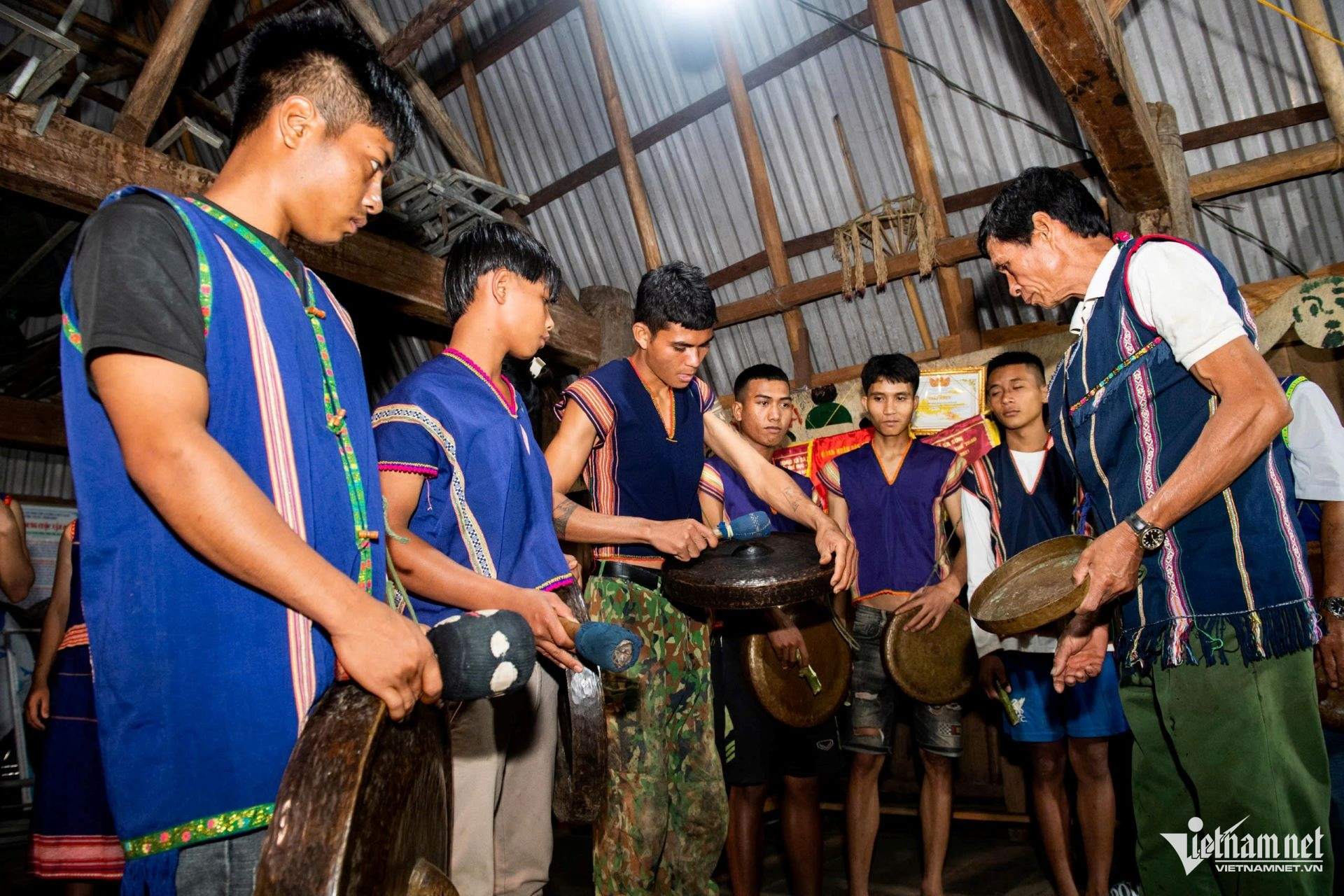
A Sup, village elder of Ba Ro Goc, continues to teach gong performance techniques to younger generations. Photo: Ngoc Chi
Despite multiple relocations over time, the Gia Rai people of Ba Ro Goc have maintained their distinctive cultural identity. Precious sets of gongs, valued jars, traditional basketry and brocade weaving, along with customary festivals, are carefully preserved as treasured assets of families and the community.
At the heart of spiritual life in Ba Ro Goc is the Central Highlands gong cultural space, recognized by UNESCO as a Representative Intangible Cultural Heritage of Humanity. For the Gia Rai here, gongs are not merely musical instruments but the voice of deities and the soul of the village, accompanying important rituals such as the new rice celebration, the grave-leaving ceremony and life-cycle rites.
A Duin, Party cell secretary of Ba Ro Goc village, said the village still preserves seven valuable sets of gongs. Elder artisans, who master performance techniques and possess deep knowledge of traditional repertoires, play a crucial role in passing them on to younger generations. Practice sessions often take place under the communal rong house or in the village yard. As a result, the village has established two gong and xoang dance teams.
Beyond gongs, traditional basketry and brocade weaving are important tangible heritages cherished by the Gia Rai in Ba Ro Goc. These crafts not only produce essential daily items but also showcase dexterity and aesthetic sensibility through intricate patterns and motifs. Elderly artisans continue to practice and transmit their skills to younger villagers.
Nguyen Van Xuan, Vice Chairman of the People’s Committee of Sa Thay commune, said Ba Ro Goc has the advantage of preserving Gia Rai cultural traditions while being located at the foot of the majestic Chu Mom Ray mountain. The village maintains distinctive festivals such as the new rong house celebration and the new rice festival, along with finely handcrafted products including brocade textiles, backpacks, baskets and trays. For this reason, the commune has oriented the village toward developing community-based tourism to capitalize on its inherent strengths.
The efforts of the Gia Rai people in Ba Ro Goc to preserve their living environment and culture represent a persistent journey. From the sacred sound of gongs carefully transmitted through generations to the delicate artistry of basketry and brocade weaving, and the solemn atmosphere of traditional festivals, all together create a vibrant and enduring cultural landscape.
It stands as clear evidence that traditional culture can survive and flourish only when it is nurtured and handed down by the community itself.
Ngoc Chi
.svg)
