 Vietnamnet.vn

 Podcast



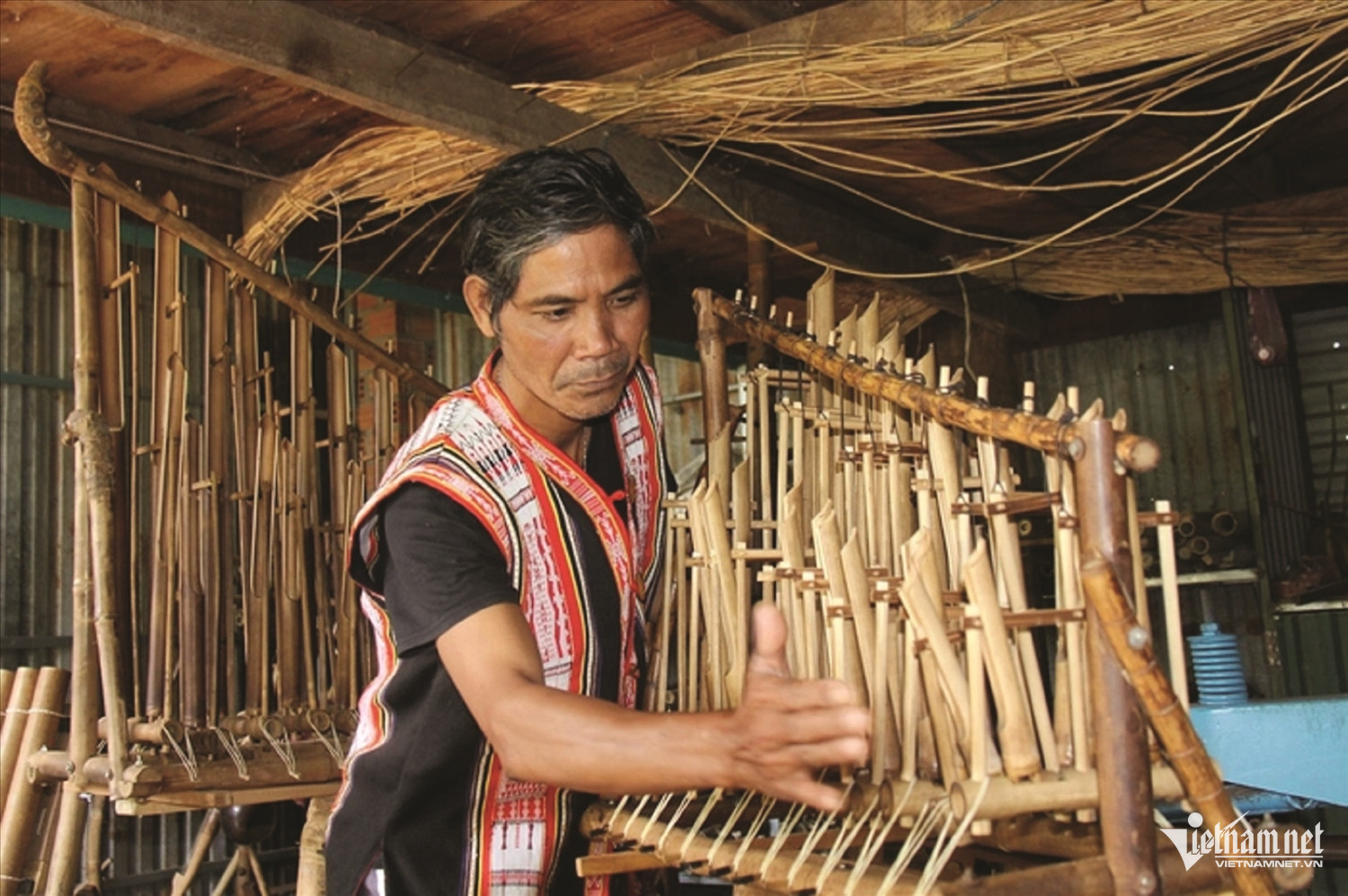
Along the lush Truong Son mountains and the deep green Sesan River, artisan Ro Cham Tih from Gia Lai has long been more than just a guardian of the Gia Rai people’s ancient melodies. He is now seen as a “cultural envoy,” carrying the voice of the Central Highlands to audiences across the globe.
Music in his blood
At nearly 60 years old, with silver in his hair, Ro Cham Tih’s hands still glide effortlessly across bamboo keys and reed strings. For him, Gia Rai instruments are not objects - they are extensions of the body, part of the breath, pulsing through his veins.
He calls his beloved T’rung, Goong, K’lông But, Ting Ning, and Bro Amom instruments his “spiritual children,” lovingly shaped, polished, and innovated. Some are meant to be both plucked and struck; others were once fixed but are now redesigned for portability. His creations - two-tiered and three-tiered T’rung sets, and the Klek Klok - reflect modern needs while holding tight to tradition.
Born and raised in Jut 1 Village, Ia Hrung Commune, Ro Cham Tih learned from his father, grandfather, and village elders. While other children ran about the fields, young Tih was captivated by bamboo instruments and the elders who tuned and tested them. Praise was rare, but even a quiet “you’ve done well” would leave him glowing for days.
After completing his military service in 1993, he devoted himself fully to sharing Gia Rai music far and wide. From festivals at home to international performances, he traveled with self-made instruments and an unmistakable joy. He has earned more than 30 medals - 10 of them gold - as well as numerous certificates and distinguished titles.
Each instrument he creates holds deep emotional weight. For Ro Cham Tih, the traditional 15 instruments aren’t enough; he constantly seeks new ways to express the heart - the “belly,” as he calls it - of the Gia Rai soul.
The sounds must stir emotion, dispel anger, unite communities, soothe wild animals, call birds home, and keep livestock from wandering.
The melodies he produces are not mere entertainment; they’re living slices of Gia Rai life - of festivals, rituals, daily labor, and spiritual reflection. Every instrument is entirely handmade, without machines. Every note is born from a long process of tonal calibration, careful crafting, and continuous practice. He plays Gia Rai folk songs exactly as they were passed down - never adding or altering.
Taking the highlands to the world
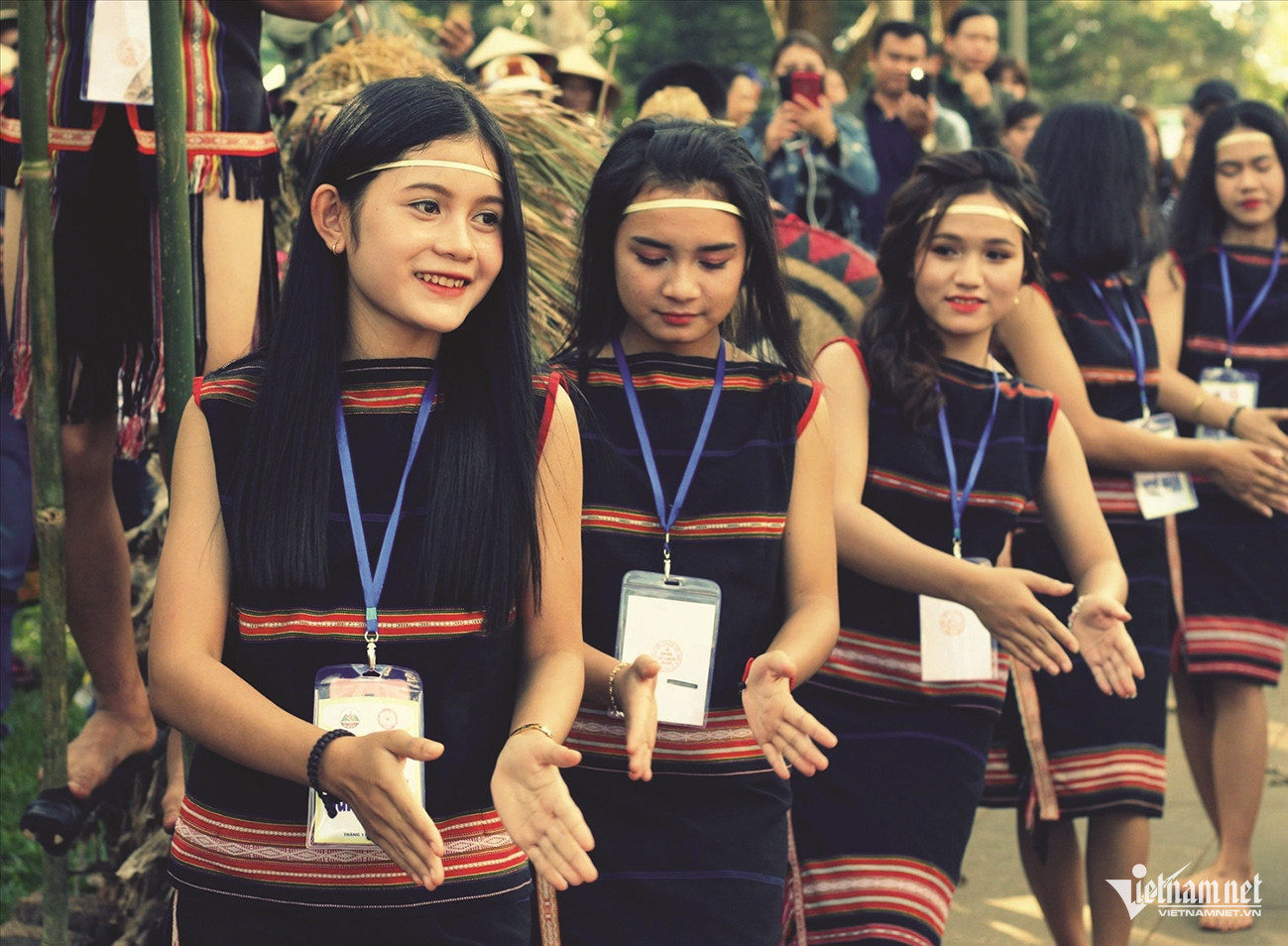
After one performance in Japan, Ro Cham Tih returned home and quietly resumed carving bamboo. In moments of rest, he often recalls the warmth of gong-circles under starry skies, the grace of traditional dances, the image of a mother carrying her child to the fields or a father leading elephants to the river.
For him, Gia Rai culture is not a passion - it is his very existence.
Over nearly 40 years, he has lost count of the places he’s brought Gia Rai music: Japan, the United States, the United Kingdom, Finland, South Korea, Laos, Cambodia… Everywhere he goes, audiences marvel at the sound of instruments made from simple yet precious bamboo.
“Only Vietnam has such a rich diversity of bamboo instruments,” he says, eyes shining with pride.
Each of his instruments undergoes rigorous selection and preparation. He ventures deep into the forest to find straight, unblemished bamboo at least three years old. The bamboo must be dried upright under the sun for a full month - exposed by day and stored by night, protected from rain and dew.
Only then does he begin refining and assembling, listening closely to ensure each piece sings with its own sweet resonance.
In the stillness of dusk or midnight, he plays alone, hearing the breath of the bamboo, the chill of the forest air, the hush of falling dew - or the passionate sighs of young lovers.
His music not only calms hearts but ignites inspiration in the young.
At home, he’s set aside an entire building to store materials, display instruments, and teach. His students include Rơ Cham Khoi, Siu Lam, and even his sons - Siu Tim and Siu Ting Ning.
He is not only keeping the flame alive but determined to pass it on.
Ro Cham Tih has given his life to preserving Gia Rai culture. In 2015, he was honored by the President of Vietnam with the title of Distinguished Artisan in the field of Folk Performance Art - a fitting tribute to a man who has dedicated his life to nurturing and preserving a cultural lifeline.
Tieu Dao - Bao Anh
.svg)
