 Vietnamnet.vn

 Podcast



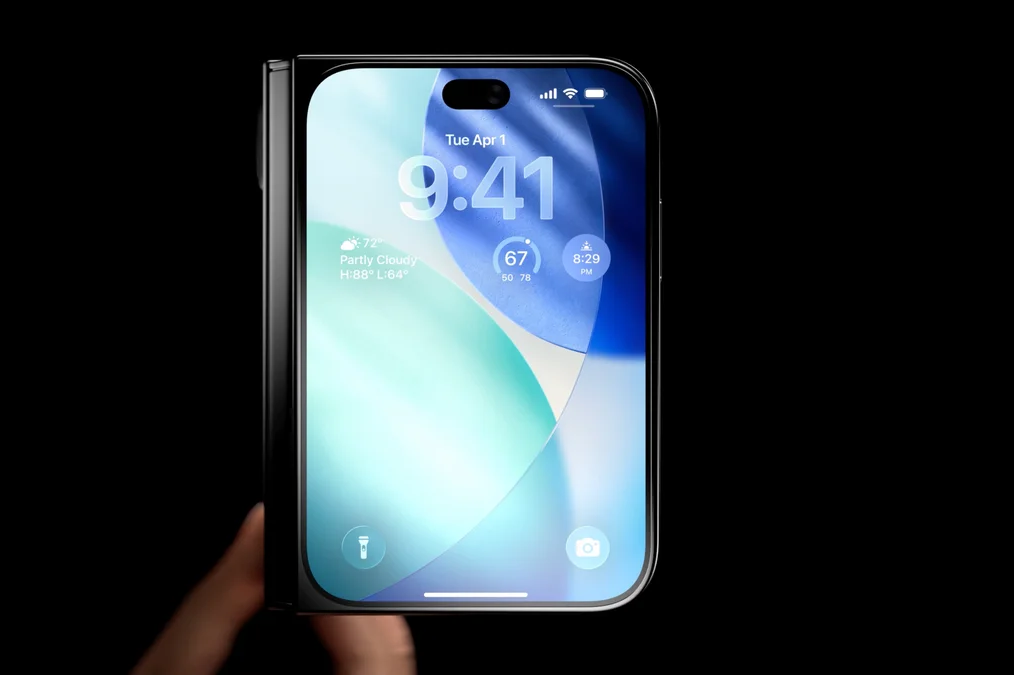
Multiple reports suggest Apple is preparing to unveil a foldable iPhone as early as September, with the device widely expected to be called the iPhone Ultra, although the company has remained silent about the product.
Now, the latest iOS 27 developer beta has provided what appears to be the most compelling evidence so far.
For the first time, Apple’s operating system code contains direct references to an iPhone equipped with multiple batteries - a configuration not found in any current iPhone model.
iOS 27 clues strengthen the case for iPhone Ultra
Most book-style foldable smartphones on the market use a dual-battery architecture, with a separate battery cell housed in each half of the device to make better use of the limited internal space.
Previous rumors have suggested Apple could adopt a similar design for its first foldable iPhone.
What makes the latest discovery particularly notable is that the fourth iOS 27 beta appears to provide strong support for those claims.
Macworld researchers initially spotted new strings in the operating system, while MacRumors subsequently confirmed references associated with an iPhone containing multiple batteries.
New messages appearing in the Battery Health section include wording such as: “The batteries in this iPhone are functioning normally,” and “The health of the batteries in this iPhone is significantly degraded.”
Another message warns that one of the batteries cannot be verified as a genuine Apple battery.
The addition is significant because no iPhone currently on the market uses a dual-battery architecture.
That strongly suggests the code has been created in preparation for an entirely new device, with the rumored iPhone Ultra the most likely candidate.
Apple is famously secretive about products it has yet to announce. Over the years, however, developers have repeatedly uncovered references to future features and hardware inside beta versions of iOS.
Nor is this the first time iOS 27 has appeared to reveal clues about a foldable iPhone.
As early as the first beta, developers reportedly discovered code related to detecting folding angles and different operating modes designed specifically for a display that can be folded and unfolded.
The continued appearance of such references across multiple beta releases suggests Apple is refining its software to support new hardware by the time the device is officially introduced.
This would also be consistent with Apple’s approach when preparing entirely new product categories, allowing its hardware and software ecosystem to work smoothly from the first day a device reaches consumers.
According to leaked information, the iPhone Ultra could feature two battery cells with rated capacities of 1,921mAh and 2,962mAh, bringing their combined capacity to around 4,883mAh.
For marketing purposes, Apple could potentially present this as a rounded capacity of approximately 5,000mAh.
That would fall below some earlier rumors suggesting the device could carry a 5,800mAh battery.
Even so, a capacity of around 5,000mAh would remain relatively impressive for a foldable smartphone.
Compared with many popular foldables currently on the market, it would place the iPhone Ultra among devices with relatively large batteries.
There would still be a substantial gap, however, between Apple’s rumored device and several Chinese foldable smartphones using silicon-carbon battery technology, some of which offer capacities of around 6,660mAh.
Apple, meanwhile, is expected to continue emphasizing hardware-software optimization to extend real-world battery life rather than competing solely on battery capacity.
Apple tipped to quickly overtake Samsung in foldables
Despite entering the foldable smartphone market much later than many rivals, Apple is expected to make a significant impact within its first few years.
According to the latest forecasts, Apple is targeting shipments of around 10 million iPhone Ultra units during the initial sales period.
That would be a striking figure compared with Samsung, one of the pioneers of foldable smartphones, whose foldable shipments this year are projected at only around 5.5 million to 6 million devices.
Analysts believe Apple’s brand strength, software ecosystem and large base of loyal iPhone users could allow the company to rapidly establish an advantage in the premium segment.
Many consumers have spent years waiting for a foldable iPhone rather than switching to an Android device.
Samsung, meanwhile, is facing growing competitive pressure. The South Korean company is reported to have lost nearly 14% of the foldable smartphone market to Motorola last year, with forecasts suggesting its position could come under further pressure once Apple officially enters the category.
Hai Phong
.svg)
