 Vietnamnet.vn

 Podcast



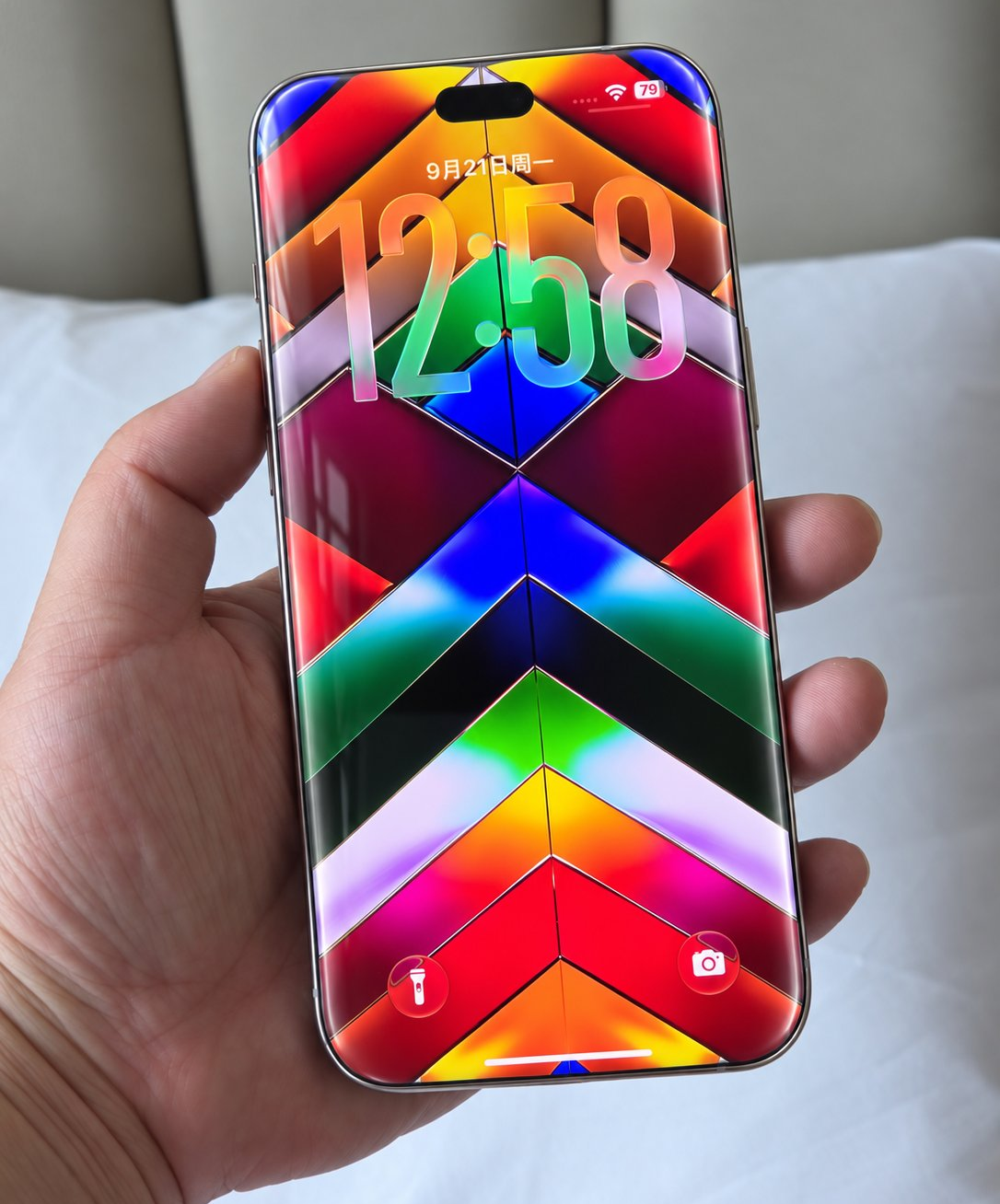
The iPhone 20 Pro remains a product of rumors for now, with Apple’s 20th-anniversary iPhone still roughly a year away.
Even so, it is expected to be one of the most distinctive iPhones Apple has ever produced, marking two decades since the original iPhone transformed the mobile phone industry.
Given the significance of the anniversary, Apple will almost certainly be under pressure to deliver a meaningful leap with the iPhone 20 Pro. Its price could rise accordingly.
But rather than focusing on specifications or pricing - subjects likely to generate plenty of discussion over the next 350 days - one rumored feature deserves particular attention: a display curved on all four sides.
If Apple adopts the design on the iPhone 20 Pro, and Android manufacturers once again follow Cupertino’s lead, next year’s premium smartphones could revive a trend many thought the industry had already left behind.
Apple no longer leads every hardware race
Apple is no longer the company that consistently gets to every major smartphone hardware innovation first.
It entered the foldable phone race roughly seven years after Samsung and Huawei.
Even the iPhone 18 Pro Max, despite bringing several notable upgrades, does not have the largest smartphone battery on the market.
Apple has also shown relatively little interest in the race toward increasingly large camera sensors that has become prominent among Chinese flagship phones.
Yet whenever Apple does make a change, the rest of the smartphone industry still pays close attention — sometimes perhaps too much attention.
Call it the “Apple effect.”
What Cupertino does often becomes inspiration for other manufacturers.
Sometimes those changes are genuinely useful. At other times, they leave users wondering why the entire industry suddenly decided something was a good idea.
Is the iPhone 20 Pro bringing four-sided curved screens back?
Current rumors suggest Apple’s anniversary iPhone could feature a display curved along all four sides next year.
Rather than curving only along the left and right edges, as seen on some previous smartphones, the display glass would bend toward every edge of the device.
The thinking behind the design is relatively straightforward.
Apple reportedly wants the iPhone 20 Pro to have bezels that virtually disappear. Curving the glass around the edges could help create the impression that the display extends all the way to the phone’s boundaries.
Visually, the result could undoubtedly be impressive.
But an attractive design does not necessarily translate into a better user experience.
Curved screens have always involved compromises. Curved edges can increase accidental touches, particularly when using a phone with one hand.
They can also make a device more vulnerable than a conventional flat-screen design.
When a phone is dropped or struck, the curved portions of the display can become particularly exposed areas.
Screen protectors create another problem.
Covering a display that curves along all four sides is typically more complicated and inconvenient than protecting a flat screen. Users need compatible accessories, while protection around the curved edges may not always be as effective as expected.
Curved displays can also produce shifts in color or brightness around their edges, particularly when viewed from an angle.
None of these problems is necessarily severe on its own. Together, however, they raise a simple question: Is a four-sided curved screen really an upgrade that users need?
The iPhone 20 Pro does not need curves to stand out
The iPhone 20 Pro could still make a major statement without a display curved on all four sides.
Apple could retain a flat panel, keep the bezels reasonably thin and devote its engineering resources to improvements with a clearer impact on everyday use.
A genuinely large battery, for example, could be far more valuable.
If Apple could equip the iPhone 20 Pro with a significantly larger battery while adding 100W fast charging, the difference in everyday use would be substantial.
Users could plug in their phones for a short period and become much less dependent on overnight charging.
In that scenario, a few millimeters of bezel would hardly seem important.
Could the ‘Apple effect’ send Android backward?
By 2026, the smartphone industry has largely moved beyond its obsession with curved displays.
From flagship devices to mid-range and budget smartphones, flat screens have become increasingly common because of their practicality, durability and compatibility with protective accessories.
Calling that preference conservative would be fair, but flat displays have demonstrated their value.
A smartphone does not need curves on every edge to look modern.
The bigger concern is what happens if Apple does introduce a four-sided curved display on the iPhone 20 Pro.
Android manufacturers could once again embrace the trend simply because it has appeared on an iPhone.
Yet the Android market has already demonstrated that a completely flat display can coexist with an almost bezel-free design.
In other words, manufacturers do not necessarily need to return to curved screens simply to maximize display area.
If the iPhone 20 Pro is to become the defining device of the iPhone’s 20th anniversary, Apple has every reason to make bold changes.
For users, however, the most meaningful upgrades may not involve glass curving around all four sides.
A tougher phone, longer battery life and greater everyday practicality could ultimately matter far more.
Hai Phong
.svg)
