 Vietnamnet.vn

 Podcast



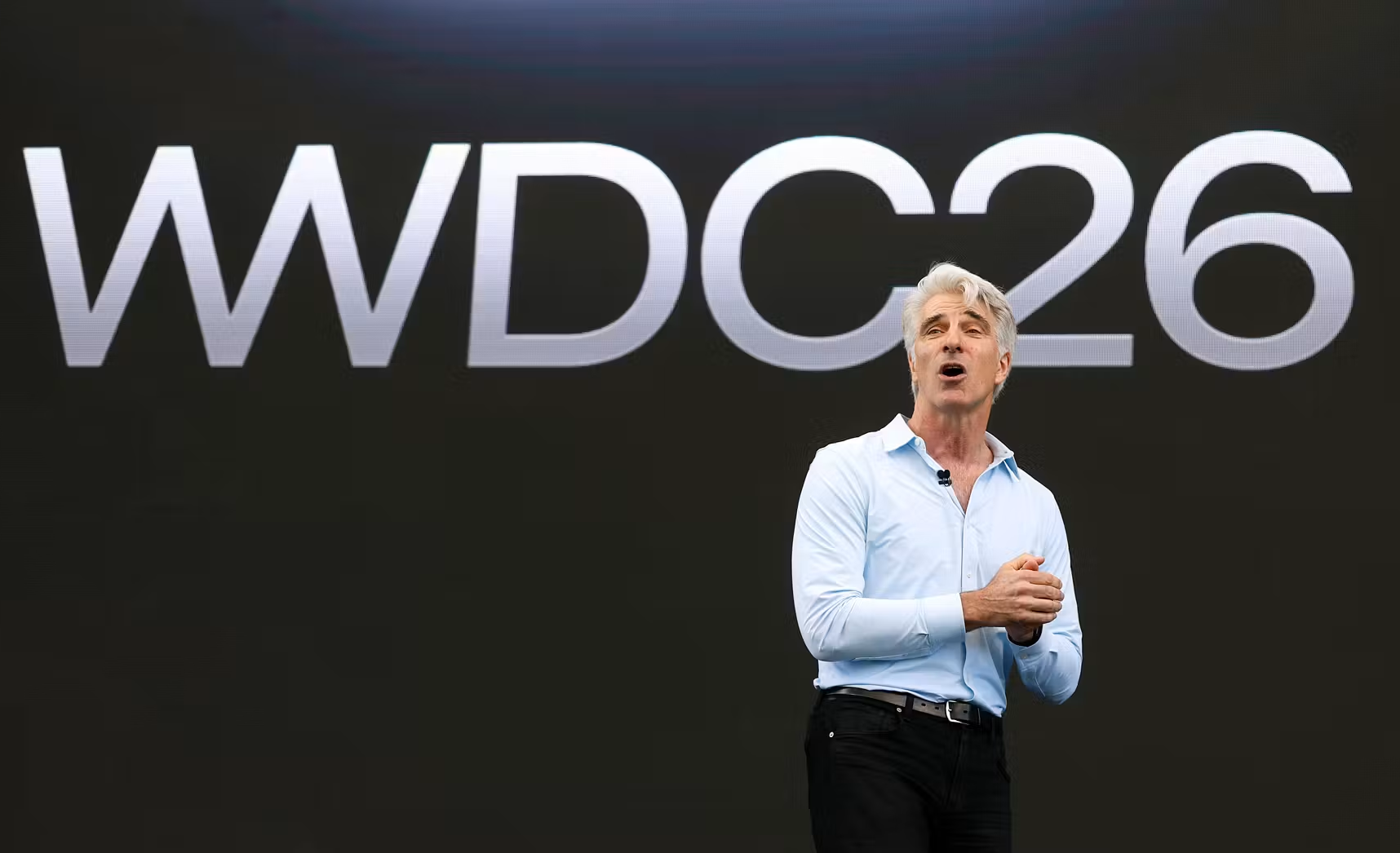
For years, Apple has frequently been criticized as one of the biggest laggards in the artificial intelligence race. Skeptics argued that the absence of a clear AI strategy had caused the company to lose its traditional technological edge. On Wall Street, many analysts worried that the widening gap between Apple and its rivals could eventually affect iPhone sales.
Yet Apple has now unveiled what it describes as its most significant AI advancement to date: a new generation of AI-powered Siri.
A message to the broader AI industry
The new platform is deeply integrated into Apple’s operating systems, bringing a wide range of intelligent automation capabilities while leveraging a partnership with Google Gemini to expand information retrieval and processing capabilities.
Is that enough to silence claims that Apple is losing the AI race?
In reality, nobody can answer that question with certainty yet. But perhaps the question itself misses the point. The more important issue is whether Apple users will actually use these new AI features and, if they do, how those features will contribute to Apple’s business growth.
During the announcement, Craig Federighi, Apple’s Senior Vice President of Software Engineering, delivered a notable message.
He suggested that some companies are rushing into AI for AI’s sake without paying sufficient attention to the people the technology is intended to serve. According to Federighi, Apple’s longstanding mission has been to transform advanced technologies into useful, intuitive and accessible products for everyone.
The statement was widely interpreted as a response to criticism that Apple has fallen behind in AI. It also reflects the company’s cautious approach toward increasingly mixed public sentiment surrounding artificial intelligence.
Today, many consumers are simultaneously excited and concerned about AI. Some fear the technology could replace human jobs, while others worry it may erode critical thinking and creativity. Against that backdrop, Apple appears determined to position itself as an AI company that serves users rather than simply chasing technological dominance.
Demonstrations of the new Siri suggest Apple is prioritizing practical applications over flashy technological showcases.
The system can search information buried deep within emails, messages and conversation histories to provide contextually relevant suggestions. Siri has also been equipped with what Apple calls “screen awareness,” enabling it to understand the content users are viewing and provide relevant assistance instantly.
Through Gemini integration, Siri can access up-to-date information from the internet in near real time and deliver results directly to users’ devices.
Beyond that, Siri is designed to function seamlessly across Apple’s ecosystem, including iPhone, iPad and Mac devices. Like modern AI chatbots, it can also retain conversation history, allowing users to revisit previous interactions more easily.
One of Apple’s most significant decisions is that it is not building a standalone AI application. Instead, AI is being integrated directly into the operating system itself.
That could become a major competitive advantage. While rivals must reach customers through app stores, Siri AI sits at the foundation of Apple’s ecosystem.
If users can meet most of their AI needs through Siri, many third-party AI applications could face substantial competitive pressure.
However, the key word remains “potential.” The new Siri has not yet been released broadly and is only expected to enter beta testing later this year.
Apple doesn’t need to win the AI race
Although it remains far too early to draw final conclusions, one thing is becoming increasingly clear: Apple is attempting to develop AI in a way that aligns with the needs of its customers.
Unlike many pure-play AI companies, Apple remains fundamentally a hardware business. The objective of its AI enhancements is not necessarily to create entirely new products but to make iPhones, iPads and Macs more useful, more convenient and more capable of keeping users within Apple’s ecosystem.
This distinction becomes especially apparent when compared with competitors.
OpenAI continues releasing new updates at a rapid pace but is still searching for a clear answer to a fundamental question: Is its primary customer the individual consumer or the enterprise?
Meanwhile, Meta is investing tens of billions of dollars into AI while still struggling to clearly explain how those enormous expenditures will connect to its core advertising business.
By contrast, Apple’s more measured approach is increasingly revealing both strategic and financial advantages.
Throughout most of the AI boom, Apple has not needed a flashy AI strategy to remain successful. The company still delivered record iPhone sales during its most recent quarter despite ongoing criticism regarding its pace in artificial intelligence.
As more questions emerge about AI’s long-term profitability and the real value it delivers, Apple appears to be in a relatively favorable position.
According to estimates, Apple is expected to spend roughly US$14 billion in capital expenditures this year. That figure is dramatically lower than the roughly US$900 billion that other technology giants have collectively committed to AI investments over the coming years.
What makes the situation even more interesting is that Apple continues to generate significant revenue from the AI industry itself.
Numerous AI companies offering applications through the App Store share a portion of their revenue with Apple through platform fees.
In other words, Apple is spending far less than many competitors while still generating enormous profits. At the same time, it has introduced a suite of AI features that, for most iPhone users, may not feel dramatically different from AI applications they have already downloaded from the App Store.
If that is not enough to qualify Apple as a winner in the AI race, it may still represent the smartest way to compete.
Rather than joining an expensive spending war, Apple is leveraging its greatest strengths: a vast hardware ecosystem, billions of loyal users and an unmatched ability to turn complex technologies into simple, useful experiences that fit naturally into everyday life.
Hai Phong
.svg)
