 Vietnamnet.vn

 Podcast



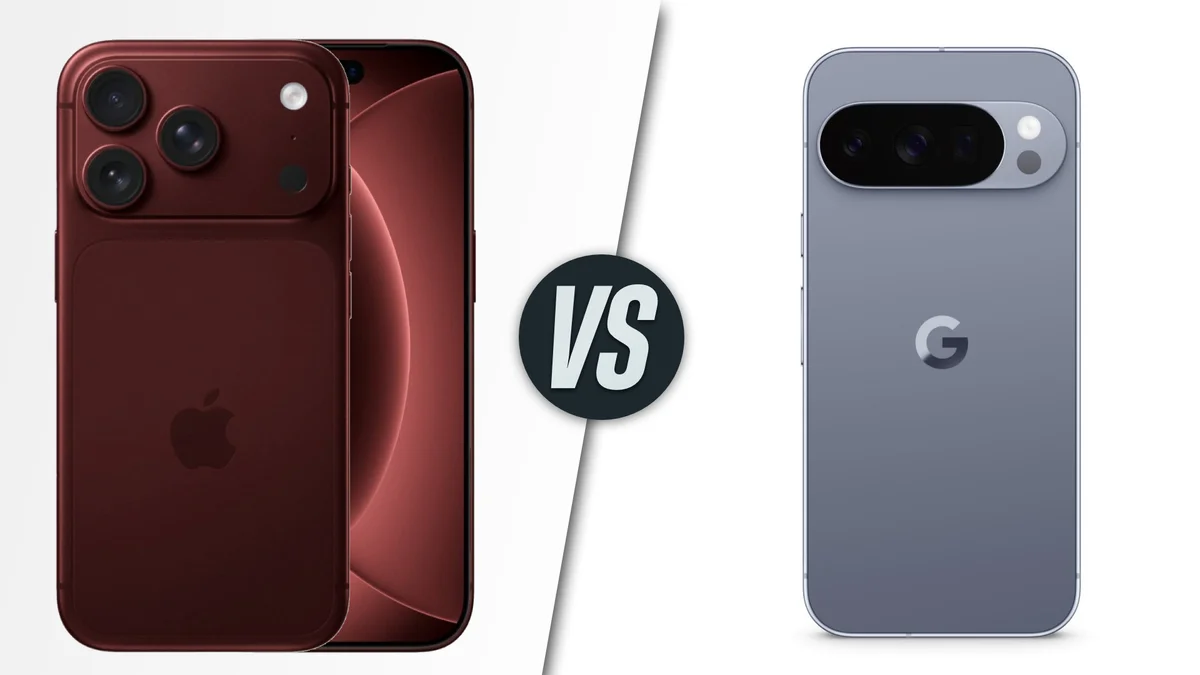
Apple has equipped the iPhone 18 Pro Max with several significant upgrades, including an A20 Pro chip manufactured on a 2nm process, a larger battery and, for the first time on its main camera, a variable aperture.
It is a familiar Apple formula: retaining the broader design and experience while concentrating upgrades in areas that matter most at the premium end of the smartphone market.
Google's Pixel 11 Pro XL, by comparison, does not represent as substantial a departure from the Pixel 10 Pro XL. Its changes are more incremental, including a new HiLight LED integrated into the rear camera bar and the Tensor G6 processor.
Notably, the Tensor G6 is not manufactured using a 2nm process, contrary to earlier expectations.
Put side by side, however, the differences between the two flagship phones become much clearer.
Design: Pixel is lighter and more compact
Apple has made few major changes to the iPhone 18 Pro Max's overall design. It retains an aluminum frame and a large rear camera module similar to that of the iPhone 17 Pro Max.
It is hardly a design revolution, but Apple may see little reason for one given how recognizable its current flagship aesthetic has become.
The Pixel 11 Pro XL follows a similar evolutionary approach. Google's new flagship largely inherits the Pixel 10 Pro XL design, combining an aluminum frame and glass back with the distinctive horizontal camera bar.
Its most notable new visual feature is the HiLight LED integrated into the camera bar.
The light can provide signals when selected contacts call or when Gemini is listening or responding to the user. Its functionality remains relatively limited for now, although developers could potentially expand its uses in the future.
The Pixel has a clear advantage in dimensions and weight. It is thinner, shorter and narrower than the iPhone 18 Pro Max and also considerably lighter.
The Pixel 11 Pro XL weighs around 227 grams, compared with 249 grams for the iPhone 18 Pro Max.
Apple offers the iPhone in Burgundy, a prominent new color replacing the previous generation's Cosmic Orange, alongside Black, Glacier and Silver.
The Pixel 11 Pro XL is available in Jade, Moonstone, Obsidian and Porcelain.
Display: smaller Dynamic Island versus greater brightness
The iPhone 18 Pro Max has a 6.9-inch Liquid Retina XDR display, similar to its predecessor. It remains a flat panel with peak brightness of up to 3,000 nits.
The biggest change is the Dynamic Island, which has been reduced in size by about 35%, making the display cutout less prominent.
Beyond that, the overall display experience does not change dramatically from the iPhone 17 Pro Max.
Google equips the Pixel 11 Pro XL with a 6.8-inch, 120Hz OLED display supporting HDR and peak brightness of more than 3,300 nits. Gorilla Glass Victus 2 provides protection.
The two phones also take different approaches to biometric authentication.
Apple continues to use Face ID, while the Pixel has an ultrasonic fingerprint sensor beneath the display.
Google also offers Class 3 facial recognition, secure enough to authenticate payments, bringing the Pixel's face-unlock capabilities closer to what Apple offers with Face ID.
Performance: Apple's 2nm A20 Pro stands out
Performance represents one of the most significant differences between the two devices.
The iPhone 18 Pro Max is powered by Apple's A20 Pro, manufactured using a 2nm process.
It is expected to be the fastest and most energy-efficient processor yet used in an iPhone, while supporting Apple's broader push toward better power efficiency.
The Pixel 11 Pro XL runs on Google's Tensor G6.
Earlier reports suggested the processor might move to a 2nm manufacturing process, but the Tensor G6 is instead believed to use TSMC's 3nm N3P process.
Google has never positioned Tensor primarily around benchmark performance. Its strengths lie more in AI processing and software features developed specifically for Pixel devices.
The gap in raw performance, however, remains an important consideration when comparing Pixel directly with Apple's premium iPhones.
The base Pixel 11 Pro XL comes with 12GB of RAM and 256GB of storage. Buyers wanting 16GB of RAM need to choose either the 512GB or 1TB version.
The iPhone 18 Pro Max also has 12GB of RAM but offers a broader range of storage capacities: 256GB, 512GB, 1TB and 2TB.
On the software side, the iPhone ships with iOS 27, bringing an upgraded Siri, faster system performance and additional controls for reducing the prominence of Apple's Liquid Glass interface.
The Pixel 11 Pro XL runs Android 17 and includes new features such as App Bubbles.
Cameras: Apple introduces variable aperture
The camera system is one of the more significant upgrades to the iPhone 18 Pro Max.
Its 48MP main camera features a variable aperture ranging from f/1.4 to f/4.0.
The camera can use a wider aperture in low light or when users want a shallower depth of field, while narrowing the aperture in brighter conditions to increase sharpness and detail.
Apple has also added more manual controls, giving users greater influence over how images are captured.
Beyond the variable aperture, the iPhone 18 Pro Max retains a triple 48MP camera configuration similar to that introduced with the iPhone 17 Pro Max.
iframe
The Pixel 11 Pro XL has a 50MP main camera, 48MP ultrawide and 48MP periscope telephoto offering 5x optical zoom.
Google is said to have improved its camera sensors, although the overall configuration remains broadly similar to the Pixel 10 Pro XL.
For selfies and video calls, the iPhone has an 18MP Center Stage camera capable of automatically keeping subjects in frame.
Google opts for considerably higher resolution on paper, with a 42MP front-facing camera.
Battery and charging: Apple's biggest iPhone battery yet
Battery life could be one of the areas where the iPhone 18 Pro Max delivers its most noticeable generational improvement.
The eSIM-only version has a battery capacity of up to 5,567mAh, while models with a physical SIM slot sold in international markets have an approximately 5,391mAh battery.
Both represent the largest batteries Apple has ever fitted to an iPhone.
The Pixel 11 Pro XL has a battery of more than 5,200mAh. That is substantial for a Pixel, although it remains below the capacities found in several premium Android phones using newer silicon-carbon battery technology.
Combined with the efficiency gains expected from the 2nm A20 Pro, the larger iPhone battery could translate into substantial improvements in real-world endurance. Actual battery testing will ultimately be needed to establish the difference between the two phones.
Charging has also become faster. The Pixel 11 Pro XL supports 45W wired charging, while the iPhone 18 Pro Max supports up to 60W.
Both offer 25W wireless charging.
Each also has its own magnetic accessory ecosystem, with Apple using MagSafe and Google offering Pixelsnap.
Two different approaches to the premium smartphone
The iPhone 18 Pro Max follows Apple's familiar strategy of incremental refinement rather than wholesale redesign, with its biggest advances concentrated on processing power, cameras and battery capacity.
The Pixel 11 Pro XL continues to emphasize Google's strengths in software, AI, computational photography and the company's own vision of Android, while also offering a lighter and more compact body and a brighter display on paper.
The specifications suggest clear differences between the two devices, but they do not settle which provides the stronger overall experience. Real-world testing of performance, cameras and battery life will provide a more meaningful picture once both devices are widely available.
Hai Phong
.svg)
